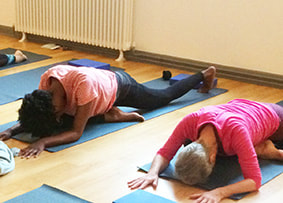
 I love getting to the end of a term of classes and inviting people to see if the physical work or breathwork feels different than when they started a few weeks previously. We have been getting into the deeper work that familiarity in your practice allows. Perhaps the half pigeon pose isn't as intense after doing it for a few weeks, not because you aren't doing it as fully, but because the body has changed and is less restricted in the hips than it was before.
Yoga really does work. Brilliant! I had a lovely email from someone from class yesterday and I would love to share it with you (it's anonymous of course, but thanks so much for sending me your story of how yoga is helping you!!). "I walked into the office this morning and my boss took a deep breath to speak. (Clara note: her boss is VERY difficult to work for) Instantly a little voice in my head said “You’ve got this. You did yoga last night!” Isn’t that incredible! I stood tall and answered politely! So yoga is working for me! Looking forward to our next session!" Yoga practice helps our bodies change for the better, and helps our nervous system to become more resilient to stress and strain. We become more open and available to meeting antagonism with friendliness, holding our ground with amity rather than anxiety. Our minds become more open, relaxed, spacious, and we can let go of negative patterns and embrace a more positive way of being in the world. All that from a weekly class. I love it!
0 Comments
Luckily the penny dropped right away with me that yoga was something I needed to prioritise. That this is what I needed to do to improve pretty much every aspect of my life. I immediately felt less stressed and tired. Literally by the end of my first 20 minute practice I felt like a weight had lifted from my body, from my mind and from my sense of wellbeing. I knew I needed to keep doing this regularly to top up these effects and I've never looked back. What else do you put in your calendar that helps you feel better, find more space and freedom in body and mind, and helps everyone around you? I practise yoga every morning before I come down and breakfast with the kids for exactly this reason. It enables me to bring more vitality and a better mood to the table, which helps my day, their day, and get us off to a good start. They are teens so they need all the good vibes they can get or it can be a rocky ride. 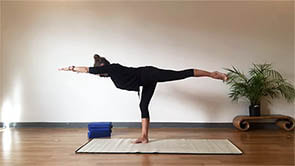 Finding the right practise, the right level of effort and ease, the right intensity and relaxation is hard to find these days. There is a lot of power yoga that is fast and vigorous, heated to intensify the experience, skipping through poses with barely a chance to catch your breath.
But there is also what we offer at YogaSpace ... there is a quietness to what we teach, it is challenging but gentle, understated but highly effective and brilliantly accessible. It can take getting used to but brings all the benefits that yoga has to offer. Add slow breath and focus to any posture and you'll discover a new way to practise. It can take time to get it to feel familiar, to get comfortable and to learn the skills of effective practise, but that is why it is called practise. The penny might not drop right away, it might not feel like the workout you thought you needed, but you'll soon find your way with it. Along with our group classes that we offer, there are some in-depth workshops coming up that will help kick start and develop your practise in a way that only small group guidance can. 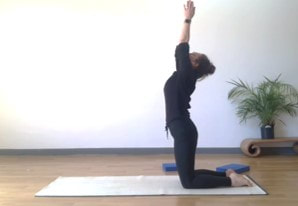 If you do yoga regularly, a year from now you'll be stronger, healthier, have improved mobility, breath capacity and regulation, and be accustomed to feeling good ...
Our bodies, our health, our mental vitality are in a 'use it or lose it' trajectory. If we don't get round to putting our bodies and breath through their paces, and stretch our mental wellbeing and focusing ability, the decline will be subtle until things start to grumble. Don't leave it that long. I hear all the time, as people return to practice, they don't know why they stopped and had forgotten how good it feels. The body loves (needs!) to move, to breath well, to notice and address postural habits and mental patterns. It is amazing how it all falls back into place if we make it to the mat regularly. If not now ... when?
Thinking about whether to do your practice or not is a slippery slope. Our thoughts are tricky, easily derailed, and unreliable for doing what is best for us.
Not getting to your mat can be tempting when the weather is bad. And without the commitment in advance, it won't get any easier. Take your decision to practice once, in advance, when your feeling pro-active. It is soooo much easier than deciding each day or week whether or not to turn up. If you are constantly questioning whether your practice is going to happen, then Autumn is the season where it will really slide. Pick your time, pick your class, book it in and stick to it, enjoy that you did it. The same way that you don't think about cleaning your teeth each day, you already committed to doing that as part of your life years ago. Yoga practice should be developed to be that same positive habit. I took a drenching this morning going to the studio. But it made me feel alive, vibrant, and great to be outside, rather than home watching the rain. It is always hard when you have to decide to leave the house. Commit ahead of time, book your term or pre-book your month's classes using your membership to help you stick to your good intentions. You'll always be glad you did.
When you first get started, there is a period of figuring out how to get to the mat regularly. Learning what sort of class suits you, and understanding the format of the class and what the teacher is talking about.
Then you start to figure out how to get into some basic postural forms, discover what the breath is doing. discover how to focus and pay attention. The teacher provides helpful feedback to help guide you into safe and effective practice. As the practice becomes more familiar perhaps we can then independently start to listen to our own cues and tune in to more subtle aspects. The guidance of the teacher is part of the picture, your own internal guidance perhaps starts to be of more importance. Some practice styles prioritise teacher feedback, others tend to prioritise students tuning in to their own feedback. Our own feedback may be more subtle and easier to miss until we become more sensitive in our practice. A teacher can never know what you are feeling in the same way that you can. At first you might have no idea how your feeling, but that sensitivity gradually develops. Your body might need to start grumbling more before it is listened to by you. The breath might get lost or become agitated or we might become out of breath before we listen to it. Sometimes students ask me for adjustments and may be disappointed when I suggest that their pose is in a good place, and offer cues to help them feel for themselves. Often people like to be told what to do (or perhaps they are used to being told what to do). Your body and breath are great guides, along with pausing to notice or taking more time in your practice to understand the responses being offered. Pausing during our practice, rather than just at the end, to observe moments of stillness and quietness, may seem counter intuitive if it isn't something your used to. Pausing, sometimes after each pose, can help us reduce our tendency to rush and not pay close attention. Some people take to it like ducks to water, moments of space and quiet are why they came to the practice in the first place. Some like to feel heat and intensity of a challenging practice with a strong focus to support and stabilise them. A long savasana at the end, once our energy is spent, may be the closest we get. Understanding your own practice can be your greatest teacher in yoga. Understanding the body and the breath, and ultimately understanding the mind and more subtle aspects beyond can be revelatory. A teacher / guide can be of enormous help and point things out that your not seeing and help you avoid indulging some ideas you may have about your practice. Feedback is a collaboration through relationship with your teacher, your body, your breath and the fruits of your practice.
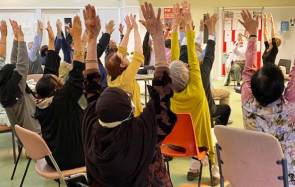
Mostly attendees were in their 70s and 80s and they enthusiastically enjoyed exploring some yoga postures, breathing, relaxing and ultimately found it revitalising with smiles all around by the end of the short, 25 minute practice. (Or was that because lunch was next).
They sought out the handout to support them with a short, daily routine of yoga to help them rekindle this feeling in themselves. Movement, breathing, focus, coordination, the fun social interaction of a group activity - all these aspects are helpful in preventing the development of dementia and keeping active in any way is great for everyone, including elderly folk. Yoga can be gentle enough to include everyone, doesn't need fancy leggings or mats, and certainly doesn't need to feel esoteric or mystical. Let's move, breath, relax into ourselves and enjoy life a little more :-)
It doesn't matter how much movement or breath or focus you are able to muster that day. Showing up, engaging in practice, connecting to your body, breath and more subtle aspects of yourself can be easily neglected, but remain instantly retrievable just by showing up next time.
Top tip: if you find you haven't got an hour or 15 minutes that week for practice, remove yourself from social media for a day and see how much time you actually have. What help can you need to support you in showing up?
There is really only one reply. Why do you want to be able to do the Lotus posture?
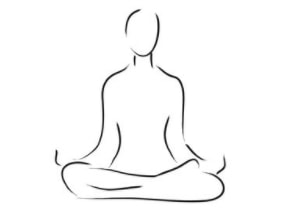
There are lots of ideas about yoga, and one is that the pose has some special quality that once you achieve it, will be bestowed upon you. The myth is that sitting in Lotus posture will mean you are finally 'good' at yoga, or can 'do' yoga, or will be able to meditate more effectively. Perhaps the ego will finally be satisfied (!), or your discomfort with sitting quietly will go away. Truth is, many people will never be able to sit in Lotus posture. Or if they manage it, could well damage their knee, hip, ankle etc. or create other undesirable outcomes. The bigger question to explore, is to understand why have they come to yoga and what can yoga offer them. It might not be obvious at first. There may be paths to pursue that then require a change of course. This is life. But starting them down a safe and satisfying route of practice, while exploring why they want a particular posture so much and helping them perhaps see a greater use of their time, is part of being an effective guide. It may be that 6-months to Lotus pose is a wonderful pursuit, if it gets them on the road to daily, safe, practice. This term in my group classes, we are focusing on sitting in some variation of cross-leg pose. Not because at the end of the term everyone will be able to sit cross-leg, that would be a fools promise. But to help those who can and want to, move towards it safely, and those who can't (or can but shouldn't) realise that another pose, or sitting on a chair, may well be far more beneficial and fruitful for their meditation practice. Enjoy the practice. Comparing yourself or aiming for someone else's practice is a reliable way of making you unsatisfied and unhappy. 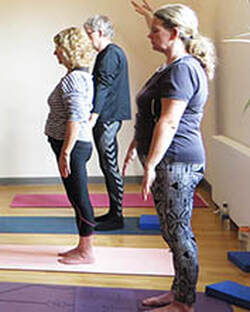 What does it mean to be 'good' at yoga?
That you can do many of the poses or techniques? Perhaps that you have athletic prowess or a graceful and flexible body? Maybe your face remains serene under duress? That you get to your mat regularly no matter what? Or maybe you have mental focus like a laser beam and an impressive breath? The quality of your yoga practice can be viewed through the pursuits that you are able to master along the way or it can be viewed through the lens of the quality of care and attention that you bring to your practice. Try bringing in more care and attention. Sun salutations not required.  A common question, often when you are getting going with it. What's my response? Well it depends on your aims and needs and what other life commitments you already have. Regular is good, but more is not always better. I practice yoga every morning, before the day gets going. Before the kids are awake and when the house is still relatively quiet. I get up and take to my mat or whatever space is available if I'm not at home. I take asana (yoga postures), pranayama (breathwork) and then sit in meditation. This is my foundation, and it feels essential with teenagers in the house. It's not a chore, I love it and miss it if I don't do it. Is a weekly yoga practice enough A weekly practice provides a regular, intimate contact with yourself, your health and wellbeing. Spending time with a close connection to your body, your breath, your mind, Moving your body in ways that support your physical and mental health, breathing well and allowing space for the mind to quieten. Is daily yoga practice a good idea?I encourage my students to take practice in between classes. I provide short practice handouts based on what we do in class, and offer advice to support them in developing their own home practice. This doesn't work for everyone, but even 10 minutes a day can be a brilliant addition to your day. A daily practice is different to a weekly class. The daily practice is more intimate - you are there connecting with your body, breath and mind more often so the relationship with yourself becomes more refined. Your understanding of your body each day will develop, along with the understanding of your breath and mind and the thought patterns you begin to notice. I have a course that is set up to help you develop a regular home practice if this sounds appealing to you: Home practice course > Is there such a thing as too much yoga practice? I've certainly come across keen yoga practitioners who do a lot of yoga practice, sometimes several hours a day. Anything can be taken to extremes so of course that is true with yoga practice as well. Equally there are those who have a modest daily practice who find it invaluable. How much do you actually need to gain the benefits you seek. And how much is your ego telling you more is better or being competitive with yourself or others? How will I know what suits me?It might not be the quantity of the yoga techniques that is being practiced but perhaps what has been chosen to practice. A yoga teacher is a great resource to help you find a suitable practice. Ensure that the teacher you choose is experienced and isn't just about fitness and getting stronger and more flexible. There is more to yoga and more to life.
Anything is better than nothing, but too much might not be as helpful as you think... 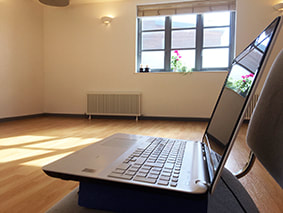 Online yoga has firmly established itself in our lives. It offers brilliant benefits and enables more people than ever to discover yoga practice. Yoga is so good, that even a a few asanas (postures) can quickly improve how you feel - as can other straightforward exercise forms. Anything is generally better than nothing, no matter what it is. The body likes to move. So having an in-person yoga teacher isn't a pre-requisite to get started. 'Yoga with Adrienne' and those like her have a valuable and worthwhile place in a yoga practitioners tool kit. Is in-person yoga different?I teach a handful of people who I've never met in person, just via the screen. I know most of my online students from before we all went online, but a few have joined me along the way. Some of these have since met me for 121s or come to my studio for class from time to time so that I can get to know them and their practice further. This is immensely helpful. Seeing them in-person helps the guidance be more tailored to them, and also helps me then picture what they are likely to be doing when they appear in their little box on the screen. I can anticipate the habits they are likely to accumulate if I see them from time to time. If I haven't seen you in two years, I have very little to go on except where you were 2 years ago, and what you have fed back to me along the way. When I see you practice in your little box, I'm able to see if you have got the right end of the stick, I can pick up on a few cues, and so can trust that the basic benefits will be coming your way. Then there are people I see regularly in-person. We chat, I see them practice and see the response in them, I see how they breathe, and hear the quality of their breath, which can be the most revealing part of someone's yoga practice and helps me provide more nuanced guidance. I can see where they benefit and where they struggle, notice their expressions or tension signs during practice, and help them practice with increasing skill. Deepening a yoga poseYoga practice isn't just about accessing a posture, going 'further' in a pose, or developing physical prowess. The health benefits and physical development are rather wonderful and compelling side effects. Often we aim to do 'more' with a pose or with the breath than is necessary. We continually 'try' and 'strive' in our practice. We want to go further, deeper, stronger, and so on. If we aren't trying, then what is the point? Trying too hardThis accumulative 'trying' is perpetuated from the rest of our life, and seems to be an expectation of all our pursuits. If we aren't 'getting anywhere' then why bother? We 'try' all day long, pushing, striving, grasping, wanting in sometimes very subtle ways. Our yoga practice doesn't have to be that. It can be a counter point to how we habitually find ourselves in the rest our life. It can become a place of skillfully noticing our habits and attitudes and then finding ways of 'letting go', of shedding and removing blocks, tensions, excess efforts. These are commonly blind spots that you can't see on your own, or at least it will likely take you much longer. Yoga is as much about 'doing' something as it is about 'un-doing'. Offering ways of moving, breathing and sitting which are beyond a place of struggle and striving. Helping to find a place of greater freedom which might not be realised when you are seemingly getting along fine on their own with their screen as the guide. Finding qualities of space and freedom in your yoga practice can be revelatory. Discover moreHere's the thing with yoga... you can take practice for years and enjoy the immediate benefits of it helping you feel great. It provides so much - bringing us a comfort in our body, breath and mind so quickly. It provides so much strength, health and suppleness over time too. This is its power but also its sticking point. As we then might overlook its greatest potential. The developmental discipline, subtlety and insightful power of intimate yoga (in a space that doesn't involve a screen).
It awaits discovery for those who are curious.  Some approaches to yoga teach the same sequence of postures and techniques that you learn, practice, develop, progress and refine over many years (e.g. Ashtanga Vinyasa). Some yoga teachers change what is taught in every class (e.g. Vinyasa Flow can get very creative). There are benefits and pitfalls to each and of course it doesn't need to be one or the other ... I teach a midline in my group classes, but with a definite pointer towards repetition and familiarity of postures, breathwork and technique. Hopefully leading you towards daily practice, repeating your personal home practice each day without variation unless there is a specific reason to adapt it. Group yoga classesMy group classes follow a term of more or less the same practice - that is several weeks of the same class. There is some development of the poses over time, exploring variations or subtleties within the poses as they become increasingly familiar. Repetition in this way helps you move beyond the excitement of 'what are we going to do today?' to allow you to become more deeply involved in what and indeed how to practice and enable you to refine what you are doing and perhaps discover more subtlety and more spaciousness in the practice. Rather than inviting in exploration of what is new and exciting, removing the novelty to leave space for other aspects to emerge. Pros and consVarying what is taught every couple of months supports you to encounter new postures, techniques and ways of practicing, learn how to do them in ways that suit you, and perhaps even discover that they are valuable to you and perhaps include in your own home practice.
Creative practice can be exhilarating and entertaining. Trying new things, exploring your body and breath, capturing your attention in new ways. This is particularly important for younger people who need the variety to keep them engaged and to keep them coming back to the practice. It can be satisfying in a way that is hugely important when you are embarking on your journey and need external motivation to keep going. I practice almost the same thing every morning. However as with all elements in viniyoga, it is about picking the right tool for the job and teaching what is beneficial and appropriate to the person wanting to practice yoga. What do you think?
Perhaps an ache will reduce, perhaps a tension habit will subside, perhaps the sleep will start to improve, or you'll be less moody. Perhaps your chores will feel more pleasurable, or you'll be more present with your kids or colleagues. Perhaps you'll be more patient or open to other people's ideas, perhaps you'll be a little kinder - It shows up in many ways.
But the other can also be true. The prep may feel GREAT. The practice might be fully satisfying, and you want more prep. You might feel like you are becoming a fantastic chef and your prep is awesome. You practice more, you love it, you find your tribe and you're into it, BUT you don't notice the meal. Life beyond the practice is the important bit - how the prep leaves you. Do you feel tired? Are you getting a repetitive strain or grumbling discomfort in your body that wasn't there before? Are you agitated or judgemental, impatient or aggressive etc. How is your ego handling all of this awesome prep and how great you have been feeling lately? How are your relationships with those around you? Subtle results that are important revelations to the results of our practice. Being vigilant to the sidetracking towards the glitter of the prep, rather than the meal itself and how it shows up in you in subtle ways, is a consideration when practicing yoga. What I love about yoga practice is that the more consistent and appropriate prep you do, the better the meal - the better the rest of your life feels. This builds day-on-day, week-on-week, year-on-year. And occasionally in our prep, we get to taste a sublime flavour that stays with us far beyond the yoga mat. Regular, consistent, appropriate prep, regular consistent practice, to bring into the rest of your life. Enjoy.
They aren't entirely sure why, as you don't get puffed in the same way that you do doing more traditional cardiovascular exercise. But research suggests it is true and believe it is due to the combination of exercise and stress reduction.
According to the research, yoga leads to weight loss, lowers cholesterol and cuts blood pressure. And it even helps you quit smoking. The research involved 2,700 people and also found that regular yoga practice reduced blood pressure 3x more effectively then taking pills. "Yoga may provide the same benefits in risk factor reduction as traditional physical activity such as cycling or brisk walking". Says researcher Myriam Hunink of Erasmus University and Harvard University. Maureen Talbot of the British Heart Foundation said "any physical activity that can help reduce the risk of cardiovascular disease should be encouraged, and the benefits of yoga on emotional health are well established". Brilliant, get yourself to a class or start your home practice today! See our class schedule here and get in touch to find out more. Back to the Bristol YogaSpace homepage. 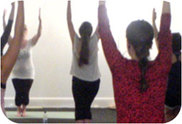 We are delighted to open our doors on Sat 13th September and invite everyone to join in our free yoga classes, meet the teachers and enjoy refreshments.
We are inviting you and your friends to join us, whether you are a beginner or just want to try another style of yoga or a new teacher. Everyone is welcome! Free class schedule 11:45 - 12:45 Flow yoga with Virginie and Sheila 13:00 - 14:00 Beginners yoga with John 14:25 - 15:15 Viniyoga with Clara 15:30 - 16:30 Beginners yoga with Clara All levels of fitness and experience are welcome to all the classes. YogaSpace along with most of the other yoga studios across Bristol are all opening our doors for the 2nd Bristol Yoga Trail. Last year's was great fun so hoping to make this year's even better. Hope to see you there! See the Bristol Yoga Trail website here > Back to YogaSpace homepage > 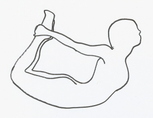 Yoga is great for improving our health and wellbeing. A well trained teacher will ensure that the class is safe and suitable for all participants. But yoga injuries do happen, and here are my top tips to ensure your yoga practice remains safe and enjoyable.
1) Listen to your body Yoga shouldn’t hurt. If it doesn't feel right, or your starting to feel strain in a vulnerable part of the body (e.g your knees, neck or lower back) then ease off and take a breather. Your body is yours so take care of it and work within safe limits, especially while you are getting started. 2) Start gently and build it up Don't go to your first class expecting to do everything. Whether you are seeking physical strength or improved breathing, connecting with yourself, focus, or relieving stress, there is no magic wand or quick fix to achieve these aims. Incremental changes will happen, and allowing yourself time to add challenges and layers of technique as you get used to the practices will bring the most benefit. Everyone has limitations, so be gentle with yourself and don’t be tempted to push it too soon. 3) Regular practice If you drop in to a class from time to time, your body will always be starting from the beginning and if there are any vulnerabilities, they are more likely to flare up. Regular practice will allow you to develop strength and stamina so that you can then further your practice. If issues or niggling pains do start to emerge, you'll have time to understand what triggers them and find ways around them. 4) Talk to your teacher Your teacher should be well-trained in a wide-range of injuries and ways to adapt the postures and techniques to suit you. Not all yoga teachers have this training (especially is they took their training over just a few weeks or months where they may only have covered postures, choreography and basic anatomy). Make sure your teacher understands any injuries or past vulnerabilities that you have so they can suggest alternatives or adaptations. You need to take some responsibility here and pro-actively talk to your teacher to ensure they can support you. 5) Yoga should never hurt Worth saying twice. Really. If it hurts, your body isn’t ready to go that deeply into it so ease off. Yoga classes aren’t (or shouldn’t be) competitive. Just because your neighbour on the mat next to you can do it, it doesn’t mean you should be able to. The class is there to benefit you, and every body in the class is different. So do things that will be helpful and have the wisdom and patience to know when to rest and wait for the next pose. Enjoy safe yoga practice and you will reap the rewards for years to come! 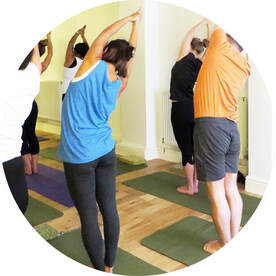 The time for good intentions is all around us. Perhaps we want to become fitter, more flexible, leaner, more creative, more focused, happier? All of these are possible. And to help, here are my top 5 tips for getting started. (Also read our GETTING STARTED page for new students.)
1) Start small - Pick one thing. A new class? Or a mini yoga practice at home that you can do every day just for 10 minutes (just pick 3 or 4 yoga postures and do that for a couple of months). Don't choose both of these, just choose one thing as that is effort enough. Focus on getting the habit started, rather than the results that you want to get from doing it. 2) Be realistic - pick the time that you can do every day or every week that is sensible and that can work for you more often than not. Then pick a class or a short daily practice, 3 or 4 poses that you think you can do and that you will enjoy. Your focus should be on getting the habit ingrained. The rest will follow. 3) Get started - the main thing is that you do it. It doesn't matter if you do it well, or if you have a cold so need to go gently, or that it is raining and cold and you don't fancy going to your class. The main thing is to get started, do it, and do it in a way that you can stick to. Get yourself on your yoga mat every week or every day. 4) Tell someone your getting started - this will help you make the commitment and increase your likelihood of doing it! 5) Don't miss two in a row. If you need to miss one, then ok. Try not to miss two in a row as then the habit is broken and all your good effort may not come to fruition. Keep going, even if only gently if your under the weather. If your away, then try to make up the class or the practice in another way that still counts. Good luck with getting your new yoga practice in place. The benefits will be worth it, all you need to do it turn up and do it :-). Happy new year!  Mindfulness - to be mindful. To be aware of each moment and to act with intention. Christmas - beyond the religious festival it is to fill stockings, make plans, see friends and family, plan menus, arrange travel, eat wonderful rich foods etc. It's busy, fun, tiring, stressful, overindulgent, exciting, a whirlwind ... a mix of many things. For many people, trying to maintain a sense of mindfulness when life gets hectic is a challenge most of us struggle with. Those who go to a yoga class will already have a headstart in maintaining a mindful attitude. To practice yoga is to develop a mindful body and movement with mindful breath. Maintaining a mindful approach helps you to enjoy the whirlwind. To experience joy and gratitude for the festivities all around us. It is all too easy miss if your too busy to notice. Try this... To help you remain mindful try setting aside as little as 5 minutes each day to re-set your intentions. Sit quietly, perhaps alone, or over a quiet cup of tea. Do nothing else except gaze softly at a blank wall, table, or natural object and settle your gaze there gently, or close your eyes. Notice your breathing, and connect with yourself for a short while. Note your intentions for the day and resolve to pursue them. Try this for 5 minutes each day through the Christmas period. Try not to get carried away in the potential whirlwind but to stay connected to what is important to you and to enjoy the moments. If you find yourself feeling too rushed or stressed, take a few deep breaths and ask yourself 'what would my 'mindful self' do?', and then act. Remember to take time to enjoy your Christmas festivities. Keep up some yoga or other grounding practice if you can. And see you in class in the new year. Back to Bristol YogaSpace homepage 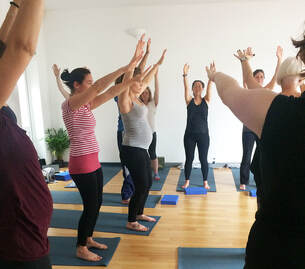 Each week in my yoga classes in Bristol, I see people come in to class feeling tired, perhaps agitated by their day, and usually more than a little lack lustre.
When they leave, there is a noticeable difference in how they seem. They are usually settled, calmer, and more comfortable in themselves. A better version of themselves. They have changed. During the class we move the body, opening, expanding, stretching, challenging, engaging and working the entire body in some way. We breathe fully, slowing and extending the breath where possible. And we try to focus internally and our breath. I came across a fascinating talk by Amy Cuddy recently called 'Your body language shapes who you are'. Amy is a social psychologist. She researches body language at Harvard Business School and she was interested in researching how body language not only effects other people's perceptions of us, but how it actually effects our own body chemistry. In her research she concluded that by standing up tall with the feet apart and with the arms raised and open for only 2 minutes daily, we can raise our testosterone levels (dominance hormone giving a confident outlook), and reduce cortisol levels (stress hormones). Simply by changing our body position in this way, we are altering our hormones and brain chemistry. We are changing ourselves to not only feel but become more powerful, confident and laid back. Great! In yoga classes it is very likely that you'll do a lot of arm raising like she describes, standing with the feet apart, reaching up, opening up. Also combining this with bending forwards, twisting and so on. So her research suggests that we are actually changing ourselves and our hormones in a very real way by doing this. I took two things from Amy Cuddy's inspiring talk - firstly, that yoga postures seem very aligned to the body changes she talks about, and that by doing them you'll actually become more confident and laid back. - and secondly, that only a little practice, taken regularly, can make a big difference! Pass it on... PS. I love TED Talks! Back to Bristol YogaSpace homepage 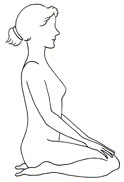 I've recently been inspired by reading about minimalism as an approach to living. I've been enjoying how it reflects many values that I hold close, and that I've been cultivating through my study and practice of yoga. It has also inspired me to have a really good clear out of my home!
The idea of living simply with less to enjoy life more is one that has taken more prominence for me since becoming a yoga teacher. I teach viniyoga - yoga that is applied carefully and adapted to suit those who are participating. Viniyoga embodies a minimalist approach to yoga practice. It doesn't require a super heated yoga studio, or any special kit (no blocks, belts, bolsters or even mats required). Nor does it require a certain level of fitness or skill to participate. All you need is you, your body, your breath, and your attention. In fact this is why it initially appealed to me. I wanted to start practicing yoga at home but found the foam blocks, folding chair, bolster, strap and bricks used in class rather unwieldy and off-putting to home practice, and questioned how essential they really were. Upon discovering the simplicity of viniyoga I was hooked, home practice became encouraged, and there has been no looking back. I often do use a sticky yoga mat, but at home I'm equally happy practicing on a carpet (or even floorboards if necessary as I did last week when I was away but it's a little less comfortable). I use my body's own weight to create resistance to help strengthen and energise as I practice the various postures (asana) of yoga. Viniyoga has a minimalist approach to the repertoire of asana usually practiced. At it's core there are a carefully selected set of primary asana, each serving an important purpose. These asana are gradually explored in further and further depth, with a deepening emphasis on breath and focus and techniques around these as the practice advances. This makes it a very accessible form of yoga practice as you can deepen your yoga practice and continue to develop without the need for a gymnast's or dancer's body. Let's face it, if you started practicing yoga as an adult, that isn't a realistic ambition for most people. And beyond the daily bodywork and breathwork to maintain and develop our health, yoga cultivates mindful compassionate living, minimising the dependence on material attributes in our lives so that we have space to spend each day in an enjoyable, meaningful way. A wonderful way to live with amazing potential. Back to the YogaSpace homepage. |
More blog articles >
Categories
All
Archives
April 2024
|
 RSS Feed
|
Bristol YogaSpace Ltd
Princes Place, Bishopston Just off Gloucester Road Bristol BS7 8NP |
|