|
Luckily the penny dropped right away with me that yoga was something I needed to prioritise. That this is what I needed to do to improve pretty much every aspect of my life. I immediately felt less stressed and tired. Literally by the end of my first 20 minute practice I felt like a weight had lifted from my body, from my mind and from my sense of wellbeing. I knew I needed to keep doing this regularly to top up these effects and I've never looked back. What else do you put in your calendar that helps you feel better, find more space and freedom in body and mind, and helps everyone around you? I practise yoga every morning before I come down and breakfast with the kids for exactly this reason. It enables me to bring more vitality and a better mood to the table, which helps my day, their day, and get us off to a good start. They are teens so they need all the good vibes they can get or it can be a rocky ride. 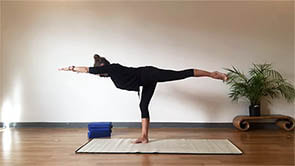 Finding the right practise, the right level of effort and ease, the right intensity and relaxation is hard to find these days. There is a lot of power yoga that is fast and vigorous, heated to intensify the experience, skipping through poses with barely a chance to catch your breath.
But there is also what we offer at YogaSpace ... there is a quietness to what we teach, it is challenging but gentle, understated but highly effective and brilliantly accessible. It can take getting used to but brings all the benefits that yoga has to offer. Add slow breath and focus to any posture and you'll discover a new way to practise. It can take time to get it to feel familiar, to get comfortable and to learn the skills of effective practise, but that is why it is called practise. The penny might not drop right away, it might not feel like the workout you thought you needed, but you'll soon find your way with it. Along with our group classes that we offer, there are some in-depth workshops coming up that will help kick start and develop your practise in a way that only small group guidance can.
0 Comments
My teenage kids can be a challenge with turbulent and unpredictable moods and impulsive behaviours. It's certainly not easy being a teenager. As they are a huge part of my life they take as much energy, patience and goodwill as I can muster. Keeping calm and bringing positive energy to meet their teenage hormones is sometimes the best thing I can do for them, and I can't always even do that! It helps hugely to practice yoga each morning before I head downstairs to greet them. If I manage to arrive with a positive mindset, it effects how my day goes, my perception of everything I encounter, and if I can bring humour and fun to whatever they bring to the breakfast table, it instantly raises their mood too. And if you know any teenagers, moods are a big deal.  Our yoga practice is not only for us but also those around us. If our outlook can be improved, then it has a ripple effect that goes far beyond ourselves. We experience each moment of our day through the lens of our minds. We colour everything we encounter with our moods, our emotions and mindset. And if the lens of our mind is cloudy, murky or moody, then that will be how we interpret most things.
And then we do our yoga... Moving and breathing in helpful ways actually shifts things. It changes our state to become lighter, more positive, more vibrant and able to meet challenges with more positive energy, which is contagious.. Weekly yoga, daily yoga even for 10 minutes - it all counts. And it accumulates over time. We build up a positive 'credit' of health and positive energy. We can draw on this when times get tough, and we can invest into it and build up our credit when times are good. Keep showing up to your practice and the ripple effects will positively effect everyone around you. Even teengers.
So what happened?
She moved quickly and breathed as she was used to. She would finish before everyone else, and look around bored. And she missed a fair amount of what the class was offering, the class simply didn't suit where she was. Here are a few things she missed: A chance to leave behind the 'rushing' that makes up most of the rest of our life. Allowing time to not just 'do' a yoga pose or breath, but to actually embody, inhabit and Be in a pose and find a fuller connection to every single breath. The increased challenge of moving slowly. The body has to sustain the movement for longer, the breath requires more focus as it is so different to our habitual pace, and there is less chance to escape into easier bits of the practice. If we normally breath at around 15-breaths per minute in our everyday breath, in a typical sun salutation you might find yourself at 6 or 7 breaths a minute. This is great and offers a lot. But then what would happen if you went to 3 or 4 breaths a minute? It feels really different, it requires 10X focus, the nervous system loves it, the body has to slow down to more control in each pose is required which takes more skill, and you notice way more. Needless to say, the after-class chat went along the lines of: do I do any other types of class where she can work harder and feel more challenged. I'm not the right teacher for her, and if I was, my beginners class would be a great starting point so that she could established a good foundation of movement and breath. Not every teacher is the right one for every student. You need to be met where you are, and engaged in the practice that they are compelled to teach. I wish her well and hope she finds a teacher that can catch her attention and that she can really learn from.  Advertisers, social media, TV, radio, friends, family, sales people, chores - many things want a slice of our attention. It is a valuable resource and there often doesn't seem like enough to go around.
Your attention is literally for sale. Advertisers pay good money for it, news companies are funded by it. Treat it with high regard and choose what you do with it wisely. Yoga practice includes the art of cultivating sustained attention towards that of your choosing. In our practice we gradually discover that we can 'do' less, so that we can 'be' with ourselves more fully. Our practice might start with 'attention grabbing' poses and bold breath focus, and from there the practice unfolds. We gradually settle into being more comfortable in our body, our mind settles down, and we are able to discover relative stillness. We turn away from the external world for a while, discover our own internal sanctuary and find a wellspring from which to restore ourselves. Have you noticed that in yoga practice we start with more energising, external facing, open poses, and gradually become quieter, more internally aware, more subtle? Our attention is encouraged to settle onto the body, the breath, the inner sensations, and this process unfolds as we continue through our practice. What feels like a stormy body and mind at the beginning of practice, becomes more calm and steady by the end. The art of paying attention, of intentionally choosing what you attend to, is really a radical act in today's world as it goes against what external forces would command. But it is a skill well worth cultivating. Find more space and freedom in your life as you give your attention to what you choose, rather than by-design what you encounter. Spend your attention wisely and reap the rewards. 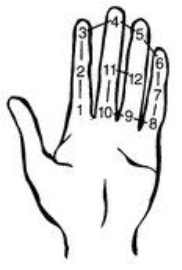 You'll likely be familiar with how important breathing is to the practice of yoga. It's a remarkably effective and direct way to leave behind your whirling mind, once you've become comfortable with it. If you've not yet discovered the benefits of breath focus, you may wonder what all the fuss is about and decide that the usual everyday breathing we do all day long is sufficient. Breath focusBreath focus, or pranayama in Sanskrit, is a profound and accessible tool that can offer a way into a direct experience of yourself, your mind, body and breath. A bridge out of being lost in thought, lost in worries, day dreaming etc. You move beyond thinking about the breath and become able to simply experience the breath with full awareness. At first maybe just for micro-moments, but over time in more sustained ways. If you've ever tried this, you might be thinking, easier said than done. But like many things that are worthwhile, it might take a bit of practice to get the hang of it. 12 count hand mudraA technique we've been using in my yoga classes this term which can be hugely helpful, is the 12-count hand mudra. A brilliant device for accessing the breath awareness more fully. A simple hand gesture that once it is familiar enough is a great addition to your yoga toolkit. Using the left hand turned up, the back of the hand resting on your thigh, you use the thumb to count round the 12 inner creases of each finger (inside the knuckles). - Place the thumb on the first crease of your first finger, and take a breath (inhale and exhale). - Then on the next breath, moving the thumb to the middle crease on the first finger. - With 12 creases to count on your fingers, you move round in a spiral shape among the creases. With 12 movements of your thumb, 12 breaths, you finally reach the middle of your ring finger (as long as you didn't forget to move your thumb and remembered to only touch each finger crease once). Simple but effectiveIt is similar to counting on beads, and serves the same purpose. It helps you move away from your thoughts, and for a moment leave behind your conceptual mind (counting after all is conceptual). The counting has been migrated to the hand so the mind is free to experience the breath more directly and fully. You are able to count without thinking about counting. This technique, once it is practiced enough for it to be comfortable and easy, allows you to move out of thinking and come more fully into directly experiencing the breath and the sensations in your hands. From here, you can experience each breath and moment in a new way. It is a simple idea. As a technique it doesn't have the glitter of a complex body shape or flow of movements, but in its simplicity lies its power. So ... a challenge for you- Week 1: Use the mudra everyday to learn it and become comfortable with it
- Week 2: Then se it every day with more subtlety and more proficiency and notice the difference. Simply take 12 quiet breaths, counting on your hand. Notice what you experience when you do it, how it leaves you, and if this has any bearing on the rest of your day. Enjoy and feel free to get in touch with questions. 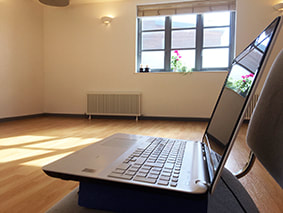 Online yoga has firmly established itself in our lives. It offers brilliant benefits and enables more people than ever to discover yoga practice. Yoga is so good, that even a a few asanas (postures) can quickly improve how you feel - as can other straightforward exercise forms. Anything is generally better than nothing, no matter what it is. The body likes to move. So having an in-person yoga teacher isn't a pre-requisite to get started. 'Yoga with Adrienne' and those like her have a valuable and worthwhile place in a yoga practitioners tool kit. Is in-person yoga different?I teach a handful of people who I've never met in person, just via the screen. I know most of my online students from before we all went online, but a few have joined me along the way. Some of these have since met me for 121s or come to my studio for class from time to time so that I can get to know them and their practice further. This is immensely helpful. Seeing them in-person helps the guidance be more tailored to them, and also helps me then picture what they are likely to be doing when they appear in their little box on the screen. I can anticipate the habits they are likely to accumulate if I see them from time to time. If I haven't seen you in two years, I have very little to go on except where you were 2 years ago, and what you have fed back to me along the way. When I see you practice in your little box, I'm able to see if you have got the right end of the stick, I can pick up on a few cues, and so can trust that the basic benefits will be coming your way. Then there are people I see regularly in-person. We chat, I see them practice and see the response in them, I see how they breathe, and hear the quality of their breath, which can be the most revealing part of someone's yoga practice and helps me provide more nuanced guidance. I can see where they benefit and where they struggle, notice their expressions or tension signs during practice, and help them practice with increasing skill. Deepening a yoga poseYoga practice isn't just about accessing a posture, going 'further' in a pose, or developing physical prowess. The health benefits and physical development are rather wonderful and compelling side effects. Often we aim to do 'more' with a pose or with the breath than is necessary. We continually 'try' and 'strive' in our practice. We want to go further, deeper, stronger, and so on. If we aren't trying, then what is the point? Trying too hardThis accumulative 'trying' is perpetuated from the rest of our life, and seems to be an expectation of all our pursuits. If we aren't 'getting anywhere' then why bother? We 'try' all day long, pushing, striving, grasping, wanting in sometimes very subtle ways. Our yoga practice doesn't have to be that. It can be a counter point to how we habitually find ourselves in the rest our life. It can become a place of skillfully noticing our habits and attitudes and then finding ways of 'letting go', of shedding and removing blocks, tensions, excess efforts. These are commonly blind spots that you can't see on your own, or at least it will likely take you much longer. Yoga is as much about 'doing' something as it is about 'un-doing'. Offering ways of moving, breathing and sitting which are beyond a place of struggle and striving. Helping to find a place of greater freedom which might not be realised when you are seemingly getting along fine on their own with their screen as the guide. Finding qualities of space and freedom in your yoga practice can be revelatory. Discover moreHere's the thing with yoga... you can take practice for years and enjoy the immediate benefits of it helping you feel great. It provides so much - bringing us a comfort in our body, breath and mind so quickly. It provides so much strength, health and suppleness over time too. This is its power but also its sticking point. As we then might overlook its greatest potential. The developmental discipline, subtlety and insightful power of intimate yoga (in a space that doesn't involve a screen).
It awaits discovery for those who are curious.  Is every morning a beautiful morning? Option A: It's grey, cold, drizzling in your face, and your getting wet. You didn't sleep well, you stubbed your toe, and you've got a job today that last time you did it, was tricky to say the least. Option B: It's sunny, blue skies, birds are singing. Your well, you've got the day off, and you've just won the lottery. Which do you prefer? It depends on your frame of mindBoth mornings could be great, or both mornings could be dreadful, depending on the state of your mind. If our mind is clear and present who is to say that cold drizzle and a painful toe have any bearing on how your day unfolds or is experienced. You might even discover a song in your heart. Yoga helps us look past our judgementsIt is worth noting and querying our initial mental judgements on our day. Whether the day is going well or not.
Yoga practice helps us to find a more equanimous viewpoint. Moving into our body steadily, breathing slowly and mindfully, settling the thoughts - taken on a regular basis this can help us to react less to our immediate judgements and work with them more skillfully. It helps us take each day as it comes, and meet it with fresh eyes and a fresh perspective. And with the right framing, each moment could be a treasure to be discovered. Don't rely on the sunshine, your mood, or any other factors to decide how your day goes. If we were only happy when the day was going well, we (and those around us) are in for a bumpy ride. Find ways that help you reset your view and see what you might be missing. Noticing the beauty and joy, even in the face of drizzle and toe-pain, is definitely a skill worth cultivating. Rest assured, you'll need to deal with both at some point, especially if you live in Bristol.
I'm part of a community of teachers who participate in the Association of Yoga Studies (AYS). A group of a few hundred teachers, mostly in the UK, who meet annually to share teachings, learn from experts in their field, and continually develop our knowledge and understanding of yoga and yoga teaching. We are based in the teachings of TKV Desikachar and his father, Krishnamacharya, Viniyoga. Part of this tradition is chanting. Chanting the Yoga Sutras was a core part of my teacher training. Learning by heart some of this core text which forms the basis of much of what I teach. Even though it is over 2,000 years old, the teachings on the mind are so relevant to modern life. Being able to chant in Sankrit was a surprise part of my training that I didn't realise I was going to learn to do, but here I am, years later still continuing and participating in group chanting. There are practical reasons to learn how to chant... - breath development - learning the ancient teachings of the Vedas and Yoga Sutras by heart - focus and concentration (you literally can't drift your attention and remain true to the Sanskrit sounds without knowing that you have, as you'll make an audible mistake right away and bringing your focus keenly back) - quietening the body, nervous system and mind But something else happens when you chant, especially when your in a group. A resonance takes place in your own body and mind. Especially with the group sound, the coming together of individual voices to make a collective sound which is a wonderful and powerful experience. Anyone who takes part in a choir or orchestra will understand what I'm talking about. It's no coincidence that every culture has singing practices embedded deep within. And Covid has reminded us the value of being together in a room with others. Chanting in Sankrit, continuing the strict chant rules and pronunciation that has remained as unchanged as possible for over 2,000 years is an inspiring experience. It brings us together, connecting us individually, as a collective, and to the shared subtle underpinning of our everyday life. This past weekend I took part in a wonderful Vedic Chanting retreat with Chris Preist. Coming together with a shared joy of yoga practice and study with time for reflection and silence has never felt as needed as after the challenges of Covid. If you've ever wondered about chanting, please do ask me, or come to one of my workshops where we use simple chanting and sound practices. Or simply try humming to yourself and start to enjoy the sound and vibration. Try this...Lie on your back, knees bent.
~ Place your hands over your eyes (not pressing on the eyes themselves) and block out the light. ~ Gaze into the darkness and patterns that appear there. ~ Relax ~ And then take a soft, easy hum each time you exhale. ~ Do this for a few minutes, slowly listening to the sound of each hum. ~ No matter what note or quality of sound, and no matter if you like the sound of your voice or not. Feel the sound if you don't like to listen to it, ~ After 5 minutes, see how you feel. Something will have changed in you. ~ Ponder....
My 20202020 was a year like no other. It was completely unexpected and included things I never thought I would do in my life.
An incredible yearGiven all the limits and constraints of the year, I found it incredible in many ways. Some things of course I'm hoping we move on from. But I've learned so much, and continue to learn from all that has been thrown at us. My meditation practice allows me a welcome space to sit with the tragedy of the year, and the heightened visibility of inequality and privilege demonstrated through the virus's progression through different communities and countries and the BLM movements. A clear re-evaluation of life and what to do with the privilege that I have is an ongoing project. Perhaps we've all come to value our health and way of life more than ever before. We can more easily recognise the gifts of our health and our privilege and ensure we use these gifts well in our daily lives. Top tipsStart small, for achievable and sustainable progress. From how we make ourselves more resilient in our own health, through our lifestyle and dietary choices, to how we interact with others and treat our neighbours and engage with our local communities. My top tips for every day:
There are lessons for each of us from 2020. If any positives are to come of last year, let's find them and take them to heart.
Yoga is a set of practices but also, it is an area of study. The practices that we embody - the movements and postures, the breath and the meditative supports - can be wonderful to simply experience and do. No prior knowledge needed. But as your experience and understanding develops the richer it becomes, As an adjunct to the practices is the understanding, the context and the wider practices of yoga, which are rooted in a rich, broad, deep and ancient tradition. Not something you get to grips with in a group class generally (try one of my Bristol-based yoga workshops or Foundation Courses to find out more about this).
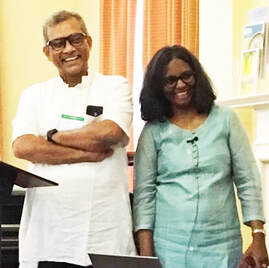
The Association of Yoga Studies (AYS) of which I'm a teaching member, is a viniyoga community that meets every year and comes together for a weekend of wonderful yoga workshops. This weekend just past was our annual convention with an inspiring theme on Yoga and Music led by Ravi Shankar and Sheela Shankar from India. They are both long-time yoga scholars trained directly by Desikachar and Sheela is an accomplished classical Indian singer. They shared the most beautiful and subtle approach to yoga practice through sound, song, chant and ancient Vedic poetry. Sheela delightfully performed songs for us and then led us skillfully in ancient chanting practices. While Ravi gave us eloquent context and history around the chants that we practiced. As always with the teaching conventions, I've come away inspired to explore these subtle practices in my personal practice and feel re-rooted in the tradition of yoga. It is such a privilege to be welcomed into this warm and generous community all brought together by the legacy of the humble, honest and rigorous teachings of TKV Desikachar. What I love about the teachings in this weekend's community, is that your never more than a breath away from a reference to the Yoga Sutras or the Vedas. The ancient traditions are maintained with a thread of understanding that is brilliantly woven through the workshops and brought to life through the teacher. The interpretation of yoga hasn't been recycled so many times without reference to the original teachings, that it is barely recognisable as yoga at all (as is common in many modern yoga teaching approaches). Refreshing, inspiring, grounding and beautiful. Chanting sublimely embodies a timelessness that is hard to find in other yoga practices. The chanting of a song that was written millennia ago, chanted to the same clear, strict rules which means it sounded the same then as it does now (if your teacher is as skilled as Sheela Shankar) bringing you to the exact same point as the people who chanted it before you, The sounds, the breath and focus required to maintain the ability to chant in Sanskrit, the acute listening and heightened senses, the connection to that which is timeless, And the awareness that of course life hasn't changed that much. The outward appearance and experience is unrecognisable, but our internal experience is still on the same path and these teachings which were so valuable then, are still available to help make life and living better. Love it!!  Recently, on BBC Radio Bristol's 'Clueless' program, we were invited to be their special 'mystery' destination for their clue-led treasure hunt. Through a series of cryptic clues, callers had to ring in to the program and help find the location of the mystery place - US! All clues led to Bristol YogaSpace and once we were found I chatted with the show presenters where we laugh about the difficulties of starting out with yoga. Take a listen. We talk about breath-centred yoga practice which we specialise in at Bristol YogaSpace. It is always interesting to hear about someone's first experience of yoga like the presenter in the radio chat who felt like she might never go back. She found her first class too challenging -- so for a long-term and sustainable practice, it probably isn't a good starting point. You want to have a good experience, feel engaged in what you are doing, revitalised by a positive experience, but not so challenged that you might not continue. There is always a good starting place, and in yoga, there is always something you can do, now matter what your age or physical ability. This starting point will be different for each of us depending on our lifestyle and constitution A group class typically starts with body movements and breathwork but if your body isn't well or strong, then other starting points might be a better route for your yoga practice. But hopefully the presenter will find a class that she finds enjoyable and engaging, and something she can't wait to do again. Maybe you first tried it through a YouTube video or DVD (my first experience was through a video cassette!). Or perhaps you tried a yoga class, or had a more meditative yoga experience, perhaps a podcast or guided audio practice. There are so many ways to first experience yoga. Don't be disheartened if you try it and it doesn't feel right. Each teacher will teach what they found helpful and important so finding a teacher you feel comfortable with and aligned too, who can support you through the initial stages of your developing yoga skills will help you get the most benefit from yoga. Please do get in touch if we can help you get started, whether in a group class or with private lessons to discover and develop your journey with yoga.
Breathing well in yoga can seem tricky As a beginner to yoga, it can seem difficult to keep the focus on the breath. It is common to find that you’ve been holding your breath and straining in some postures. Arms and legs are just about doing what the teacher has invited you to do - but your breath, well who knows? This is particularly noticeable in a fast-paced or deeply strenuous class where the body is most dominant and anything else gets left behind as you work your way through the class. So what if my breath isn't great?Day to day we typically breath 12-15 breaths per minute. The rate, depth and quality of it can help adjust our levels of anxiety and stress, our immune system effectiveness and many more physical and mental health markers. Yoga offers profound teachings in the breath if we choose to listen that can support our health, wellbeing and awareness in our day to day lives. Familiarity helps to develop our breath focusGradually, with familiarity of a regular yoga practice, we can start to remember to breathe with a flowing and calmer breath. And eventually the breath and movements start to link together more. From here we can start to take that further still and refine into a more advanced yoga practice. Once you feel you are able to link the breath and movements together, then the power of the breath can really start to be harnessed and the refinement and quality of our yoga practice can bloom. Our nervous system will feel immense benefit from working skilfully with breath centring and we can move beyond the endorphin highs of vigorous and strenuous yoga practice and move towards maturing our yoga practice. The breath powers our yoga practiceSounds obvious, of course we need to breath to power everything that we do or we’ll collapse in a heap. But it is easy to forget about the quality of our breath when distracted or physically strained. What if you eased back from the strain and found a spaciousness in the breath to develop the power of your yoga practice instead? What would that feel like? What could it do to your yoga practice? What if we found our physical alignment from our breath?We often listen to the technical instruction from the yoga teacher: move your foot here, rotate your hip there, etc... Breath-centred practice can support us to more naturally open and expand your body into a posture, rather than teaching instruction being the main driver. Explore how your breath can position you into a natural alignment from within that is unique to your body structure and your deepening breath. Starting out with breath-centred yoga practiceThe classes at Bristol YogaSpace work with a deeply breath-centred approach to yoga. Rather than simply coordinating with our breath, which is common in many Vinyasa, Flow or Ashtanga yoga practices, we centre ourselves in the breath more deeply and use it to power the practice and direct the postures and focus.
When I started out some 20 years ago I practiced Ashtanga yoga, a vigourous and strong yoga practice, then Iyengar yoga which is technical and detailed in its formal postures. But I eventually discovered a truly breath-centred approach in Viniyoga and practice was transformed for me. Perhaps ask your teacher more about the breath when you feel ready or curious or come along to a Viniyoga class which specialises in breath-centred yoga practice, or a yoga workshop to support you to develop more breath centring in your yoga practice. Enjoy your yoga practice. “Without breath, it isn’t yoga – it is like a river without water” Krishnamacharya  Mindfulness - to be mindful. To be aware of each moment and to act with intention. Christmas - beyond the religious festival it is to fill stockings, make plans, see friends and family, plan menus, arrange travel, eat wonderful rich foods etc. It's busy, fun, tiring, stressful, overindulgent, exciting, a whirlwind ... a mix of many things. For many people, trying to maintain a sense of mindfulness when life gets hectic is a challenge most of us struggle with. Those who go to a yoga class will already have a headstart in maintaining a mindful attitude. To practice yoga is to develop a mindful body and movement with mindful breath. Maintaining a mindful approach helps you to enjoy the whirlwind. To experience joy and gratitude for the festivities all around us. It is all too easy miss if your too busy to notice. Try this... To help you remain mindful try setting aside as little as 5 minutes each day to re-set your intentions. Sit quietly, perhaps alone, or over a quiet cup of tea. Do nothing else except gaze softly at a blank wall, table, or natural object and settle your gaze there gently, or close your eyes. Notice your breathing, and connect with yourself for a short while. Note your intentions for the day and resolve to pursue them. Try this for 5 minutes each day through the Christmas period. Try not to get carried away in the potential whirlwind but to stay connected to what is important to you and to enjoy the moments. If you find yourself feeling too rushed or stressed, take a few deep breaths and ask yourself 'what would my 'mindful self' do?', and then act. Remember to take time to enjoy your Christmas festivities. Keep up some yoga or other grounding practice if you can. And see you in class in the new year. Back to Bristol YogaSpace homepage 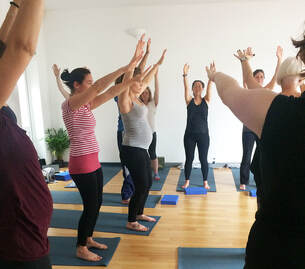 Each week in my yoga classes in Bristol, I see people come in to class feeling tired, perhaps agitated by their day, and usually more than a little lack lustre.
When they leave, there is a noticeable difference in how they seem. They are usually settled, calmer, and more comfortable in themselves. A better version of themselves. They have changed. During the class we move the body, opening, expanding, stretching, challenging, engaging and working the entire body in some way. We breathe fully, slowing and extending the breath where possible. And we try to focus internally and our breath. I came across a fascinating talk by Amy Cuddy recently called 'Your body language shapes who you are'. Amy is a social psychologist. She researches body language at Harvard Business School and she was interested in researching how body language not only effects other people's perceptions of us, but how it actually effects our own body chemistry. In her research she concluded that by standing up tall with the feet apart and with the arms raised and open for only 2 minutes daily, we can raise our testosterone levels (dominance hormone giving a confident outlook), and reduce cortisol levels (stress hormones). Simply by changing our body position in this way, we are altering our hormones and brain chemistry. We are changing ourselves to not only feel but become more powerful, confident and laid back. Great! In yoga classes it is very likely that you'll do a lot of arm raising like she describes, standing with the feet apart, reaching up, opening up. Also combining this with bending forwards, twisting and so on. So her research suggests that we are actually changing ourselves and our hormones in a very real way by doing this. I took two things from Amy Cuddy's inspiring talk - firstly, that yoga postures seem very aligned to the body changes she talks about, and that by doing them you'll actually become more confident and laid back. - and secondly, that only a little practice, taken regularly, can make a big difference! Pass it on... PS. I love TED Talks! Back to Bristol YogaSpace homepage 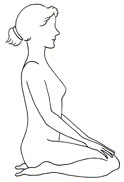 I've recently been inspired by reading about minimalism as an approach to living. I've been enjoying how it reflects many values that I hold close, and that I've been cultivating through my study and practice of yoga. It has also inspired me to have a really good clear out of my home!
The idea of living simply with less to enjoy life more is one that has taken more prominence for me since becoming a yoga teacher. I teach viniyoga - yoga that is applied carefully and adapted to suit those who are participating. Viniyoga embodies a minimalist approach to yoga practice. It doesn't require a super heated yoga studio, or any special kit (no blocks, belts, bolsters or even mats required). Nor does it require a certain level of fitness or skill to participate. All you need is you, your body, your breath, and your attention. In fact this is why it initially appealed to me. I wanted to start practicing yoga at home but found the foam blocks, folding chair, bolster, strap and bricks used in class rather unwieldy and off-putting to home practice, and questioned how essential they really were. Upon discovering the simplicity of viniyoga I was hooked, home practice became encouraged, and there has been no looking back. I often do use a sticky yoga mat, but at home I'm equally happy practicing on a carpet (or even floorboards if necessary as I did last week when I was away but it's a little less comfortable). I use my body's own weight to create resistance to help strengthen and energise as I practice the various postures (asana) of yoga. Viniyoga has a minimalist approach to the repertoire of asana usually practiced. At it's core there are a carefully selected set of primary asana, each serving an important purpose. These asana are gradually explored in further and further depth, with a deepening emphasis on breath and focus and techniques around these as the practice advances. This makes it a very accessible form of yoga practice as you can deepen your yoga practice and continue to develop without the need for a gymnast's or dancer's body. Let's face it, if you started practicing yoga as an adult, that isn't a realistic ambition for most people. And beyond the daily bodywork and breathwork to maintain and develop our health, yoga cultivates mindful compassionate living, minimising the dependence on material attributes in our lives so that we have space to spend each day in an enjoyable, meaningful way. A wonderful way to live with amazing potential. Back to the YogaSpace homepage.  Yep, Halls menthol sweets are being marketed as a way to stay cool and calm all through the summer, not just when you have a cold.
Breathing deeply, especially exhaling deeply are great at settling and calming yourself (just take a deep breath and see) and integral to yoga practice. So interesting to see sweet manufacturers are catching on. Although not supporting taking sugar throughout the day to stay calm using breathing in this way is great! Back to Bristol YogaSpace homepage  Running the Bristol Half Marathon this Sunday?
What you learn on the yoga mat either at your group class or in your own home yoga practice can be invaluable to help keep you injury free, focused, motivated, energised and able to stay the distance. Here are some top-tips: 1) Tall posture Yoga practice often starts by standing on the mat, focusing on standing with awareness, with attention and length in the spine, having an open chest, and then relaxing your shoulders and breathing deeply. Bring this feeling of readiness yet relaxation into your pre-run preparation and take some deep breathes to stay focused and relaxed. Stand with both feet evenly supporting you and be aware of the shift of balance from side to side of the feet and body. This awareness of balance can carry on through into your running to help keep you centred and grounded for the duration of the run. 2) Stay aware to prevent injury It is easy to become part of the crowd and lose your internal awareness, meaning your perhaps not listening to your body and maybe accumulating tension into your running. This is when injuries are far more likely. Stay focused and aware of your running and how your body is responding. Keep aware of how your breathing is, and try to relax and let go of any tension as you notice it coming into the body. During the run, every 10 minutes or so, spend 10 breaths checking that you are breathing well, with a good exhalation, that your shoulders and body are relaxed, and that your posture isn't starting to collapse as you become tired. Reenergise yourself and keep your focus going. 3) Open your chest to breathe Breathing properly is very important to ensure your body is working at its optimum, and many people only use a portion of their full breath, meaning their bodies have to work harder. As you tire, everything wants to collapse downwards, including your chest and shoulders. Or perhaps you become tense and your full capacity for breathing 'seizes up' as you will yourself on. Keep your chest open, shoulders back and relaxed, shoulder blades down, arms and hands relaxed. Maintaining this openess will enable optimal breathing. 4) Take time to exhale Your yoga practice will have taught you to exhale completely, and this takes time and practice. If you become out of breathe during running, it usually is because your not breathing out deeply enough. Focus on your exhale, breathe out from the belly drawing your belly button in towards the spine, take a few deeper exhales and than relax into a breathing rhythm that allows full exhalation. 5) Some Downward Facing Dog After the run, fully stretching will help your recovery and leave you in less discomfort the next day. Include some time spent in downward facing dog as this can be great for stretching your calves, hamstrings and your back. Stay in the pose for at least 8 full breathes (breathing slowly), longer if comfortable for you. Each inhalation spend time lengthening the spine and extending the hips away from the shoulders, each exhalation allowing the legs to take a little more of the stretch. Taking some time to relax and stretch here to help your recovery from the run. (Not advis Most of all, enjoy your run and good luck! Back to YogaSpace homepage >
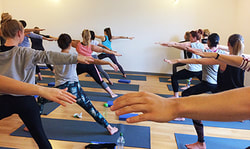 I'm regularly asked to help people choose a Yoga class that will suit them. There are lots of styles, and flavours on offer in Bristol, so here are a few pointers and guidelines to help get you started: Please feel free to get in touch for more information. Why Yoga?Different styles of yoga offer different degrees of either physical or mental challenge and discipline or more entertainment (music etc.). What are you interested in initially? Do you want to get fit, find some calm and mental space, learn how to meditate, reduce stress, lose weight, reduce stiffness, become more grounded and centred, ease tension, aches and pains, relax more, have a physical or emotional injury that you want to improve, explore something beyond everyday life? Yoga can do all of this and more. Your personal interests will help direct which class would be most suitable. See the styles of yoga below to see where you might want to start. Try some yoga classesThere isn't really any substitute for trying the class to see if you enjoy it and get along with the teacher as it is such a personal experience. Even if your friend loves the class, it just might not suit you. Try classes out until you find one you really want to go back to. Most yoga teachers are happy for you to come along and try their class and see if it is right for you. You are much more likely to stick with it if you find a class and a teacher you are happy with. Classes vary hugely, so don't be put off from yoga if you go to a class and it wasn't what you expected or didn't enjoy it. But don't shop around forever, at some point, you should commit to a class to gain not only breadth of practice but depth to your practice. Talk to the yoga teacherEvery teacher is different and will focus their class on what they understand is important. Talk to them to see if it fits with what you are after and if they have the skills to work with any special needs you may have. All yoga teachers are passionate about what they do but not all of the have the skills or experience to guide or teach others well. Enjoy the classSounds obvious, but some people enjoy endurance and believe in the old adage 'no pain no gain'. The class should leave you feeling refreshed, revitalised, relaxed, energised, calm, settled and more positive. An overall good feeling that should speak for itself and make you want to continue. If you didn't enjoy it, or feel unwell or are in pain, feel frustrated, unsettled, uncomfortable, competitive, agitated, then perhaps the class doesn't suit you or try talking to the teacher. The effects can be accumulative so be sure it is serving you well. Feel comfortable with the teacherYou should feel comfortable in the class, and confident in the teacher so you can immerse yourself in the yoga practice. You should feel able to ask your teacher questions (before or after class usually or get his/her attention during the class) to help support you. As a beginner, or as you begin to deepen your practice and potentially encounter obstacles, a supportive and experienced teacher will help you work through these. Find a regular class and commit to itRegular practice with a teacher who you get to know, is really important to gradually develop and deepen the benefits and practice safely. Finding a yoga class that is convenient for you to get to, and is at a time that you can usually make, will give you the best chance of sticking with it. when getting started. Once you have found a class that you enjoy and are becoming regular in your practice, avoid continuing to 'shop around' for a yoga class and commit to staying at least a few months with your class (if not years!). Continuing to scoot around to lots of different classes will keep you working with great breadth and variety, but it will be at the detriment to the depth and refinement of your practice. Relaxing class or challenging class?Should you take a more challenging, intense or difficult class (either physically or mentally) or a more gentle yoga class? Or find one that is somewhere in the middle. This is where classes vary the most and finding something that suits you and suits your lifestyle is really important.. If you are relatively healthy and fit, then a more physically challenging class may suit you. If you are interested in meditation and breath focus then some classes offer physical and breath/mental challenge too, beyond just the physical aspects, and are well worth seeking out. If you already have a really busy lifestyle and are a fast-paced person, then perhaps consider exploring a more calming, supportive Yoga class that will help balance your life. You might find yourself typically attracted to a strong, intense yoga class (e.g. Bikram yoga, Vinyasa Flow yoga or Ashtanga yoga), but this might be counterproductive. After a few months/years you could find it leaves you feeling 'burnt out'. Consider trying a different approach as a counterbalance to your usual pace and lifestyle and see what happens. Stick with it, avoid being drawn by entertainment and see what hidden depths yoga can offer you. If you have an injury or medical condition, then a smaller class where the focus is on safe alignment and modifying the practice to suit each person in the class is recommended, with a well trained teacher who understands your condition. If your lifestyle is quite sedentary, perhaps your not too motivated or feel lethargic or suffer from depression, then perhaps a more uplifting and energising class to switch your pace could be helpful. Start gradually and work within your physical abilities, especially at first, and see what the results bring over the months / years. Well trained teacherYoga is a vast and ancient body of knowledge. There is much to study and as yoga teachers we are always learning more. Along with the many Yoga postures, there are many breathing techniques that are learned over time, Yoga philosophy, anatomy and physiology, and lots more besides. We recommend at least two years teacher training to even begin to get to grips with the basics and be able to teach and adapt the class safely to suit the participants. Then the teachers experience, depth of knowledge (not just breadth) and their refinement of that knowledge and skill are all important. Organisations such as the British Wheel of Yoga provide accreditation to meet this standard. (They are the only Yoga body to be approved by Sport England). Styles of yoga classHere are a few 'types' or flavours of class to help orientate you. They are all Yoga and all dealing with the same things but might feel different and focus on slightly different aspects when you try them. So this is just a rough guide, feel free to add more descriptions below in a comment to help others choose a class... ~Hatha Yoga Classes~ Classic yoga postures which also incorporate a focus on the breathing and include relaxation. Variations on postures include staying in postures, or moving into them dynamically but more slowly. Classes can range from challenging to more gentle and relaxing so try the class or check with the teacher to see what they are teaching. They usually suit all levels from beginners so good for everyone. Most YogaSpace classes are a form of Hatha Yoga. ~Viniyoga Classes~ (what I teach) Classic Yoga postures which include slow flowing movements and a close integration of breath. Generally small classes where the teacher will help adapt the postures to suit the students and will offer optional challenges as you progress. Focus on breathing and gradually deepening and developing the breath to intensify the practice when the student is ready. Good classes for all levels including beginners and working on specific goals and they are well trained teachers :-) ~Iyengar Yoga Classes~ Iyengar Yoga offers physically challenging classes where you hold classic yoga postures for a period of time to develop good strength. Strong focus on alignment, making use of equipment such as belts, blocks, bricks, chairs etc. to assist you in getting in to the posture. Less focus on breathing until a couple of years into your practice. Usually well trained teachers. ~Ashtanga Yoga Classes~ Ashtanga Yoga is a set sequence of dynamic movements which you learn over time and will work through each class. A physically demanding practice with focus on moving steadily with the breath. Physically demanding and some quite extreme yoga poses. Good level of commitment required as you need to keep this up regularly to be able to do it. Good for physical and mental stamina and an intense experience. Go carefully, especially at first. ~Bikram Yoga Classes~ Hot Yoga classes, offering a set sequence of 26 postures practiced in a hot (super-hot!) humidified room where students sweat and work hard in each pose. Often beginners will sit out some poses and just enjoy (?!) the intense heat and humidity. Teachers have learned a set class formula which Bikram Choudhury developed and has taught to all his teachers during their 9-week intensive teacher training programme. An intense experience. ~Vinyasa Flow Yoga Classes~ Dynamic movements linking poses together and flowing the movements with the breath. Often a physically challenging and focusing practice which requires some coordination to join in and keep up. Some classes are quite fast, some involve music, some are very creative and expressive, good coordination needed to practice this safely. Variable teacher training, some good but some can be trained in only a month or few months so recommend finding out. Try a class or a few classes and see how they suit you. Please add more class descriptions or suggestions below to help others in finding the right class for them.
Enjoy! Back to homepage 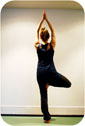 Yoga practitioners often ascribe ancient traditions to the practice of yoga. And it is true, there is an ancient tradition of yoga well documented over thousands of years.
BUT - the physical practice of yoga perhaps isn't as ancient as we think. In any typical western yoga class, we do yoga postures, putting outselves in all sorts of twists, bends and sometimes inversions. We stay there, trying to focus on our breathing and settle our minds. But this is a curious thing... The history of modern physical yoga postures isn't perhaps what we think. Possibly only originating from 100 years ago when gymnastics and yoga met in India. It is true, some of the postures can be found in a text dating from around the 14th Century, but many of the postures we practice in a class today are perhaps relatively modern. Some claim that the Yogis noticed how popular gymnastics was and how appealing the physical form was and cleverly incorporated some of the ideas blending them with yoga practices to encourage people to give it a go. Interesting, and there is some credible evidence to suggest it is true. But does it really make any difference if it is 100 or 10,000 years old? Surely what matters is that if you give it a go, it should leave you feeling better and over time help support your health and life. It should stand on its own two-feet. Does it need the justification of some ancient authenticity? Mark Singleton authored the book "Yoga Body. The origins of modern posture practice" by Oxford University Press. It depicts the rising of the physical form of yoga that we see in most yoga classes in the west. And it tries to provide some context about where it came from. He provides compelling explainations challenging some of the apparent myths of where this ancient and timeless practice originates. A good blog post providing more context about Mark's book and modern yoga practice is here. But hopefully it doesn't matter if it is authentically ancient or not. Yoga can still be experienced through your posture practice without the addition of romantic origins. Your practice should help you develop strength and stability, physically and mentally, and connect with yourself and the world around you. Over time you should start to notice that you are more compassionate, more self-aware and less selfish that will ultimately benefit those around you. Your practice helps you develop space for self-enquiry. Yes and along the way you may find yourself fitter, stronger, leaner and more toned. So maybe a yoga class isn't an ancient tradition, but it sure does help you feel better about things and is a great support in life. |
More blog articles >
Categories
All
Archives
April 2024
|


 RSS Feed
|
Bristol YogaSpace Ltd
Princes Place, Bishopston Just off Gloucester Road Bristol BS7 8NP |
|