|
Luckily the penny dropped right away with me that yoga was something I needed to prioritise. That this is what I needed to do to improve pretty much every aspect of my life. I immediately felt less stressed and tired. Literally by the end of my first 20 minute practice I felt like a weight had lifted from my body, from my mind and from my sense of wellbeing. I knew I needed to keep doing this regularly to top up these effects and I've never looked back. What else do you put in your calendar that helps you feel better, find more space and freedom in body and mind, and helps everyone around you? I practise yoga every morning before I come down and breakfast with the kids for exactly this reason. It enables me to bring more vitality and a better mood to the table, which helps my day, their day, and get us off to a good start. They are teens so they need all the good vibes they can get or it can be a rocky ride. 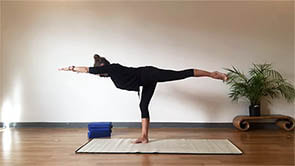 Finding the right practise, the right level of effort and ease, the right intensity and relaxation is hard to find these days. There is a lot of power yoga that is fast and vigorous, heated to intensify the experience, skipping through poses with barely a chance to catch your breath.
But there is also what we offer at YogaSpace ... there is a quietness to what we teach, it is challenging but gentle, understated but highly effective and brilliantly accessible. It can take getting used to but brings all the benefits that yoga has to offer. Add slow breath and focus to any posture and you'll discover a new way to practise. It can take time to get it to feel familiar, to get comfortable and to learn the skills of effective practise, but that is why it is called practise. The penny might not drop right away, it might not feel like the workout you thought you needed, but you'll soon find your way with it. Along with our group classes that we offer, there are some in-depth workshops coming up that will help kick start and develop your practise in a way that only small group guidance can.
0 Comments
Mostly attendees were in their 70s and 80s and they enthusiastically enjoyed exploring some yoga postures, breathing, relaxing and ultimately found it revitalising with smiles all around by the end of the short, 25 minute practice. (Or was that because lunch was next).
They sought out the handout to support them with a short, daily routine of yoga to help them rekindle this feeling in themselves. Movement, breathing, focus, coordination, the fun social interaction of a group activity - all these aspects are helpful in preventing the development of dementia and keeping active in any way is great for everyone, including elderly folk. Yoga can be gentle enough to include everyone, doesn't need fancy leggings or mats, and certainly doesn't need to feel esoteric or mystical. Let's move, breath, relax into ourselves and enjoy life a little more :-)
Appreciate what you haveTake time to appreciate what you already have and not get too caught up in high expectations for the holidays. Enjoy what comes your way, and find abundance in each moment. Notice the simple things that you take for granted and marvel at how amazing they all are! Try some home yoga practiceA great time to commit to a short daily yoga practice, even if it is only one pose, or sitting and taking 12 steady, slow breaths. Sanctuary in a bookFind sanctuary in a contemplative book, even if only for 5 minutes a day. Be in natureSpend some time with nature. If that isn't possible, spend a few minutes each day gazing at a tree or plant. Treat yourself - mindfullyTreat yourself, but try and do it mindfully so that you really enjoy it and will remember it later on and so enjoy it again when you think of it! Be kindDo a kind action every day for no particular reason. Share some joy with others in your local community, or do something kind for yourself. Random acts of kindness, even if only a smile to someone you don't know.
Here's to wishing you a wonderful holiday season and a joyful and healthy new year. x
Breathing well in yoga can seem tricky As a beginner to yoga, it can seem difficult to keep the focus on the breath. It is common to find that you’ve been holding your breath and straining in some postures. Arms and legs are just about doing what the teacher has invited you to do - but your breath, well who knows? This is particularly noticeable in a fast-paced or deeply strenuous class where the body is most dominant and anything else gets left behind as you work your way through the class. So what if my breath isn't great?Day to day we typically breath 12-15 breaths per minute. The rate, depth and quality of it can help adjust our levels of anxiety and stress, our immune system effectiveness and many more physical and mental health markers. Yoga offers profound teachings in the breath if we choose to listen that can support our health, wellbeing and awareness in our day to day lives. Familiarity helps to develop our breath focusGradually, with familiarity of a regular yoga practice, we can start to remember to breathe with a flowing and calmer breath. And eventually the breath and movements start to link together more. From here we can start to take that further still and refine into a more advanced yoga practice. Once you feel you are able to link the breath and movements together, then the power of the breath can really start to be harnessed and the refinement and quality of our yoga practice can bloom. Our nervous system will feel immense benefit from working skilfully with breath centring and we can move beyond the endorphin highs of vigorous and strenuous yoga practice and move towards maturing our yoga practice. The breath powers our yoga practiceSounds obvious, of course we need to breath to power everything that we do or we’ll collapse in a heap. But it is easy to forget about the quality of our breath when distracted or physically strained. What if you eased back from the strain and found a spaciousness in the breath to develop the power of your yoga practice instead? What would that feel like? What could it do to your yoga practice? What if we found our physical alignment from our breath?We often listen to the technical instruction from the yoga teacher: move your foot here, rotate your hip there, etc... Breath-centred practice can support us to more naturally open and expand your body into a posture, rather than teaching instruction being the main driver. Explore how your breath can position you into a natural alignment from within that is unique to your body structure and your deepening breath. Starting out with breath-centred yoga practiceThe classes at Bristol YogaSpace work with a deeply breath-centred approach to yoga. Rather than simply coordinating with our breath, which is common in many Vinyasa, Flow or Ashtanga yoga practices, we centre ourselves in the breath more deeply and use it to power the practice and direct the postures and focus.
When I started out some 20 years ago I practiced Ashtanga yoga, a vigourous and strong yoga practice, then Iyengar yoga which is technical and detailed in its formal postures. But I eventually discovered a truly breath-centred approach in Viniyoga and practice was transformed for me. Perhaps ask your teacher more about the breath when you feel ready or curious or come along to a Viniyoga class which specialises in breath-centred yoga practice, or a yoga workshop to support you to develop more breath centring in your yoga practice. Enjoy your yoga practice. “Without breath, it isn’t yoga – it is like a river without water” Krishnamacharya
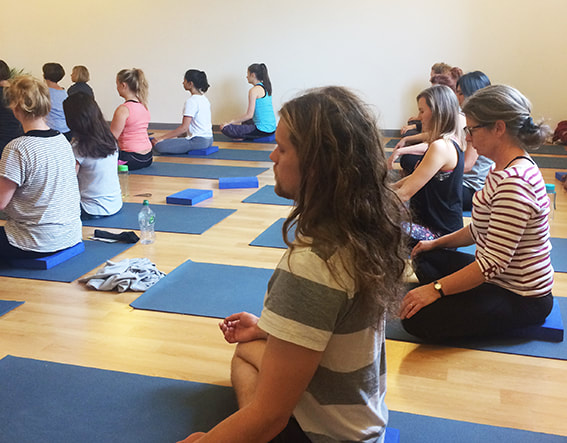
The gentle yoga class was quieter but always nice to be able to offer a more adapted and therapeutic approach to yoga practice for those who want to start there. Small groups are ideal for this approach to yoga so that we can ensure that it is adapted and suitable for you.
We are pleased to say we raised £163.28 for Off the Record, the local Bristol charity providing free mental health support for young people. Thanks for your donations and the donation jar is there this week for anyone who wants to drop-off a donation who didn't get a chance on Saturday. It was a lovely chance to collaborate with many of the other independent yoga studios in Bristol too. Our lovely neighbours, Yogawest, who offer the more alignment based Iyengar yoga joined in, Yogafurie who offer hot yoga in Ashley Down, Yogasara and Bristol City Yoga in Stokes Croft, and Flow yoga in Windmill Hill. It is so nice to collaborate with the other 6 studios, work together to share yoga to the broader Bristol community, and raise money for charity. It is great to demonstrate that in this day and age, not everything is competitive or trying to get ahead. We all love yoga and see if as a way to share our love of it with as many people as possible, bring people together and become more integrated with our communities as a collective. Looking forward to the 2018 yoga trail and working with the other yoga studios again to bring that to everyone. Thanks again for coming and we welcome you back to the YogaSpace studio in Bishopston soon! 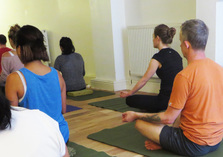 Do you know anyone who isn't busy? Really busy? Chances are you have a long list of things to do (once you've done all the things you need to do). And once you've done that, you'll find something else to keep you busy.
Radio 4 recently had a short article on how we are 'addicted' to being busy and I have to say it rang very true. As a society, it is almost a badge of achievement to say your really busy. We value you, the idea of doing, achieving, getting more things done. Really it is easier to be busy than to not be busy. But are 'busy' things distracting us from bigger objectives? We're so used to our time being filled that I'm not sure we'd be entirely comfortable with having nothing to do. When we might actually get a chance to turn our attention beyond the daily distractions. Unfortunately stress, health dilemmas, being 'burnt out' are all modern day results. And what have we really achieved? The idea that we are too busy to take care of ourselves, to maintain a balance in our lives between doing, achieving, and being and experiencing is a conversation we should probably all have with ourselves along our journey - regularly. Yoga practice, and other meditative practices try to encourage moving away from 'doing' and entering a state of 'being' as a regular habit. To become familiar with other aspects of our lives and see what arises as we do this. At least weekly, preferably daily, try simply 'being' for 5 or 10 minutes. Try sitting, gazing, breathing, meditating, a moving meditation such as yoga, whatever you like. Try it and see what happens...  Sunday is World Yoga Day as designated by the United Nations. The UN "recognises the holistic benefits of this timeless practice and its inherent compatibility with the principles and values of the United Nations."
United Nations The system of yoga was developed thousands of years ago and has been one of India's greatest gifts to the world. The human body and mind work far better with with regular use, and yoga offers a system of exercises, practices and teachings to enable the body and mind to achieve the greatest health possible. Some of the practices are rather esoteric and may not suit our western culture as well, but many of the teachings and practices are applicable to everyone and a great way of improving our health, strength, energy, awareness and becoming able to live a full life. Tune the instrument of your body and mind and see what becomes possible. Back to Bristol YogaSpace homepage.
They aren't entirely sure why, as you don't get puffed in the same way that you do doing more traditional cardiovascular exercise. But research suggests it is true and believe it is due to the combination of exercise and stress reduction.
According to the research, yoga leads to weight loss, lowers cholesterol and cuts blood pressure. And it even helps you quit smoking. The research involved 2,700 people and also found that regular yoga practice reduced blood pressure 3x more effectively then taking pills. "Yoga may provide the same benefits in risk factor reduction as traditional physical activity such as cycling or brisk walking". Says researcher Myriam Hunink of Erasmus University and Harvard University. Maureen Talbot of the British Heart Foundation said "any physical activity that can help reduce the risk of cardiovascular disease should be encouraged, and the benefits of yoga on emotional health are well established". Brilliant, get yourself to a class or start your home practice today! See our class schedule here and get in touch to find out more. Back to the Bristol YogaSpace homepage.  Yoga helps us achieve improved health and wellbeing. Here are 10 things to watch out for during yoga classes to help you get the most from your yoga practice. Avoid these and your practice will be far more effective. If you find yourself doing these things, don't be disheartened - but do explore why you do them, see what happens if you mindfully avoid them, and in time you'll find the quality of your practice improves along with the benefits.
1) Avoid being late to class If you arrive late, you are likely to be flustered and rushed. Arrive early or on time and you can settle yourself and get more from your practice. (But being late is better than not coming at all.) 2) Don't have your phone on This is time for you, time to step outside your everyday life and ground yourself. Watching the phone won't help, and you won't fully switch off from your 'doing' mode. Plus ringing or vibrating phones can be off-putting for others in the class too. 3) Don't chat Once the practice starts turn the focus inwards rather than chatting with your friends. 4) Don't eat a full meal before practice It will be uncomfortable and those twists and abdominal holds will be limited by a full belly. A small snack is fine if you need to keep up your energy, but a full meal will restrict your practice and lose some of the energetic effects. 5) Don't look around during practice The gaze is an important part of yoga practice. There is a saying, "where the gaze goes, the mind follows" - looking around encourages the mind to jump around too, and we want to try and settle the mind as much as possible. Settling the gaze, or closing the eyes for some of the postures, helps you keep your focus on your practice. Admiring the water bottle of the person in front won't help you get the benefits of yoga. 6) Avoid fidgeting In the quest to develop our focus and attention in our yoga practice, fidgeting isn't helpful. Instead, try to notice that you want to adjust your t-shirt every time you finish a pose, notice that you want to do it, but don't react to it, don't do it, simply enter into stillness and see how it makes you feel. 7) Don't push too hard Yoga practice should be engaging, even challenging, but if you find yourself constantly pushing yourself, then easing off slightly may improve the quality of your practice. We push ourselves all day, trying to get to work on-time, rushing around from task to task. During yoga, there should be an equal level of effort and grit but also of comfort and space in each pose (sthira and sukha). Notice your breath during the challenging parts of practice, if it isn't smooth and under your control, then it's time to ease off. 8) Don't drink in between postures Ideally, you should come to the class fully hydrated so that you don't need to take a drink in between each pose. Yoga practice can make you warm, even hot,and this is part of the practice which we don't want to dampen down. Usually we are drinking through habit, rather than actually needing to hydrate the body, which means we have lost our focus. Keep focused, have a drink at the end, and you'll reap more benefits. 9) Don't wear jeans They don't usually let you move freely and can be uncomfortable. Wear clothes that allow free movement. (Unless your jeans are of the full lycra variety.) 10) Don't beat yourself up If you find yourself unable to focus, fidgeting, looking around, sipping your water, running late to class, and glancing at your phone - don't beat yourself up about it. Yes your yoga practice has plenty of room for refinement, but it is still worth doing, regular practice will help things improve, and you'll feel better for having done it! Back to YogaSpace homepage  We are delighted to open our doors on Sat 13th September and invite everyone to join in our free yoga classes, meet the teachers and enjoy refreshments.
We are inviting you and your friends to join us, whether you are a beginner or just want to try another style of yoga or a new teacher. Everyone is welcome! Free class schedule 11:45 - 12:45 Flow yoga with Virginie and Sheila 13:00 - 14:00 Beginners yoga with John 14:25 - 15:15 Viniyoga with Clara 15:30 - 16:30 Beginners yoga with Clara All levels of fitness and experience are welcome to all the classes. YogaSpace along with most of the other yoga studios across Bristol are all opening our doors for the 2nd Bristol Yoga Trail. Last year's was great fun so hoping to make this year's even better. Hope to see you there! See the Bristol Yoga Trail website here > Back to YogaSpace homepage >  About 3 or 4 months ago a woman in her late forties joined my class who had been diagnosed with high blood pressure. She wanted to know if yoga would help and was willing to give yoga a try. She came every week, almost without fail, and enjoyed the classes.
We took it gently at first, modifying postures where needed, ensuring that the practice was safe and giving her body time to get used to moving in new ways. After some practice, she took well to the ujjayi breathing, and even came to a weekend workshop to explore taking yoga further. I had a wonderful email from her this week saying she has had her high blood pressure re-tested and it is back to normal and she credits the yoga practice for this. However let's give the credit right back to her. She was motivated to do something positive to help herself with her health situation. She was ready to make changes to her lifestyle that were contributing factors to her high blood pressure (high stress and lack of exercise). She stuck with it, even though at first she saw no tangible improvement in her blood-pressure and asked how long it would take for the yoga to 'work'. She helped her health situation for herself and she now has her own reward. All of us have this ability within us to help ourselves and I'm inspired by students who come and practice the yoga teachings in their own way for their own aims. It does take perseverance; it isn't overnight. Often when we arrive at a class we are looking to improve imbalances or issues that have crept up over years or decades, and these won't be changed in a few sessions. But hopefully by finding a yoga practice that you enjoy you will enable the improvements to come. Another woman in her early thirties came to my class in December. She was a British Athlete, a snowboarder, who had suffered a serious concussion and was unable to continue her rigorous slope and gym training. With frequent, regular yoga practice, she was able to continue her physical training in a way that adapted itself to her injury. She found a sense of peace of mind and confidence. Then in February she went on to win Britain's first Olympic medal on snow. Well done Jenny Jones! Yoga is adaptable to any injury, illness or health situation. When skillfully applied, it can be a great support and help you pave your way to improvements. The tools are varied and some may be more appropriate than others - bodywork, breathwork, meditation. No matter what your situation there will be something you can do to get started. Please get in touch to find out more or read more about yoga therapy here. Back to YogaSpace homepage  Mindfulness - to be mindful. To be aware of each moment and to act with intention. Christmas - beyond the religious festival it is to fill stockings, make plans, see friends and family, plan menus, arrange travel, eat wonderful rich foods etc. It's busy, fun, tiring, stressful, overindulgent, exciting, a whirlwind ... a mix of many things. For many people, trying to maintain a sense of mindfulness when life gets hectic is a challenge most of us struggle with. Those who go to a yoga class will already have a headstart in maintaining a mindful attitude. To practice yoga is to develop a mindful body and movement with mindful breath. Maintaining a mindful approach helps you to enjoy the whirlwind. To experience joy and gratitude for the festivities all around us. It is all too easy miss if your too busy to notice. Try this... To help you remain mindful try setting aside as little as 5 minutes each day to re-set your intentions. Sit quietly, perhaps alone, or over a quiet cup of tea. Do nothing else except gaze softly at a blank wall, table, or natural object and settle your gaze there gently, or close your eyes. Notice your breathing, and connect with yourself for a short while. Note your intentions for the day and resolve to pursue them. Try this for 5 minutes each day through the Christmas period. Try not to get carried away in the potential whirlwind but to stay connected to what is important to you and to enjoy the moments. If you find yourself feeling too rushed or stressed, take a few deep breaths and ask yourself 'what would my 'mindful self' do?', and then act. Remember to take time to enjoy your Christmas festivities. Keep up some yoga or other grounding practice if you can. And see you in class in the new year. Back to Bristol YogaSpace homepage 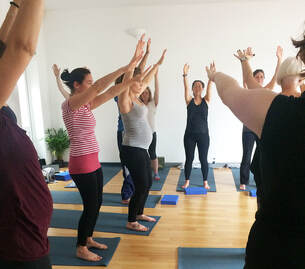 Each week in my yoga classes in Bristol, I see people come in to class feeling tired, perhaps agitated by their day, and usually more than a little lack lustre.
When they leave, there is a noticeable difference in how they seem. They are usually settled, calmer, and more comfortable in themselves. A better version of themselves. They have changed. During the class we move the body, opening, expanding, stretching, challenging, engaging and working the entire body in some way. We breathe fully, slowing and extending the breath where possible. And we try to focus internally and our breath. I came across a fascinating talk by Amy Cuddy recently called 'Your body language shapes who you are'. Amy is a social psychologist. She researches body language at Harvard Business School and she was interested in researching how body language not only effects other people's perceptions of us, but how it actually effects our own body chemistry. In her research she concluded that by standing up tall with the feet apart and with the arms raised and open for only 2 minutes daily, we can raise our testosterone levels (dominance hormone giving a confident outlook), and reduce cortisol levels (stress hormones). Simply by changing our body position in this way, we are altering our hormones and brain chemistry. We are changing ourselves to not only feel but become more powerful, confident and laid back. Great! In yoga classes it is very likely that you'll do a lot of arm raising like she describes, standing with the feet apart, reaching up, opening up. Also combining this with bending forwards, twisting and so on. So her research suggests that we are actually changing ourselves and our hormones in a very real way by doing this. I took two things from Amy Cuddy's inspiring talk - firstly, that yoga postures seem very aligned to the body changes she talks about, and that by doing them you'll actually become more confident and laid back. - and secondly, that only a little practice, taken regularly, can make a big difference! Pass it on... PS. I love TED Talks! Back to Bristol YogaSpace homepage 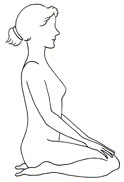 I've recently been inspired by reading about minimalism as an approach to living. I've been enjoying how it reflects many values that I hold close, and that I've been cultivating through my study and practice of yoga. It has also inspired me to have a really good clear out of my home!
The idea of living simply with less to enjoy life more is one that has taken more prominence for me since becoming a yoga teacher. I teach viniyoga - yoga that is applied carefully and adapted to suit those who are participating. Viniyoga embodies a minimalist approach to yoga practice. It doesn't require a super heated yoga studio, or any special kit (no blocks, belts, bolsters or even mats required). Nor does it require a certain level of fitness or skill to participate. All you need is you, your body, your breath, and your attention. In fact this is why it initially appealed to me. I wanted to start practicing yoga at home but found the foam blocks, folding chair, bolster, strap and bricks used in class rather unwieldy and off-putting to home practice, and questioned how essential they really were. Upon discovering the simplicity of viniyoga I was hooked, home practice became encouraged, and there has been no looking back. I often do use a sticky yoga mat, but at home I'm equally happy practicing on a carpet (or even floorboards if necessary as I did last week when I was away but it's a little less comfortable). I use my body's own weight to create resistance to help strengthen and energise as I practice the various postures (asana) of yoga. Viniyoga has a minimalist approach to the repertoire of asana usually practiced. At it's core there are a carefully selected set of primary asana, each serving an important purpose. These asana are gradually explored in further and further depth, with a deepening emphasis on breath and focus and techniques around these as the practice advances. This makes it a very accessible form of yoga practice as you can deepen your yoga practice and continue to develop without the need for a gymnast's or dancer's body. Let's face it, if you started practicing yoga as an adult, that isn't a realistic ambition for most people. And beyond the daily bodywork and breathwork to maintain and develop our health, yoga cultivates mindful compassionate living, minimising the dependence on material attributes in our lives so that we have space to spend each day in an enjoyable, meaningful way. A wonderful way to live with amazing potential. Back to the YogaSpace homepage.  Yoga practice isn't just confined to the mat. The ancient discipline suggests bringing intention to how you conduct yourself - including what you consume. So choosing to eat foods that benefit you both inside and out, are part of practicing yoga throughout your day. But how to do this and still enjoy what you eat?
I love quinoa (pronounced 'kin wa') which is a grain originally from South America. My friends are bored of me saying how great it is and coming up with new and interesting ways of eating it, so I thought I'd share my favourite recipe with you in case you hadn't discovered it yet. It also happens to be the International Year of Quinoa as designated by the United Nations as it is so easy to grow and so nutritious. It isn't just a grain, it is a seed packed full of protein, calcium and all things good. Its delicious (when spiced up a little), nutritious, good for you and our rather lovely planet. Anyway, jump on the band wagon and try it! ~~~ Spicy Quinoa Salad 1 cup of uncooked quinoa 2 cups of boiling water 1-2 onions 2 cloves of garlic 1 red pepper 1 cup of cooked sweetcorn 1 tin of black or adzuki (or any other) beans drained 1 tsp hot sauce or chopped chilli 1/2 tsp cumin powder 2 tbsp lime juice 2 tbsp olive oil salt and pepper to taste handful of fresh chopped coriander Step 1: Cook the quinoa. Add the quinoa and boiling water in a pan, put the lid on and simmer for 10 mins, then turn off the heat and leave for 10 more mins with the lid on. Then fluff with a fork and allow to cool. Step 2: While the quinoa is cooking, lightly saute the onion, garlic and red pepper, and cook the sweetcorn. Step 3: Mix together the sweetcorn, beans, hot sauce, cumin, lime juice, olive oil, salt, pepper and coriander. Step 4: Once the quinoa has cooled enough, mix all together in a big bowl and enjoy! Check out this great quinoa recipe site www.LoveQuinoaRecipes.com Back to Bristol YogaSpace homepage 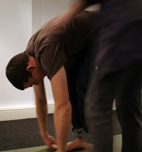 After being asked about it for ages by some of my male students and friends, we've finally decided to start up a new men's yoga class at YogaSpace on Saturday mornings (9.30am, all levels of fitness and stiffness welcome!).
Update since 2013 when we first published this - the class didn't last and the numbers coming were low, but there are men in most of our classes and they are very welcome. Men's yoga isn't different necessarily, but it is nice to be in a group where you feel comfortable and men tend to be stiffer than women, particularly in the legs and back, and in need of better core strength, all yoga classes help improve these areas. Traditionally yoga was only for men and it is only the last 50 years or so that it has been opened up to women by yoga teaching pioneers such as Krishnamacharya and Iyengar. So tell your friends and blokes who would benefit from a bit more strength, flexibility and de-stressing in their lives! Men welcome to all classes at Bristol YogaSpace. See our full offering of yoga classes here > Back to YogaSpace homepage  As we set our good intentions for the new year (including re-igniting your commitment to yoga classes!) it is sometimes helpful to get some inspiration...
The Dalai Lama shared some wonderful advice on how to live in the new millenium, and I love to read them at the start of each year. Enjoy in a short video or read below! The Dalai Lama's 18 rules for living 1. Take into account that great love and great achievements involve great risk. 2. When you lose, don't lose the lesson. 3. Follow the three Rs: 1. Respect for self 2. Respect for others 3. Responsibility for all your actions. 4. Remember that not getting what you want is sometimes a wonderful stroke of luck. 5. Learn the rules so you know how to break them properly. 6. Don't let a little dispute injure a great friendship. 7. When you realize you've made a mistake, take immediate steps to correct it. 8. Spend some time alone every day. 9. Open your arms to change, but don't let go of your values. 10. Remember that silence is sometimes the best answer. 11. Live a good, honourable life. Then when you get older and think back, you'll be able to enjoy it a second time. 12. A loving atmosphere in your home is the foundation for your life. 13. In disagreements with loved ones, deal only with the current situation. Don't bring up the past. 14. Share your knowledge. It's a way to achieve immortality. 15. Be gentle with the earth. 16. Once a year, go someplace you've never been before. 17. Remember that the best relationship is one in which your love for each other exceeds your need for each other. 18. Judge your success by what you had to give up in order to get it Back to Bristol YogaSpace homepage > 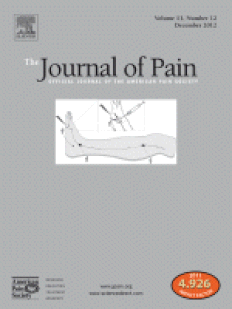 A common complaint - stiff shoulders, limited mobility in the neck and discomfort in the upper back, shoulder, neck area. Accumulated tension, often caused by working at a desk, poor posture, cycling etc. all contribute to tension and stiffness related pain. There are some great yoga postures that gently get to the root of the problem and release blockages and free up the area. And without them, or regular massage, it doesn't resolve by itself. We don't really do any natural movements that will release that part of the body, unless we make the extra effort. So it just gets worse over time. So many of us hunch our shoulders and have a rounded upper back as a result.
It is good to see yoga being clinically researched to demonstrate how it can help. I see benefits in my students and anecdotally hear how it helps them regularly. I currently have two yoga therapy students who are greatly benefitting from the gentle releasing of the shoulders and neck. You need to work carefully and gradually, but gentle stretching and movements will help. See more on the research here: Journal of Pain Research paper http://www.jpain.org/article/S1526-5900(12)00779-1/abstract Yoga Journal Article http://blogs.yogajournal.com/yogabuzz/2012/12/yoga-for-neck-pain.html Get in touch to find out more about how yoga can help you if you suffer from neck pain. bristolyogaspace@gmail.com Back to homepage >  Affecting up to a third of breast cancer survivors, fatigue can't be underestimated for its impact on a sufferers daily life. Fatigue can be debilitating and is often not taken seriously enough.
A study published recently has demonstrated the benefits of practicing yoga to help overcome persistent fatigue in breast cancer survivors. 12 weeks of yoga practice in a randomised, controlled study not only found significant reduction in fatigue, but also increased vigor. Details on the study can be found here (1). Also see the British Wheel of Yoga article here. This doesn't mean heading to your nearest group yoga class however. When suffering from fatigue it is important not to be exhausted by the yoga. A group yoga class would likely be too much to begin with. Short, gentle, regular yoga practices would be more beneficial, gradually progressing as improvements are felt. Personalised home yoga practice, or therapeutically applied yoga, is most effective when embarking on yoga for those suffering from fatigue. Get in touch for more info on getting started with your own home practice designed to meet your health and energy needs. (1) Bower, J. E., Garet, D., Sternlieb, B., Ganz, P. A., Irwin, M. R., Olmstead, R. and Greendale, G. (2012), Yoga for persistent fatigue in breast cancer survivors. Cancer, 118: 3766–3775. doi: 10.1002/cncr.26702 Return to YogaSpace homepage  Many fitness classes are available just to drop-in whenever you feel like it. So why do we encourage students to take Yoga as a course of classes?
Yoga is of course different from a fitness class, and our aim is to encourage everyone to get the most they can from learning about and practicing Yoga. It's true, you can get some of the benefits from your very first Yoga class, or by turning up every now and again to a class. We are very open to students coming along to classes in that way. Simply by stretching and moving the body, and breathing more deeply, you are starting to energise and open up a bit more. But this is just the very tip of a rather large iceburg, and our aim is to deepen your experience. One of the aims of Yoga is not only to improve your overall health, but also your wellbeing, and much more besides. This includes physical and mental wellbeing. Yoga is working not only at the physical level, but also on the mind, and many of the practices of Yoga aim to help cultivate clear thinking and a sense of connection to your body, and also aim to open up and release the tension and energy in the body. By committing to a course of Yoga, you are actually taking the first step towards disciplining your body and mind, agreeing that every week, whether or not you mind or body is saying to you you'll give it a miss this week, you turn up anyway and work on cultivating positive practices. And you'll always be glad you did. Over the weeks of the course, you'll start to become familiar with the basic, foundation aspects of the postures, and get to know your bodies stiffnesses and weaknesses feeling them gradually improving. You'll also start to learn the more subtle aspects of practice: your ability to gradually control your breathing (in turn starting to control your over-active mind and intensifying what you are able to achieve in each posture), developing your focus and attention during practice, releasing deeply held tension and blocks, and the ability to gradually deepen your weekly experience. It's true, some of the techniques take years to learn, but each week you gradually take it further, and each term, you'll build on the various layers of practice that will enhance your experience and get the most benefit. I've been practicing Yoga for many years, and I still take regularl classes and always learn something new. Regular practice also makes practicing Yoga safer. Allowing your body to become familiar and confident with the unusual positions you may find yourself in. By regularly stretching and maintaining health in the muscles, joints you can worry less about if you can get into the postures and start to develop the more subtle aspects of practice. We're just getting going with the Autumn term where there are many Yoga Courses you can enrol in. Our experienced teachers are passionate about Yoga and all of us have studied the philosophy and methodologies of Yoga in depth over many years giving us the opportunity to carefully structure the classes so that they are appropriate to develop each student. Feel free to get in touch to find out more. Don't just do Yoga, learn Yoga Back to homepage |
More blog articles >
Categories
All
Archives
April 2024
|

 RSS Feed
|
Bristol YogaSpace Ltd
Princes Place, Bishopston Just off Gloucester Road Bristol BS7 8NP |
|