
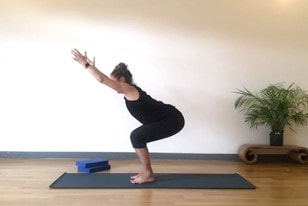
 One thing you discover as you age, is that things ache more. There are more sore bits, injuries take longer to heal and niggles can frustrate our efforts to be pain free.
The body simply isn't as resilient as it was, and we need to work harder to maintain stability and mobility. We are all aging, and we can't wait for a pain-free day to do something positive to turn the tide. It takes more effort to hold our ground than it ever has before and waiting will only set us back further. I had a recent minor skin surgery (thankfully nothing to worry about). It didn't stop me practicing. I had to modify my yoga postures and work around any forward bending so that the stitches could work their magic. My sprained ankle a couple of years back when I slipped into a hole in the park didn't derail my practice. My foot went black and blue and was swollen so cross legged was off the cards, but I simply had to avoid things that hurt, and ensure that I showed up to my practice with extra care and attention. A bit like if I have a sore in my mouth, I don't stop cleaning my teeth. I just brush them more carefully, respect the sore bits, but take care of the rest of my precious teeth and gums in the meantime. If your waiting for the day that nothing aches to get to your mat . . . The Pros - there are lots! Working with an injury can be brilliantly insightful. You'll discover an easily enhanced focus as the sheer risk of not paying attention is far greater. It is easy to view injuries as bad. Granted, no-one invites them, we all want to enjoy the freedom that good health affords. But discomfort is such an amazing opportunity for self-enquiry. Instead of fighting against, and getting frustrated by, your ailments and symptoms, treat the sensations of the cold / achey hip / swollen ankle etc., as the body giving you information about what it can and can't do today. Be curious about the patterns in the mind, the way judgement and negative bias creeps in, and the potential for your intentions to be derailed by over-thinking. All patterns worth getting to know. It is tempting to let movement and meditative practices drop off the priority list in the face of discomfort, congestion, fear etc. but it can be such an interesting and valuable time to practice. It affords new insights and rewards that are very different than if you were feeling fine. And the yoga still helps, even when it is more gentle than perhaps you would choose. You always feel better, more grounded, relaxed, energised, you'll recover sooner, and it can even adjust your relationship to the ailment to become more positive. I found Covid completely fascinating. I had new sensations in my body. My smell went completely. And mentally I knew I had 'it' - the dreaded thing that was sweeping across the world. It was in me, right now. If I allowed it, it could feel a bit scarey. But also there was a level of excitement. How interesting?! That thing that everyone is talking about, I get to experience it first hand, before anyone else I know. Was I going to be okay? Who knew. A completely new experience - how curious, a new adventure. I was lucky enough to have it while on holiday and at no point did I feel so ill that I contemplated hospital. There was even something of a relief at getting it. There was no need to avoid getting it any more, at least for a few weeks after I felt bullet proof. A layer of worry that I didn't even realise I had been carrying around had vanished. That was worth discovering - that I didn't even realise I was that worried. I had discovered a lot about what 'worry' in its more subtle guise looks and feels like. Worth knowing. And from there I just had to go with what unfolded next. My yoga practice was a revelation. My postures and breath felt different. Each practice held a sense of fascination at what it was actually like to be in a body with Covid. The physical sensations, plus the stuff in my mind. The temptation of dramatic narrative and fear of what might happen next, drawing me away from what was actually my direct experience of what was happening. The vividness of experiencing my new body, within the familiar ground of my daily practice, helped deepen my practice and level of attentiveness and meditation. All brilliant insights to carry forwards. Ultimately life is often out of our hands. We like to think we are in control, we often try to be which can take so much energy. Illness and injury are times when situations are taken out of your hands in a visceral way. And this has great value and benefit. This doesn't necessarily mean showing up to class with a streaming cold, but show up to something. Show up online and take it gently, take a short video, do your own personal practice. There is always something you can do, and it is always worth the effort. The old adage life is a journey, not a destination, applies at its best here. The journey is possibly the opposite of what you would have chosen, but there is plenty to enjoy anyway, it might just take a shift of mindset. Definitely something worth practicing.
0 Comments
 Hot yoga is really popular as an alternative to regular temperature yoga classes. Hot yoga is a studio-based yoga practice in a super-heated room (42 degrees celcius - imagine Egypt in the summer then pour in extra humidity) where the aim is to work through a physical yoga practice and sweat a ton, then lie down and bask in the heat as you recover from the effort. It's intense and many people love it. Why super heat a yoga class?The claims about benefits of hot yoga practice are many: - Detoxes the body - Sweating is good for you - Improved flexibility ... and so on. The science may not back this up, but those who love it feel the results and swear by it. Those who don't love it, probably never go back. I fall into the latter camp and find the claims to be subjective but if it benefits you and you enjoy it, then keep doing it. As with all physical yoga practices, be cautious not to over stretch and be particularly careful with your joints, that they stay within a safe and comfortable range of motion. I have had many injured hot yoga practitioners come with knee, elbow and shoulder injuries from hot yoga classes so go carefully. Sometimes when the heat is on and the practice is intense, it is hard to listen to the inner voice advising you to ease off. Hot yoga can get competitive and that makes it harder to draw back from a pose when necessary. So applying your own sensible body-awareness skills to your practice is paramount when the heat intensity is turned up. Is it more beneficial than not-hot yoga?I'm biased, as I've been practicing yoga for 20 years and find an ambient room or even a cool space a wonderful way to practice. I can engage fully in my yoga practice when I'm able to turn the attention inwards rather than feeling overly hot or sweaty. I tend to heat up during my practice anyway, even if just taking a breathing (pranayama) practice. I recently came across an interesting thesis which undertook a study comparing hot yoga practitioners alongside regular temperature Hatha yoga practitioners. The aim was to measure the effects of yoga practice on physiological and psychological fitness in young men and women over an 8-week period. Health metrics that were monitored include BMI, blood pressure, flexibility, peak oxygen consumption, back depression, anxiety and depression metrics. Hot yoga participants worked at a significantly higher cardiovascular intensity and spent more time at a higher heart rate throughout the classes. But even with this, over the 8-week period, both hot yoga and Hatha yoga groups saw the same improvements in body composition and flexibility and also in anxiety and depression scores. So the outcome observations suggest that there are real, significant health benefits to engaging in both forms of yoga practice but there was no final measure on any additional psychological or physiological benefits gained by hot yoga training. So by all means, do hot yoga practice if you love it and feel no ill effects from it, but from what we can tell, the health benefits are not greater doing it in a hot and sweaty room. Another article to read more on this can be found here > Home yoga practice?I'm a big advocate of home yoga practice. Little and often can often bring about the most benefit - it is free to everyone and has an intimacy to it that you rarely get in the classroom. Ask any of my students who get a free home yoga practice handout at the end of each term to go and try at home. So learning your yoga practice skills in a group class or with personal yoga tuition and then starting to apply those skills in your home practice is a wonderful way to practice yoga. I've written about home yoga practice before here. One of the limiting factors to hot yoga practice is that you have to go to the studio regularly to do this, and the costs add up. (Don't get me started on Mr Bikram, the hot yoga business mogul and his exuberant love of money and Rolls Royces - as a business model he turned hot yoga into a money spinner). Of course the communities that develop around group classes are wonderful and valuable, but the tie in to the studio and the costs involved can become problematic. What about subtlety in yoga practice?Beyond the intense physicality of the hot yoga class, also remember there is an inner essence to yoga practice. The internal connection through body, breath and mental focusing that go beyond the measurable health metrics outlined in the comparative study. I'm not sure the subtlety of my pranayama or meditation practice would be possible in an intensely heated environment yet the crown of my yoga practice can often be found here (thus my bias to comfortable temperature practice). My inner meditative focus might be externally drawn to feeling overly hot or to the physical sensations of sweating. But I get that some folks need the intensity of a very physical practice to keep them focused out of their busy minds.
I guess my final thought is that usually any yoga practice is better than no practice - so ultimately do whatever is likely to motivate you and do what you you will enjoy. Thanks to Kalin Shephert Gawinski for sharing the abstract to their study from 2012. 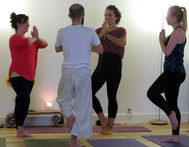 Yoga classes have begun to polarise. From the fast and sweaty vinyasa flow and Ashtanga yoga, to the restorative and Yin yoga classes that have emerged. They seem to be on two ends of a wide spectrum of modern postural yoga classes.
People turn to yoga for a range of different reasons. Perhaps you've come to it to feel stronger or more flexible, or you enjoy the heat and sweat that it can build. Perhaps you enjoy the stillness and calm that it offers, or the good nights sleep it gains you. You may have an injury or pain that you are looking to sort out, or perhaps you just want that elusive feeling of wellbeing. They are all good reasons to practice yoga, and finding the right approach for your practice is more than just the immediate feeling it leaves you with. Your practice should leave you feeling better than when you started, and progressively better in the long term. You may be surprised that I even need to state this. But I regularly speak to practitioners and even yoga teachers who switch between two extreme styles of yoga practice in an effort to keep themselves balanced. Taking a strong vinyasa class supplemented with a Yin or restorative class seems a simple contradiction in approach. It's nice to change pace and explore from time-to-time. But to pursue the challenge and energy which then leaves you needing restoration to enable you to continue this cycle seems worth reflecting on. It is a cycle we often undertake in life which we then replicate on our yoga mats. Yoga practice is for the long term. It should support your primary aims as well as deepening your sense of internal balance with consistent practice. The balance of yoga doesn't begin on the mat, it beings before you get there, with your intention and choice of how to practice. Back to YogaSpace Homepage 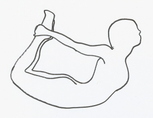 Yoga is great for improving our health and wellbeing. A well trained teacher will ensure that the class is safe and suitable for all participants. But yoga injuries do happen, and here are my top tips to ensure your yoga practice remains safe and enjoyable.
1) Listen to your body Yoga shouldn’t hurt. If it doesn't feel right, or your starting to feel strain in a vulnerable part of the body (e.g your knees, neck or lower back) then ease off and take a breather. Your body is yours so take care of it and work within safe limits, especially while you are getting started. 2) Start gently and build it up Don't go to your first class expecting to do everything. Whether you are seeking physical strength or improved breathing, connecting with yourself, focus, or relieving stress, there is no magic wand or quick fix to achieve these aims. Incremental changes will happen, and allowing yourself time to add challenges and layers of technique as you get used to the practices will bring the most benefit. Everyone has limitations, so be gentle with yourself and don’t be tempted to push it too soon. 3) Regular practice If you drop in to a class from time to time, your body will always be starting from the beginning and if there are any vulnerabilities, they are more likely to flare up. Regular practice will allow you to develop strength and stamina so that you can then further your practice. If issues or niggling pains do start to emerge, you'll have time to understand what triggers them and find ways around them. 4) Talk to your teacher Your teacher should be well-trained in a wide-range of injuries and ways to adapt the postures and techniques to suit you. Not all yoga teachers have this training (especially is they took their training over just a few weeks or months where they may only have covered postures, choreography and basic anatomy). Make sure your teacher understands any injuries or past vulnerabilities that you have so they can suggest alternatives or adaptations. You need to take some responsibility here and pro-actively talk to your teacher to ensure they can support you. 5) Yoga should never hurt Worth saying twice. Really. If it hurts, your body isn’t ready to go that deeply into it so ease off. Yoga classes aren’t (or shouldn’t be) competitive. Just because your neighbour on the mat next to you can do it, it doesn’t mean you should be able to. The class is there to benefit you, and every body in the class is different. So do things that will be helpful and have the wisdom and patience to know when to rest and wait for the next pose. Enjoy safe yoga practice and you will reap the rewards for years to come! 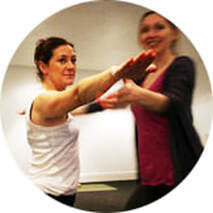 About 3 or 4 months ago a woman in her late forties joined my class who had been diagnosed with high blood pressure. She wanted to know if yoga would help and was willing to give yoga a try. She came every week, almost without fail, and enjoyed the classes.
We took it gently at first, modifying postures where needed, ensuring that the practice was safe and giving her body time to get used to moving in new ways. After some practice, she took well to the ujjayi breathing, and even came to a weekend workshop to explore taking yoga further. I had a wonderful email from her this week saying she has had her high blood pressure re-tested and it is back to normal and she credits the yoga practice for this. However let's give the credit right back to her. She was motivated to do something positive to help herself with her health situation. She was ready to make changes to her lifestyle that were contributing factors to her high blood pressure (high stress and lack of exercise). She stuck with it, even though at first she saw no tangible improvement in her blood-pressure and asked how long it would take for the yoga to 'work'. She helped her health situation for herself and she now has her own reward. All of us have this ability within us to help ourselves and I'm inspired by students who come and practice the yoga teachings in their own way for their own aims. It does take perseverance; it isn't overnight. Often when we arrive at a class we are looking to improve imbalances or issues that have crept up over years or decades, and these won't be changed in a few sessions. But hopefully by finding a yoga practice that you enjoy you will enable the improvements to come. Another woman in her early thirties came to my class in December. She was a British Athlete, a snowboarder, who had suffered a serious concussion and was unable to continue her rigorous slope and gym training. With frequent, regular yoga practice, she was able to continue her physical training in a way that adapted itself to her injury. She found a sense of peace of mind and confidence. Then in February she went on to win Britain's first Olympic medal on snow. Well done Jenny Jones! Yoga is adaptable to any injury, illness or health situation. When skillfully applied, it can be a great support and help you pave your way to improvements. The tools are varied and some may be more appropriate than others - bodywork, breathwork, meditation. No matter what your situation there will be something you can do to get started. Please get in touch to find out more or read more about yoga therapy here. Back to YogaSpace homepage  The time for good intentions is all around us. Perhaps we want to become fitter, more flexible, leaner, more creative, more focused, happier? All of these are possible. And to help, here are my top 5 tips for getting started. (Also read our GETTING STARTED page for new students.)
1) Start small - Pick one thing. A new class? Or a mini yoga practice at home that you can do every day just for 10 minutes (just pick 3 or 4 yoga postures and do that for a couple of months). Don't choose both of these, just choose one thing as that is effort enough. Focus on getting the habit started, rather than the results that you want to get from doing it. 2) Be realistic - pick the time that you can do every day or every week that is sensible and that can work for you more often than not. Then pick a class or a short daily practice, 3 or 4 poses that you think you can do and that you will enjoy. Your focus should be on getting the habit ingrained. The rest will follow. 3) Get started - the main thing is that you do it. It doesn't matter if you do it well, or if you have a cold so need to go gently, or that it is raining and cold and you don't fancy going to your class. The main thing is to get started, do it, and do it in a way that you can stick to. Get yourself on your yoga mat every week or every day. 4) Tell someone your getting started - this will help you make the commitment and increase your likelihood of doing it! 5) Don't miss two in a row. If you need to miss one, then ok. Try not to miss two in a row as then the habit is broken and all your good effort may not come to fruition. Keep going, even if only gently if your under the weather. If your away, then try to make up the class or the practice in another way that still counts. Good luck with getting your new yoga practice in place. The benefits will be worth it, all you need to do it turn up and do it :-). Happy new year!  After being asked about it for ages by some of my male students and friends, we've finally decided to start up a new men's yoga class at YogaSpace on Saturday mornings (9.30am, all levels of fitness and stiffness welcome!).
Update since 2013 when we first published this - the class didn't last and the numbers coming were low, but there are men in most of our classes and they are very welcome. Men's yoga isn't different necessarily, but it is nice to be in a group where you feel comfortable and men tend to be stiffer than women, particularly in the legs and back, and in need of better core strength, all yoga classes help improve these areas. Traditionally yoga was only for men and it is only the last 50 years or so that it has been opened up to women by yoga teaching pioneers such as Krishnamacharya and Iyengar. So tell your friends and blokes who would benefit from a bit more strength, flexibility and de-stressing in their lives! Men welcome to all classes at Bristol YogaSpace. See our full offering of yoga classes here > Back to YogaSpace homepage  A common complaint - stiff shoulders, limited mobility in the neck and discomfort in the upper back, shoulder, neck area. Accumulated tension, often caused by working at a desk, poor posture, cycling etc. all contribute to tension and stiffness related pain. There are some great yoga postures that gently get to the root of the problem and release blockages and free up the area. And without them, or regular massage, it doesn't resolve by itself. We don't really do any natural movements that will release that part of the body, unless we make the extra effort. So it just gets worse over time. So many of us hunch our shoulders and have a rounded upper back as a result.
It is good to see yoga being clinically researched to demonstrate how it can help. I see benefits in my students and anecdotally hear how it helps them regularly. I currently have two yoga therapy students who are greatly benefitting from the gentle releasing of the shoulders and neck. You need to work carefully and gradually, but gentle stretching and movements will help. See more on the research here: Journal of Pain Research paper http://www.jpain.org/article/S1526-5900(12)00779-1/abstract Yoga Journal Article http://blogs.yogajournal.com/yogabuzz/2012/12/yoga-for-neck-pain.html Get in touch to find out more about how yoga can help you if you suffer from neck pain. bristolyogaspace@gmail.com Back to homepage >  Running the Bristol Half Marathon this Sunday?
What you learn on the yoga mat either at your group class or in your own home yoga practice can be invaluable to help keep you injury free, focused, motivated, energised and able to stay the distance. Here are some top-tips: 1) Tall posture Yoga practice often starts by standing on the mat, focusing on standing with awareness, with attention and length in the spine, having an open chest, and then relaxing your shoulders and breathing deeply. Bring this feeling of readiness yet relaxation into your pre-run preparation and take some deep breathes to stay focused and relaxed. Stand with both feet evenly supporting you and be aware of the shift of balance from side to side of the feet and body. This awareness of balance can carry on through into your running to help keep you centred and grounded for the duration of the run. 2) Stay aware to prevent injury It is easy to become part of the crowd and lose your internal awareness, meaning your perhaps not listening to your body and maybe accumulating tension into your running. This is when injuries are far more likely. Stay focused and aware of your running and how your body is responding. Keep aware of how your breathing is, and try to relax and let go of any tension as you notice it coming into the body. During the run, every 10 minutes or so, spend 10 breaths checking that you are breathing well, with a good exhalation, that your shoulders and body are relaxed, and that your posture isn't starting to collapse as you become tired. Reenergise yourself and keep your focus going. 3) Open your chest to breathe Breathing properly is very important to ensure your body is working at its optimum, and many people only use a portion of their full breath, meaning their bodies have to work harder. As you tire, everything wants to collapse downwards, including your chest and shoulders. Or perhaps you become tense and your full capacity for breathing 'seizes up' as you will yourself on. Keep your chest open, shoulders back and relaxed, shoulder blades down, arms and hands relaxed. Maintaining this openess will enable optimal breathing. 4) Take time to exhale Your yoga practice will have taught you to exhale completely, and this takes time and practice. If you become out of breathe during running, it usually is because your not breathing out deeply enough. Focus on your exhale, breathe out from the belly drawing your belly button in towards the spine, take a few deeper exhales and than relax into a breathing rhythm that allows full exhalation. 5) Some Downward Facing Dog After the run, fully stretching will help your recovery and leave you in less discomfort the next day. Include some time spent in downward facing dog as this can be great for stretching your calves, hamstrings and your back. Stay in the pose for at least 8 full breathes (breathing slowly), longer if comfortable for you. Each inhalation spend time lengthening the spine and extending the hips away from the shoulders, each exhalation allowing the legs to take a little more of the stretch. Taking some time to relax and stretch here to help your recovery from the run. (Not advis Most of all, enjoy your run and good luck! Back to YogaSpace homepage > 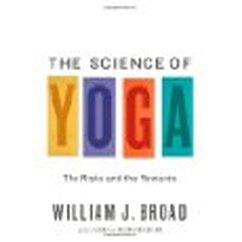 The Science of Yoga: The Risks and Rewards Interesting article on the Today show this week interviewing William Broad who has published a book on the benefits and risks of yoga (The Science of Yoga: The Risks and Rewards).
He highlights the caution that some yoga postures should be treated with, and the importance of a well trained teacher to introduce some of the more advanced and riskier yoga poses. Shoulderstand and Plough postures, along with Headstand. These postures aren't for beginners or those with any neck issues and who aren't pretty fit and strong. The stakes are high if stroke risk is considered from tearing the vertebral arteries when putting the neck in these extreme conditions. Respect for the bodies limitations, and the posture, and plenty of preparation to ensure the student is ready and the pose is appropriate. Group classes are possibly not the place to explore them unless the group is experienced, and appropriate teaching and supervision is essential. Listen to the interview here... http://news.bbc.co.uk/today/hi/today/newsid_9693000/9693928.stm Back to Homepage 1,000s of people get injured each year practicing yoga or taking yoga classes. Surprising perhaps when the reputation is that it is supposed to be safer than many physical activities that have more obvious associations with injury. With doctors referring people to yoga classes with health issues, what is going on here?
Yoga is usually low impact and if done with attention and with good and appropriate instruction should and can be safe, even for less able bodies and those with serious health conditions. But not all yoga classes are suitable for everyone, you have to find the right yoga for you. And once there, perhaps the safe perception of yoga leads people into a false sense of security and usual self-restraint is forgotten just because they are in a yoga class? I have worked with students who have come from other yoga classes after sustaining injury, and have myself been injured from a well-intentioned adjustment from an enthusiastic teacher that left me in pain for a week. (He encouraged me to go that bit further into a twist by placing a hand to my back and gently pushing, I immediately knew I had pulled something and needless to say, haven't returned to his class.) Students who come to my group classes tell me of existing health issues in the initial health form they fill in. Most are happy to listen to advice and modify what they do to accomodate their issue, erring on the side of caution, especially at first. Very occassionally the student still wants to have a go even with advice recommending them not to, sometimes they get away with it, sometimes you see problems starting to arise. As a recent New York Times article comments: Training for yoga teachers can vary, and classes are so large in some studios that instructors do not pay enough attention to everybody. This only makes the problem more difficult, as the safe perception of yoga, compounded by large classes with teachers who have taken perhaps as little as only a month of training could be a recipe for the injured contingent to grow. One Bristol yoga class disclaimer left me rather nervous and must be signed before participating - stating that: 'wrongful death could occur due to negligence', blimey. Of course disclaimers are extreme, and I signed the same disclaimer when I went sky-diving, but I kind of expected it then somehow... Perhaps it is a good reminder to us that ultimately we are responsible for our own bodies and should remain so at all times, even when we are sky-diving or in a yoga class. As yoga teachers, we are often working with people who aren't strong and fit when they begin. People who may have been sitting at a desk all day before they come to class and have associated weaknesses, stiffnesses and perhaps susceptibilities waiting for the right moment to reveal themselves. A student new to my class will often hear the instruction, go for all the easiest options offered today to see how your body responds over the next day or two. Even after understanding existing health concerns you never know whether an old sciatic problem will feel aggravated or a back problem might rear its head and complain. Working carefully initially, with safe instruction and supervision gets you started more safely. And it is one of the many reasons why regular practice is key. To come intermittently may mean that you feel you can work harder than you should, you managed to do this last time so you should be able to do it today, even though you haven't practiced in 3 weeks. Regular practice with a developmental approach and a well-trained teacher will open up doors for you that will be safe and in the long more rewarding than the thrill of having survived an extreme experience. Preparing you for the extreme experience if that is what you are seeking. Enjoy yoga, take care and practice safely until you are confident that you can stretch yourself beyond your usual boundaries. Find stability first before you reach too far. |
More blog articles >
Categories
All
Archives
April 2024
|
 RSS Feed
|
Bristol YogaSpace Ltd
Princes Place, Bishopston Just off Gloucester Road Bristol BS7 8NP |
|