 Advertisers, social media, TV, radio, friends, family, sales people, chores - many things want a slice of our attention. It is a valuable resource and there often doesn't seem like enough to go around.
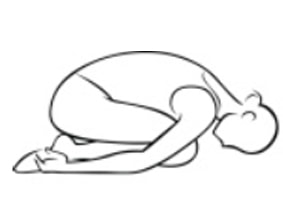
Your attention is literally for sale. Advertisers pay good money for it, news companies are funded by it. Treat it with high regard and choose what you do with it wisely. Yoga practice includes the art of cultivating sustained attention towards that of your choosing. In our practice we gradually discover that we can 'do' less, so that we can 'be' with ourselves more fully. Our practice might start with 'attention grabbing' poses and bold breath focus, and from there the practice unfolds. We gradually settle into being more comfortable in our body, our mind settles down, and we are able to discover relative stillness. We turn away from the external world for a while, discover our own internal sanctuary and find a wellspring from which to restore ourselves. Have you noticed that in yoga practice we start with more energising, external facing, open poses, and gradually become quieter, more internally aware, more subtle? Our attention is encouraged to settle onto the body, the breath, the inner sensations, and this process unfolds as we continue through our practice. What feels like a stormy body and mind at the beginning of practice, becomes more calm and steady by the end. The art of paying attention, of intentionally choosing what you attend to, is really a radical act in today's world as it goes against what external forces would command. But it is a skill well worth cultivating. Find more space and freedom in your life as you give your attention to what you choose, rather than by-design what you encounter. Spend your attention wisely and reap the rewards.
0 Comments
My 20202020 was a year like no other. It was completely unexpected and included things I never thought I would do in my life.
An incredible yearGiven all the limits and constraints of the year, I found it incredible in many ways. Some things of course I'm hoping we move on from. But I've learned so much, and continue to learn from all that has been thrown at us. My meditation practice allows me a welcome space to sit with the tragedy of the year, and the heightened visibility of inequality and privilege demonstrated through the virus's progression through different communities and countries and the BLM movements. A clear re-evaluation of life and what to do with the privilege that I have is an ongoing project. Perhaps we've all come to value our health and way of life more than ever before. We can more easily recognise the gifts of our health and our privilege and ensure we use these gifts well in our daily lives. Top tipsStart small, for achievable and sustainable progress. From how we make ourselves more resilient in our own health, through our lifestyle and dietary choices, to how we interact with others and treat our neighbours and engage with our local communities. My top tips for every day:
There are lessons for each of us from 2020. If any positives are to come of last year, let's find them and take them to heart.
 Hot yoga is really popular as an alternative to regular temperature yoga classes. Hot yoga is a studio-based yoga practice in a super-heated room (42 degrees celcius - imagine Egypt in the summer then pour in extra humidity) where the aim is to work through a physical yoga practice and sweat a ton, then lie down and bask in the heat as you recover from the effort. It's intense and many people love it. Why super heat a yoga class?The claims about benefits of hot yoga practice are many: - Detoxes the body - Sweating is good for you - Improved flexibility ... and so on. The science may not back this up, but those who love it feel the results and swear by it. Those who don't love it, probably never go back. I fall into the latter camp and find the claims to be subjective but if it benefits you and you enjoy it, then keep doing it. As with all physical yoga practices, be cautious not to over stretch and be particularly careful with your joints, that they stay within a safe and comfortable range of motion. I have had many injured hot yoga practitioners come with knee, elbow and shoulder injuries from hot yoga classes so go carefully. Sometimes when the heat is on and the practice is intense, it is hard to listen to the inner voice advising you to ease off. Hot yoga can get competitive and that makes it harder to draw back from a pose when necessary. So applying your own sensible body-awareness skills to your practice is paramount when the heat intensity is turned up. Is it more beneficial than not-hot yoga?I'm biased, as I've been practicing yoga for 20 years and find an ambient room or even a cool space a wonderful way to practice. I can engage fully in my yoga practice when I'm able to turn the attention inwards rather than feeling overly hot or sweaty. I tend to heat up during my practice anyway, even if just taking a breathing (pranayama) practice. I recently came across an interesting thesis which undertook a study comparing hot yoga practitioners alongside regular temperature Hatha yoga practitioners. The aim was to measure the effects of yoga practice on physiological and psychological fitness in young men and women over an 8-week period. Health metrics that were monitored include BMI, blood pressure, flexibility, peak oxygen consumption, back depression, anxiety and depression metrics. Hot yoga participants worked at a significantly higher cardiovascular intensity and spent more time at a higher heart rate throughout the classes. But even with this, over the 8-week period, both hot yoga and Hatha yoga groups saw the same improvements in body composition and flexibility and also in anxiety and depression scores. So the outcome observations suggest that there are real, significant health benefits to engaging in both forms of yoga practice but there was no final measure on any additional psychological or physiological benefits gained by hot yoga training. So by all means, do hot yoga practice if you love it and feel no ill effects from it, but from what we can tell, the health benefits are not greater doing it in a hot and sweaty room. Another article to read more on this can be found here > Home yoga practice?I'm a big advocate of home yoga practice. Little and often can often bring about the most benefit - it is free to everyone and has an intimacy to it that you rarely get in the classroom. Ask any of my students who get a free home yoga practice handout at the end of each term to go and try at home. So learning your yoga practice skills in a group class or with personal yoga tuition and then starting to apply those skills in your home practice is a wonderful way to practice yoga. I've written about home yoga practice before here. One of the limiting factors to hot yoga practice is that you have to go to the studio regularly to do this, and the costs add up. (Don't get me started on Mr Bikram, the hot yoga business mogul and his exuberant love of money and Rolls Royces - as a business model he turned hot yoga into a money spinner). Of course the communities that develop around group classes are wonderful and valuable, but the tie in to the studio and the costs involved can become problematic. What about subtlety in yoga practice?Beyond the intense physicality of the hot yoga class, also remember there is an inner essence to yoga practice. The internal connection through body, breath and mental focusing that go beyond the measurable health metrics outlined in the comparative study. I'm not sure the subtlety of my pranayama or meditation practice would be possible in an intensely heated environment yet the crown of my yoga practice can often be found here (thus my bias to comfortable temperature practice). My inner meditative focus might be externally drawn to feeling overly hot or to the physical sensations of sweating. But I get that some folks need the intensity of a very physical practice to keep them focused out of their busy minds.
I guess my final thought is that usually any yoga practice is better than no practice - so ultimately do whatever is likely to motivate you and do what you you will enjoy. Thanks to Kalin Shephert Gawinski for sharing the abstract to their study from 2012. 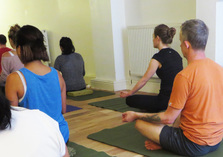 Do you know anyone who isn't busy? Really busy? Chances are you have a long list of things to do (once you've done all the things you need to do). And once you've done that, you'll find something else to keep you busy.
Radio 4 recently had a short article on how we are 'addicted' to being busy and I have to say it rang very true. As a society, it is almost a badge of achievement to say your really busy. We value you, the idea of doing, achieving, getting more things done. Really it is easier to be busy than to not be busy. But are 'busy' things distracting us from bigger objectives? We're so used to our time being filled that I'm not sure we'd be entirely comfortable with having nothing to do. When we might actually get a chance to turn our attention beyond the daily distractions. Unfortunately stress, health dilemmas, being 'burnt out' are all modern day results. And what have we really achieved? The idea that we are too busy to take care of ourselves, to maintain a balance in our lives between doing, achieving, and being and experiencing is a conversation we should probably all have with ourselves along our journey - regularly. Yoga practice, and other meditative practices try to encourage moving away from 'doing' and entering a state of 'being' as a regular habit. To become familiar with other aspects of our lives and see what arises as we do this. At least weekly, preferably daily, try simply 'being' for 5 or 10 minutes. Try sitting, gazing, breathing, meditating, a moving meditation such as yoga, whatever you like. Try it and see what happens... 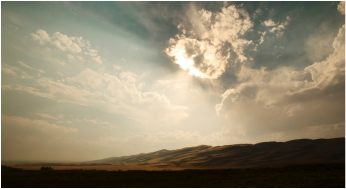 Yoga offers us a chance to take practices that will help make our body and mind stronger, more stable and less rigid and allow them to come back to a more harmonious and well-balanced state of being.
If you're a beginner to yoga, you may have an advantage to those experienced in yoga practice in some ways. You come to class being open and curious to what is about to happen. The uncertainty of not knowing what you are going to be doing in your class, the unfamiliar postures and ways of breathing all demand an attention and a focus to pull it off. There is an openness and natural effort, and less expectation. These are qualities that are essential ingredients in cultivating a healthy body and mind and enabling all that yoga has to offer to unfold for us. Without the right attitude of attention and alertness in our yoga practice, our mind and body will stay in its usual patterns. Most of us are creatures of habit -- we're slouching, breathing poorly, thinking about the same old stuff (e.g. what is for dinner or mentally shopping for whatever has captured our attention...) -- all habits that we aim to improve upon through yoga practice. Once we become experienced at yoga breathing, posture, technique and focus we can lose that fresh edge and that natural effort. We can become comfortable, perhaps complacent, or develop additional unhelpful habits rather than less. The freshness of the beginner practitioner is a gift and something experienced practitioners may need to remind themselves of when they take yoga practice. Those with experience can become mechanical and repetitive as they practice during class, missing the potential of each posture and each breath. Being fully present in your practice, is part of the practice. The full physical and mental harmony available by taking simple practices, can be missing for the experienced practitioner. As beginners to yoga we often feel like we don't know what we are doing. We should see this as a gift. Familiarity in yoga postures, breathing and the mechanics of meditation techniques can be a double edged sword. Trying to maintain a 'beginners perspective' will help to benefit more fully from each practice. Is the picture above simply another beautiful sunset, simliar to ones you have seen before? The initial impression may suggest this because of the familiarity of such images - but remind yourself to see it with fresh eyes, as if for the first time. A wonderous, unexplored moment in time with untold beauty on this amazing planet, and an unexplored day to follow. Beginners eyes can discover so much more. Beginners and those with experience, a reminder to bring along your beginners mind to your yoga practice.
Have a clear out
Have a physical clear out. Sort out a room, a cupboard, perhaps even just a drawer. Empty it out and only put back the things that you use and need. Creating physical space is a wonderful way of feeling more spacious internally too. Let go of something old We need to let go of something old first. Perhaps move on from a commitment, a habit, a club, a stagnant relationship, anything that feels like it isn't positive any longer and not worth reinvesting in. Re-assess your commitments and see what would be worth replacing with something more positive and vibrant. Practice gratitude Take a moment to count your blessings. Feeling grateful each day is a wonderful practice to cultivate. It enables you to appreciate what you have, to re-envigorate your enthusiasm for them, and importantly, to break the cycle of always wanting something that you don't have. Gratitude can help you feel more spacious and avoiding taking on more things that you may not actually need. Hey, I have opposable thumbs, thank you! Move and breath Yoga and other embodied meditative practices are wonderful at creating a feeling of physical and mental space. They support you to physically become stronger and de-compress yourself, enabling your body to be more more stable and move more easily and naturally - ie. feeling more spacious. Easing out tensions, stresses and blocks enables us to feel more comfortable with ourselves. And using the mental discplines of breath focus, moving and still meditations to allow us to let go of unhelpful thought patterns and feel mentally spacious and open are all essential to our wellbeing. Notice the present moment Practice being in the present moment more often. We often spend our days carrying around old memories and worries, or bring along anticipations and fears of the future, and perhaps feel burdened and weighed down. Try letting go of these and practice appreciating and fully experiencing each day and moment as it unfolds. I always love reflecting on the Dalai Lamas 18 rules for living this time of year too. Happy new year!  About 3 or 4 months ago a woman in her late forties joined my class who had been diagnosed with high blood pressure. She wanted to know if yoga would help and was willing to give yoga a try. She came every week, almost without fail, and enjoyed the classes.
We took it gently at first, modifying postures where needed, ensuring that the practice was safe and giving her body time to get used to moving in new ways. After some practice, she took well to the ujjayi breathing, and even came to a weekend workshop to explore taking yoga further. I had a wonderful email from her this week saying she has had her high blood pressure re-tested and it is back to normal and she credits the yoga practice for this. However let's give the credit right back to her. She was motivated to do something positive to help herself with her health situation. She was ready to make changes to her lifestyle that were contributing factors to her high blood pressure (high stress and lack of exercise). She stuck with it, even though at first she saw no tangible improvement in her blood-pressure and asked how long it would take for the yoga to 'work'. She helped her health situation for herself and she now has her own reward. All of us have this ability within us to help ourselves and I'm inspired by students who come and practice the yoga teachings in their own way for their own aims. It does take perseverance; it isn't overnight. Often when we arrive at a class we are looking to improve imbalances or issues that have crept up over years or decades, and these won't be changed in a few sessions. But hopefully by finding a yoga practice that you enjoy you will enable the improvements to come. Another woman in her early thirties came to my class in December. She was a British Athlete, a snowboarder, who had suffered a serious concussion and was unable to continue her rigorous slope and gym training. With frequent, regular yoga practice, she was able to continue her physical training in a way that adapted itself to her injury. She found a sense of peace of mind and confidence. Then in February she went on to win Britain's first Olympic medal on snow. Well done Jenny Jones! Yoga is adaptable to any injury, illness or health situation. When skillfully applied, it can be a great support and help you pave your way to improvements. The tools are varied and some may be more appropriate than others - bodywork, breathwork, meditation. No matter what your situation there will be something you can do to get started. Please get in touch to find out more or read more about yoga therapy here. Back to YogaSpace homepage  Mindfulness - to be mindful. To be aware of each moment and to act with intention. Christmas - beyond the religious festival it is to fill stockings, make plans, see friends and family, plan menus, arrange travel, eat wonderful rich foods etc. It's busy, fun, tiring, stressful, overindulgent, exciting, a whirlwind ... a mix of many things. For many people, trying to maintain a sense of mindfulness when life gets hectic is a challenge most of us struggle with. Those who go to a yoga class will already have a headstart in maintaining a mindful attitude. To practice yoga is to develop a mindful body and movement with mindful breath. Maintaining a mindful approach helps you to enjoy the whirlwind. To experience joy and gratitude for the festivities all around us. It is all too easy miss if your too busy to notice. Try this... To help you remain mindful try setting aside as little as 5 minutes each day to re-set your intentions. Sit quietly, perhaps alone, or over a quiet cup of tea. Do nothing else except gaze softly at a blank wall, table, or natural object and settle your gaze there gently, or close your eyes. Notice your breathing, and connect with yourself for a short while. Note your intentions for the day and resolve to pursue them. Try this for 5 minutes each day through the Christmas period. Try not to get carried away in the potential whirlwind but to stay connected to what is important to you and to enjoy the moments. If you find yourself feeling too rushed or stressed, take a few deep breaths and ask yourself 'what would my 'mindful self' do?', and then act. Remember to take time to enjoy your Christmas festivities. Keep up some yoga or other grounding practice if you can. And see you in class in the new year. Back to Bristol YogaSpace homepage  Fascinating radio programme on Radio 4 where we explore findings that show we are made up of 10x more microbial cells than human cells. We are a community of billions of micro-orgamisms. In fact we are more a microbiome than human. The community is constantly exchanging between our environment and other people, in constant interchange. We're not as individual as we think we are, sharing much of our environment internally aswell. Which I find mind-boggling and food for thought. So who am 'I' again?
Listen to it by following this link: http://www.bbc.co.uk/programmes/b01rvpkb Back to Bristol YogaSpace homepage 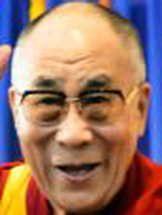 As we set our good intentions for the new year (including re-igniting your commitment to yoga classes!) it is sometimes helpful to get some inspiration...
The Dalai Lama shared some wonderful advice on how to live in the new millenium, and I love to read them at the start of each year. Enjoy in a short video or read below! The Dalai Lama's 18 rules for living 1. Take into account that great love and great achievements involve great risk. 2. When you lose, don't lose the lesson. 3. Follow the three Rs: 1. Respect for self 2. Respect for others 3. Responsibility for all your actions. 4. Remember that not getting what you want is sometimes a wonderful stroke of luck. 5. Learn the rules so you know how to break them properly. 6. Don't let a little dispute injure a great friendship. 7. When you realize you've made a mistake, take immediate steps to correct it. 8. Spend some time alone every day. 9. Open your arms to change, but don't let go of your values. 10. Remember that silence is sometimes the best answer. 11. Live a good, honourable life. Then when you get older and think back, you'll be able to enjoy it a second time. 12. A loving atmosphere in your home is the foundation for your life. 13. In disagreements with loved ones, deal only with the current situation. Don't bring up the past. 14. Share your knowledge. It's a way to achieve immortality. 15. Be gentle with the earth. 16. Once a year, go someplace you've never been before. 17. Remember that the best relationship is one in which your love for each other exceeds your need for each other. 18. Judge your success by what you had to give up in order to get it Back to Bristol YogaSpace homepage > 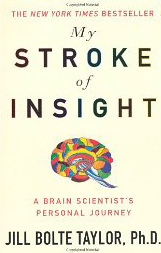 Jill Bolte Taylor is a Harvard Brain Scientist who had a life changing experience: a stroke in the left side of her brain. This offered her the extraordinary experience of analysing the progression of left and right brain function first hand as her left brain function subsided. She describes her intermittent experiences over four hours during the stroke, experiencing moments of pure stillness, fascinating insights and being an energy being connected to the universe. The chatter of the brain turns off as her left brain function is hampered, and she experiences the purity and wholeness of what we really are as her right brain comes to the fore. An interesting and inspiring experience which is worth seeing in her 20 minute TED talk.
Watch the video here >> The tools and techniques of Yoga could be described as aiming to allow us to quieten our left brain, to bring it under our control by training and discipline, to allow us to experience and tap into the right side of our brain. Being in the present, letting go of the baggage that our years of living have left us with, and becoming fully aware of our sensory experiences, being a witness, completely at peace with ourselves and the world. She says 'the more time we choose to run the deep inner peace circuitry that is the right brain, the more peace we will project into the world and the more peaceful the world will become.' Yoga movement and body work, breathing, sensory experience, and meditation are all tools that help us to still the left side of the brain and run our deep inner peace circuitry and find our own freedom. Back to homepage
 Many fitness classes are available just to drop-in whenever you feel like it. So why do we encourage students to take Yoga as a course of classes?
Yoga is of course different from a fitness class, and our aim is to encourage everyone to get the most they can from learning about and practicing Yoga. It's true, you can get some of the benefits from your very first Yoga class, or by turning up every now and again to a class. We are very open to students coming along to classes in that way. Simply by stretching and moving the body, and breathing more deeply, you are starting to energise and open up a bit more. But this is just the very tip of a rather large iceburg, and our aim is to deepen your experience. One of the aims of Yoga is not only to improve your overall health, but also your wellbeing, and much more besides. This includes physical and mental wellbeing. Yoga is working not only at the physical level, but also on the mind, and many of the practices of Yoga aim to help cultivate clear thinking and a sense of connection to your body, and also aim to open up and release the tension and energy in the body. By committing to a course of Yoga, you are actually taking the first step towards disciplining your body and mind, agreeing that every week, whether or not you mind or body is saying to you you'll give it a miss this week, you turn up anyway and work on cultivating positive practices. And you'll always be glad you did. Over the weeks of the course, you'll start to become familiar with the basic, foundation aspects of the postures, and get to know your bodies stiffnesses and weaknesses feeling them gradually improving. You'll also start to learn the more subtle aspects of practice: your ability to gradually control your breathing (in turn starting to control your over-active mind and intensifying what you are able to achieve in each posture), developing your focus and attention during practice, releasing deeply held tension and blocks, and the ability to gradually deepen your weekly experience. It's true, some of the techniques take years to learn, but each week you gradually take it further, and each term, you'll build on the various layers of practice that will enhance your experience and get the most benefit. I've been practicing Yoga for many years, and I still take regularl classes and always learn something new. Regular practice also makes practicing Yoga safer. Allowing your body to become familiar and confident with the unusual positions you may find yourself in. By regularly stretching and maintaining health in the muscles, joints you can worry less about if you can get into the postures and start to develop the more subtle aspects of practice. We're just getting going with the Autumn term where there are many Yoga Courses you can enrol in. Our experienced teachers are passionate about Yoga and all of us have studied the philosophy and methodologies of Yoga in depth over many years giving us the opportunity to carefully structure the classes so that they are appropriate to develop each student. Feel free to get in touch to find out more. Don't just do Yoga, learn Yoga Back to homepage 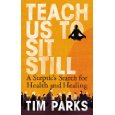 I'm enjoying a good book by Tim Parks at the moment, 'Teach us to sit still: a sceptics guide to health and healing'. It's a brilliantly honest account of a middle-aged academic's journey to overcoming chronic health issues through relaxation and meditation. I highly recommend it, a good read (perhaps skipping the literary references if not your thing) with amazing descriptions of what it is to struggle with the process of meditation. And he really is a sceptic so one I'll be passing it on to a couple of people who might be able to relate!
Back to YogaSpace homepage  Yoga is more popular than ever before but people are noticing (including Radio 4 who broadcast 'Corporate Karma' last week) how some of the traditional values and teachings of yoga are being left behind in its popularity.
When you think of yoga do you immediately think about someone doing something rather bendy that looks impossible to most of us? About the pursuit of physical health? Or do you think about sitting in meditation? About having the stability to sit and connect with something beyond your everyday persona? Yoga is innovating itself in our modern, Western world. It is becoming accessible to many by appealing to the desire to be fitter and healthier. It is becoming big business for some with brands such as Bikram Yoga and Lulu Lemon making £millions for the shareholders. But in the quest for popularity and profit, are the compromises ever going to allow yoga's true value to shine through? Physical pursuits for fitness are everywhere. Even the smallest village has a keep fit class, probably even a yoga class at the village hall once a week. In cities there are numerous yoga centres all offering an array of quick benefits and fitness promises. We are appealing to what people want. Yoga provides this but it also has far more potential than offering a quick feeling of calm and energy before heading home after a days work. This is just the tip of a rather huge iceburg. The teachings do make you feel good, we can all experience that, but that isn't by any means it. The teachings are ancient and teach about a path which if followed diligently, with a true guide, can lead to an ultimate reward far beyond any material posession or physical health. Along the way you'll learn about yourself and the world you live in. Some call it a spiritual path, which is a draw to some and offputting to others. The initial feel-good feeling is the thing that captures most of us, and that keeps us coming back for more. The days I don't practice yoga I wish I had, I'm less comfortable and less settled, and less connected with myself and the people around me. Some of yoga's teachings (not taught in the majority of classes) can seem somewhat esoteric. You might be sitting and chanting, or humming, or huffing and puffing with your breath. For us rather reserved British this is all perhaps a little uncomfortable until you get used to it. So the physical form is something we can get more readily, and feel okay with, and then perhaps the rest will come once you start to enquire a little more deeply. I should make it clear that I'm by no means knocking the appeal of the physical fitness and health through yoga, far from it. Although I'm not a supporter of the movement to add yoga as an Olympic sport, competing for who is 'best' at it (which Bikram Choudhury is a keen supporter of) - the physical postures are essential to get many people interested. It is also essential to maintain fitness and health to be strong enough to meditate. But by focusing just on the physical form, it feels a little bit like sitting on a treasure chest full of gold coins, finding a single gold coin and being entirely happy with this, blissfully unaware of the riches right beneath you. Return to YogaSpace homepage Worth sharing, the Guardian website has just published their 'How to Meditate' series. They have some step-by-step guides, videos and podcasts designed to support people wanting to meditate. Worth trying if you have wanted to give it a go or tried and found it hard in the past.
Enjoy here: http://www.guardian.co.uk/lifeandstyle/meditation On the BBC website there is a news report about the rising levels of stress and the amount of time employees take off work because of it. http://www.bbc.co.uk/news/business-11617292
Life has never seemed busier and the holiday season is no exception! Working, commuting, relationships, family, health - they can all be richly rewarding but also take energy and effort and stress can accumlate along the way. Generally we keep going until we reach a point where we collapse in a heap and need to rethink what we are doing. My students often come to me with chronically stiff shoulders, holding their stress in their posture or they talk about having difficulty relaxing or sleeping. And of course they come to yoga to take the time and make the effort to release and relax. Yoga helps us to take time out to allow the body and mind to relax, helping to release some of the tension that builds up. It gives us time to reset, to reevaluate the stress we take on and to have some perspective on what the causes are. Stress is notoriously tricky to spot early, it can sneak up on you and then spill out over into your life before you really realise you are stressed at all. Yoga is an obvious choice for relieving stress and tension and the benefits are becoming widely known. It gives us a regular space to help release it and restore our natural balance. Here is a suggestion to help you release some stress over the holiday period... Candlelight Meditation - First find a quiet, comfortable place to sit where you won't be disturbed and place a lit candle before you - Settle into a soft gaze into the heart of the flame - Try not to hold your gaze too firmly, feel free to blink as you need to and not force it - Continue gazing into the candle for a few minutes if possible, noticing the variations and gentle movements of the flame - After a few minutes, gently close your eyes, seeing if you can maintain the image of the candle in your minds eye. Hold the image of the candle for as long as possible. If you lose it, open the eyes and gaze at the candle again and repeat - Mostly, enjoy the candle meditation and enjoy the calm, still feeling it can leave you with. Tip - if you find this difficult, some yoga postures beforehand can help settle you before you start. Our lives are generally noisy and busy, with constant distractions coming from all directions. At work people are often chatting and on the phone, the tapping of keyboard keys, radios and TVs, traffic and so on. Silence is hard to come by except perhaps at night once we go to bed (if we are lucky enough to live somewhere quiet!). People often say they can't hear themselves think. Many people are so un-used to silence that they find it awkward, perhaps even uncomfortable and put background noise on to keep it at bay.
This Wednesday is an international day to celebrate silence. Just this day is trying to remind us that silence is something to be valued and to bring in to our lives more often. The Big Shhhh aims to spread stillness and to unite us. Why? you may ask, in this age of achievement, what will it get me? Silence can be a chance to get to know yourself, to listen to yourself, and to allow the mind to reflect without the distraction of noise and without these distractions sapping our energy. It can be a chance to let go of negative distractions and allow happiness to emerge, and to refocus and remain grounded. But of course, silence isn't necessarily easy, and when starting out, is impossible for some people. Once you stop physically, and listen to yourself, you realise there is a lot going on that you may have either missed before, or even actively avoided if what you find isn't comfortable to you. What might remain if you stop the noise around you? Spending time in silence, once you find yourself able to physically stop, can be a revelation. Meditation is usually taken in silence, and yoga is usually taken with only the sound of your breathing, movements if practicing asana (postures), and perhaps the sound of the teachers voice if in a group yoga class. These days some yoga classes even include background music, or uplifting music, to keep the body moving and the mind focused on the practice. It takes discipline and effort to remain silent, and to remain still. Very difficult for some and something that only regular practice and supportive guidance will help. Silence crosses disciplines and is found at the core of yoga and meditation and also in church and prayer. Once you are able to find silence, what will you find there? An open question, and only one way to find out... Back to homepage This question is one that I get asked regularly. The responses are different for different people and of course, there isn't a right or wrong answer, yoga is different things to different people...
Yoga for fitness? People take to physical activity for the challenges that are supposed to help keep us supple and healthy. Yoga can provide a range of challenges, some intense and others more relaxing depending on the yoga practice. The movements can help you feel better in yourself (as long as you work within your own limits and progress sensibly), can strengthen you and keep you suitably supple. However here is definitely more to it than a regular fitness regime, otherwise why not go to the gym? Yoga for stiffness? Yoga is notorious for its bendiness and many people believe they need to be bendy to do yoga. Not so! The bendy poses are not in the majority, and many postures are completely accesible for stiff people too and over time the stiffness will ease up so yes, great to help improve stiffness. Yoga for posture improvement? Yoga is perfect for strengthening and improving posture. After all, the physical postures or asana were originally designed to keep the body strong and stable to enable hours of meditation by the yogi. So the benefits of practising yoga asana can support our modern day posture needs too. Yoga for relaxation? Stretching and limbering up the body can help encourage the body to let go of tension. Along side this, focusing our minds on body and breath work can help relax our minds from the tensions of daily grind. Yoga can help us ease up on tension and encourage the body, and the breath, and even the mind, to relax. Yoga for stress-relief? It is well known that the work in yoga leaves people feeling calm and with a pervasive sense of well-being. Some people report this also from running, swimming, eating chocolate... Yoga definitely helps both release stress, and also to have the ability to recognise it earlier. By taking the time to listen to our bodies and minds, and recognising the signs of stress early, and by understanding what the causes are, we can begin a deeper pattern of change to prevent stress-related problems. Yoga for healing? Yoga is known for its therapeutic help, and I work with a lot of private yoga students who will testify to this. For a variety of reasons, they find a regular yoga practice helps improve their bodies and also helps them with much more besides. Movement and good breathing can help heal the body and mind and encourage repair, renewal and strength. Yoga can be as gentle or as strong as is needed to ensure it is beneficial to whoever is practicing it. I work with people recovering from sometimes serious illness who physically are very limited. But there is always something you can do that will gradually lead to greater ability and hopefully progress you back to health either physically, mentally or more often than not, both! Yoga for spirituality? Yoga has the ability to calm down and settle an overactive body and mind. We can stop worrying, still the incessant chit chat of the mind and move towards creating a refreshing calm, a reprieve to help us handle every day life. This in turn can lend itself to meditation and contemplation of what spirituality might mean to us. By accessing a still and settled mind we can experience the world from a different perspective and perhaps notice things we hadn't noticed before, bringing us closer to who we really are. Yoga to support personal change The philosophy and psychology of yoga has many teachings on how we perpetuate our habits, good and bad. It teaches how we can reflect on them, what their triggers and patterns are, how to know ourselves well enough that we can ultimately move towards changing them and ourselves. Yoga practice is a starting point for personal change and development. As I told a private student today, one of the joys of yoga is that it is sooo efficient. It can do all this and more in a relatively short practice, the more you practice, more the of these benefits you can get. So why do we practice yoga? Is it so we can become a little bendier than we were before? Or perhaps there is more purpose than this? Back to homepage Having done some recent work on yoga for the older age group (culminating in yoga suitable for those with hip replacements which is on the more extreme end of the scale of things to consider), and also having discussed it with some of the over 55s in my current group classes, it seemed that it would be good to put on a class especially for over 55s. Not because they aren't just as capable in many cases of working well in a mainstream class, but more to give that feeling of familiarity of the mix of people in the room.
As bodies get older, the impressions of life manifest themselves differently on different people. Knees, back problems, stiffnesses are different from person to person. Some people are strong and fit in their older years, others less so. The class will be a chance to offer a range of adaptations suitable to the people who attend the class and will be a safe and comfortable place to practice yoga. Beyond our physical limitations, Ramaswami has also taught on yoga for the three stages of life and the type of yoga practices that would be recommended at different stages. The first stage, the early years and childhood where the body is still growing and the mind is still maturing so a focus on asana (postures) is the emphasis. The middle years where we are adults, working, raising families and having busy and full lives, where we maintain our health through asana and progress our pranayama (breath control) practice. Then the later years, when we are more reflective, the body is left with impressions of our lives, here the focus moves towards maintaining health through asana, pranayama along with developing meditation and reflection. The stages of life supported by the different limbs or petals of yoga. More on yoga and the stages of life are in this excellent book Yoga for the Three Stages of Life, Srivatsa Ramaswami. Anyway, the new class, Yoga for Over 55s, will be starting on September 14th and will be from 11.15am until 12.15pm. Beginners very welcome! |
More blog articles >
Categories
All
Archives
April 2024
|

 RSS Feed
|
Bristol YogaSpace Ltd
Princes Place, Bishopston Just off Gloucester Road Bristol BS7 8NP |
|