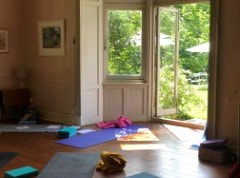
Slow downWe took the opportunity to slow down and really give space to our yoga practice and to go deeper. Each practice was longer than a usual class giving more time to delve, spend time exploring poses or pauses for longer and gaining familiarity with the ‘health mantra’ to cultivate our health and nourishment. Nourish It could sound self-indulgent to spend a weekend like this, but truly it isn’t. Each of us needs nourishment so that we can show up in our everyday lives with more energy, kindness, patience and good humour and do all the things we need to do better. The hope is that periods of deeper practice rekindle the love of regular practice to inspire you to continue to nourish yourself regularly, to show up on your mat and avoid running on empty for too long. BreathThe interest and discovery of breath was a real take-away for many. The workshop seemed to gravitate towards this through the interest of everyone there. It was so great to have time to experiment with the effects of breathwork in our practice and to understand how it can profoundly change our state and effect how we feel energetically, physically and mentally. Working with the breath takes patience, I remember working with a breathing technique for 5 years (!) before I finally got it and was able to gain the benefits from it. Yes it was worth it! It can be such a useful and vital aspect of ourselves to cultivate. ResultsThe feedback from the weekend has been wonderful. “Beautiful house, gardens, great food and very friendly. I enjoyed it so much and learned so much about the breath which I think has transformed my practice and I'll take forwards. I loved how relaxed it all was and a perfect gentle rhythm to the days. Thank you so much.” “An outstanding weekend” “A fabulous weekend. Feeling relaxed and grounded. Thank you.” ContinueI’m already looking forward to the next one and will be planning it soon. Watch this space as the last one has been fully booked since last December.
In the meantime, keep yourself nourished, including through your yoga practice. I have weekly classes which keep you practicing reguarly, offer 121s to support you with starting or developing your home practice, have online resources to help you practice in a fruitful way, and some nourishing Autumn workshops available soon. Please get in touch if I can help or give me a ring if you want any guidance on your yoga practice or getting started. Clara x
0 Comments
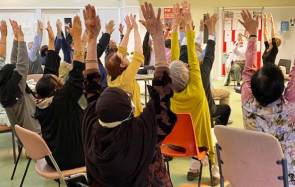
Mostly attendees were in their 70s and 80s and they enthusiastically enjoyed exploring some yoga postures, breathing, relaxing and ultimately found it revitalising with smiles all around by the end of the short, 25 minute practice. (Or was that because lunch was next).
They sought out the handout to support them with a short, daily routine of yoga to help them rekindle this feeling in themselves. Movement, breathing, focus, coordination, the fun social interaction of a group activity - all these aspects are helpful in preventing the development of dementia and keeping active in any way is great for everyone, including elderly folk. Yoga can be gentle enough to include everyone, doesn't need fancy leggings or mats, and certainly doesn't need to feel esoteric or mystical. Let's move, breath, relax into ourselves and enjoy life a little more :-)
Appreciate what you haveTake time to appreciate what you already have and not get too caught up in high expectations for the holidays. Enjoy what comes your way, and find abundance in each moment. Notice the simple things that you take for granted and marvel at how amazing they all are! Try some home yoga practiceA great time to commit to a short daily yoga practice, even if it is only one pose, or sitting and taking 12 steady, slow breaths. Sanctuary in a bookFind sanctuary in a contemplative book, even if only for 5 minutes a day. Be in natureSpend some time with nature. If that isn't possible, spend a few minutes each day gazing at a tree or plant. Treat yourself - mindfullyTreat yourself, but try and do it mindfully so that you really enjoy it and will remember it later on and so enjoy it again when you think of it! Be kindDo a kind action every day for no particular reason. Share some joy with others in your local community, or do something kind for yourself. Random acts of kindness, even if only a smile to someone you don't know.
Here's to wishing you a wonderful holiday season and a joyful and healthy new year. x 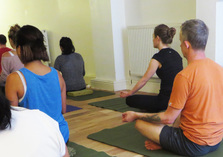 Do you know anyone who isn't busy? Really busy? Chances are you have a long list of things to do (once you've done all the things you need to do). And once you've done that, you'll find something else to keep you busy.
Radio 4 recently had a short article on how we are 'addicted' to being busy and I have to say it rang very true. As a society, it is almost a badge of achievement to say your really busy. We value you, the idea of doing, achieving, getting more things done. Really it is easier to be busy than to not be busy. But are 'busy' things distracting us from bigger objectives? We're so used to our time being filled that I'm not sure we'd be entirely comfortable with having nothing to do. When we might actually get a chance to turn our attention beyond the daily distractions. Unfortunately stress, health dilemmas, being 'burnt out' are all modern day results. And what have we really achieved? The idea that we are too busy to take care of ourselves, to maintain a balance in our lives between doing, achieving, and being and experiencing is a conversation we should probably all have with ourselves along our journey - regularly. Yoga practice, and other meditative practices try to encourage moving away from 'doing' and entering a state of 'being' as a regular habit. To become familiar with other aspects of our lives and see what arises as we do this. At least weekly, preferably daily, try simply 'being' for 5 or 10 minutes. Try sitting, gazing, breathing, meditating, a moving meditation such as yoga, whatever you like. Try it and see what happens...
Have a clear out
Have a physical clear out. Sort out a room, a cupboard, perhaps even just a drawer. Empty it out and only put back the things that you use and need. Creating physical space is a wonderful way of feeling more spacious internally too. Let go of something old We need to let go of something old first. Perhaps move on from a commitment, a habit, a club, a stagnant relationship, anything that feels like it isn't positive any longer and not worth reinvesting in. Re-assess your commitments and see what would be worth replacing with something more positive and vibrant. Practice gratitude Take a moment to count your blessings. Feeling grateful each day is a wonderful practice to cultivate. It enables you to appreciate what you have, to re-envigorate your enthusiasm for them, and importantly, to break the cycle of always wanting something that you don't have. Gratitude can help you feel more spacious and avoiding taking on more things that you may not actually need. Hey, I have opposable thumbs, thank you! Move and breath Yoga and other embodied meditative practices are wonderful at creating a feeling of physical and mental space. They support you to physically become stronger and de-compress yourself, enabling your body to be more more stable and move more easily and naturally - ie. feeling more spacious. Easing out tensions, stresses and blocks enables us to feel more comfortable with ourselves. And using the mental discplines of breath focus, moving and still meditations to allow us to let go of unhelpful thought patterns and feel mentally spacious and open are all essential to our wellbeing. Notice the present moment Practice being in the present moment more often. We often spend our days carrying around old memories and worries, or bring along anticipations and fears of the future, and perhaps feel burdened and weighed down. Try letting go of these and practice appreciating and fully experiencing each day and moment as it unfolds. I always love reflecting on the Dalai Lamas 18 rules for living this time of year too. Happy new year! 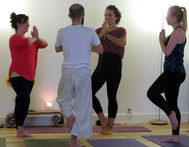 Yoga classes have begun to polarise. From the fast and sweaty vinyasa flow and Ashtanga yoga, to the restorative and Yin yoga classes that have emerged. They seem to be on two ends of a wide spectrum of modern postural yoga classes.
People turn to yoga for a range of different reasons. Perhaps you've come to it to feel stronger or more flexible, or you enjoy the heat and sweat that it can build. Perhaps you enjoy the stillness and calm that it offers, or the good nights sleep it gains you. You may have an injury or pain that you are looking to sort out, or perhaps you just want that elusive feeling of wellbeing. They are all good reasons to practice yoga, and finding the right approach for your practice is more than just the immediate feeling it leaves you with. Your practice should leave you feeling better than when you started, and progressively better in the long term. You may be surprised that I even need to state this. But I regularly speak to practitioners and even yoga teachers who switch between two extreme styles of yoga practice in an effort to keep themselves balanced. Taking a strong vinyasa class supplemented with a Yin or restorative class seems a simple contradiction in approach. It's nice to change pace and explore from time-to-time. But to pursue the challenge and energy which then leaves you needing restoration to enable you to continue this cycle seems worth reflecting on. It is a cycle we often undertake in life which we then replicate on our yoga mats. Yoga practice is for the long term. It should support your primary aims as well as deepening your sense of internal balance with consistent practice. The balance of yoga doesn't begin on the mat, it beings before you get there, with your intention and choice of how to practice. Back to YogaSpace Homepage
They aren't entirely sure why, as you don't get puffed in the same way that you do doing more traditional cardiovascular exercise. But research suggests it is true and believe it is due to the combination of exercise and stress reduction.
According to the research, yoga leads to weight loss, lowers cholesterol and cuts blood pressure. And it even helps you quit smoking. The research involved 2,700 people and also found that regular yoga practice reduced blood pressure 3x more effectively then taking pills. "Yoga may provide the same benefits in risk factor reduction as traditional physical activity such as cycling or brisk walking". Says researcher Myriam Hunink of Erasmus University and Harvard University. Maureen Talbot of the British Heart Foundation said "any physical activity that can help reduce the risk of cardiovascular disease should be encouraged, and the benefits of yoga on emotional health are well established". Brilliant, get yourself to a class or start your home practice today! See our class schedule here and get in touch to find out more. Back to the Bristol YogaSpace homepage. 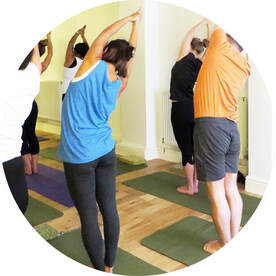 The time for good intentions is all around us. Perhaps we want to become fitter, more flexible, leaner, more creative, more focused, happier? All of these are possible. And to help, here are my top 5 tips for getting started. (Also read our GETTING STARTED page for new students.)
1) Start small - Pick one thing. A new class? Or a mini yoga practice at home that you can do every day just for 10 minutes (just pick 3 or 4 yoga postures and do that for a couple of months). Don't choose both of these, just choose one thing as that is effort enough. Focus on getting the habit started, rather than the results that you want to get from doing it. 2) Be realistic - pick the time that you can do every day or every week that is sensible and that can work for you more often than not. Then pick a class or a short daily practice, 3 or 4 poses that you think you can do and that you will enjoy. Your focus should be on getting the habit ingrained. The rest will follow. 3) Get started - the main thing is that you do it. It doesn't matter if you do it well, or if you have a cold so need to go gently, or that it is raining and cold and you don't fancy going to your class. The main thing is to get started, do it, and do it in a way that you can stick to. Get yourself on your yoga mat every week or every day. 4) Tell someone your getting started - this will help you make the commitment and increase your likelihood of doing it! 5) Don't miss two in a row. If you need to miss one, then ok. Try not to miss two in a row as then the habit is broken and all your good effort may not come to fruition. Keep going, even if only gently if your under the weather. If your away, then try to make up the class or the practice in another way that still counts. Good luck with getting your new yoga practice in place. The benefits will be worth it, all you need to do it turn up and do it :-). Happy new year!  Mindfulness - to be mindful. To be aware of each moment and to act with intention. Christmas - beyond the religious festival it is to fill stockings, make plans, see friends and family, plan menus, arrange travel, eat wonderful rich foods etc. It's busy, fun, tiring, stressful, overindulgent, exciting, a whirlwind ... a mix of many things. For many people, trying to maintain a sense of mindfulness when life gets hectic is a challenge most of us struggle with. Those who go to a yoga class will already have a headstart in maintaining a mindful attitude. To practice yoga is to develop a mindful body and movement with mindful breath. Maintaining a mindful approach helps you to enjoy the whirlwind. To experience joy and gratitude for the festivities all around us. It is all too easy miss if your too busy to notice. Try this... To help you remain mindful try setting aside as little as 5 minutes each day to re-set your intentions. Sit quietly, perhaps alone, or over a quiet cup of tea. Do nothing else except gaze softly at a blank wall, table, or natural object and settle your gaze there gently, or close your eyes. Notice your breathing, and connect with yourself for a short while. Note your intentions for the day and resolve to pursue them. Try this for 5 minutes each day through the Christmas period. Try not to get carried away in the potential whirlwind but to stay connected to what is important to you and to enjoy the moments. If you find yourself feeling too rushed or stressed, take a few deep breaths and ask yourself 'what would my 'mindful self' do?', and then act. Remember to take time to enjoy your Christmas festivities. Keep up some yoga or other grounding practice if you can. And see you in class in the new year. Back to Bristol YogaSpace homepage 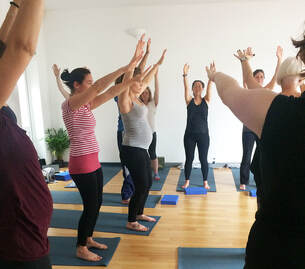 Each week in my yoga classes in Bristol, I see people come in to class feeling tired, perhaps agitated by their day, and usually more than a little lack lustre.
When they leave, there is a noticeable difference in how they seem. They are usually settled, calmer, and more comfortable in themselves. A better version of themselves. They have changed. During the class we move the body, opening, expanding, stretching, challenging, engaging and working the entire body in some way. We breathe fully, slowing and extending the breath where possible. And we try to focus internally and our breath. I came across a fascinating talk by Amy Cuddy recently called 'Your body language shapes who you are'. Amy is a social psychologist. She researches body language at Harvard Business School and she was interested in researching how body language not only effects other people's perceptions of us, but how it actually effects our own body chemistry. In her research she concluded that by standing up tall with the feet apart and with the arms raised and open for only 2 minutes daily, we can raise our testosterone levels (dominance hormone giving a confident outlook), and reduce cortisol levels (stress hormones). Simply by changing our body position in this way, we are altering our hormones and brain chemistry. We are changing ourselves to not only feel but become more powerful, confident and laid back. Great! In yoga classes it is very likely that you'll do a lot of arm raising like she describes, standing with the feet apart, reaching up, opening up. Also combining this with bending forwards, twisting and so on. So her research suggests that we are actually changing ourselves and our hormones in a very real way by doing this. I took two things from Amy Cuddy's inspiring talk - firstly, that yoga postures seem very aligned to the body changes she talks about, and that by doing them you'll actually become more confident and laid back. - and secondly, that only a little practice, taken regularly, can make a big difference! Pass it on... PS. I love TED Talks! Back to Bristol YogaSpace homepage  The Bristol yoga community are joining together on September 14th 2013 for our first annual Bristol Yoga Trail! An open day of free yoga classes and events across 6 locations in Bristol. It's a wonderful chance to join in and explore the different yoga centres in Bristol, try different yoga styles and yoga classes. Or attend a talk or see a yoga film later at YogaWest in the evening. All are welcome and the classes will be free and open to all levels and abilities of fitness. No need to book, simply join in and enjoy! There is Hot Yoga with Ed at YogaFurie, Iyengar Yoga with YogaWest, and a mix of different yoga styles at Bristol City Yoga, Wilder Studios and Yogasara. And we at Bristol YogaSpace are offering 3 viniyoga classes and a hatha yoga class for you to enjoy. Plus if you visit all 6 locations in the day, and get your leaflet stamped at each centre, you can get a free yoga class at the centre of your choice. Save the date and tell your friends: Bristol Yoga Trail, September 14th 2013 For more info and the schedule of free yoga classes and events visit here: www.bristolyogatrail.wordpress.com #bristolyogatrail Back to the Bristol YogaSpace homepage  Yep, Halls menthol sweets are being marketed as a way to stay cool and calm all through the summer, not just when you have a cold.
Breathing deeply, especially exhaling deeply are great at settling and calming yourself (just take a deep breath and see) and integral to yoga practice. So interesting to see sweet manufacturers are catching on. Although not supporting taking sugar throughout the day to stay calm using breathing in this way is great! Back to Bristol YogaSpace homepage 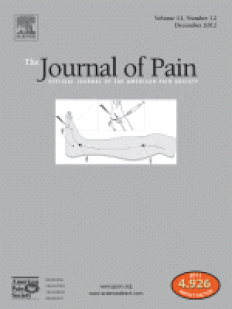 A common complaint - stiff shoulders, limited mobility in the neck and discomfort in the upper back, shoulder, neck area. Accumulated tension, often caused by working at a desk, poor posture, cycling etc. all contribute to tension and stiffness related pain. There are some great yoga postures that gently get to the root of the problem and release blockages and free up the area. And without them, or regular massage, it doesn't resolve by itself. We don't really do any natural movements that will release that part of the body, unless we make the extra effort. So it just gets worse over time. So many of us hunch our shoulders and have a rounded upper back as a result.
It is good to see yoga being clinically researched to demonstrate how it can help. I see benefits in my students and anecdotally hear how it helps them regularly. I currently have two yoga therapy students who are greatly benefitting from the gentle releasing of the shoulders and neck. You need to work carefully and gradually, but gentle stretching and movements will help. See more on the research here: Journal of Pain Research paper http://www.jpain.org/article/S1526-5900(12)00779-1/abstract Yoga Journal Article http://blogs.yogajournal.com/yogabuzz/2012/12/yoga-for-neck-pain.html Get in touch to find out more about how yoga can help you if you suffer from neck pain. bristolyogaspace@gmail.com Back to homepage > 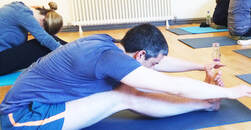 Running the Bristol Half Marathon this Sunday?
What you learn on the yoga mat either at your group class or in your own home yoga practice can be invaluable to help keep you injury free, focused, motivated, energised and able to stay the distance. Here are some top-tips: 1) Tall posture Yoga practice often starts by standing on the mat, focusing on standing with awareness, with attention and length in the spine, having an open chest, and then relaxing your shoulders and breathing deeply. Bring this feeling of readiness yet relaxation into your pre-run preparation and take some deep breathes to stay focused and relaxed. Stand with both feet evenly supporting you and be aware of the shift of balance from side to side of the feet and body. This awareness of balance can carry on through into your running to help keep you centred and grounded for the duration of the run. 2) Stay aware to prevent injury It is easy to become part of the crowd and lose your internal awareness, meaning your perhaps not listening to your body and maybe accumulating tension into your running. This is when injuries are far more likely. Stay focused and aware of your running and how your body is responding. Keep aware of how your breathing is, and try to relax and let go of any tension as you notice it coming into the body. During the run, every 10 minutes or so, spend 10 breaths checking that you are breathing well, with a good exhalation, that your shoulders and body are relaxed, and that your posture isn't starting to collapse as you become tired. Reenergise yourself and keep your focus going. 3) Open your chest to breathe Breathing properly is very important to ensure your body is working at its optimum, and many people only use a portion of their full breath, meaning their bodies have to work harder. As you tire, everything wants to collapse downwards, including your chest and shoulders. Or perhaps you become tense and your full capacity for breathing 'seizes up' as you will yourself on. Keep your chest open, shoulders back and relaxed, shoulder blades down, arms and hands relaxed. Maintaining this openess will enable optimal breathing. 4) Take time to exhale Your yoga practice will have taught you to exhale completely, and this takes time and practice. If you become out of breathe during running, it usually is because your not breathing out deeply enough. Focus on your exhale, breathe out from the belly drawing your belly button in towards the spine, take a few deeper exhales and than relax into a breathing rhythm that allows full exhalation. 5) Some Downward Facing Dog After the run, fully stretching will help your recovery and leave you in less discomfort the next day. Include some time spent in downward facing dog as this can be great for stretching your calves, hamstrings and your back. Stay in the pose for at least 8 full breathes (breathing slowly), longer if comfortable for you. Each inhalation spend time lengthening the spine and extending the hips away from the shoulders, each exhalation allowing the legs to take a little more of the stretch. Taking some time to relax and stretch here to help your recovery from the run. (Not advis Most of all, enjoy your run and good luck! Back to YogaSpace homepage >  Yep, she has finally arrived --
Yoga Teacher Barbie! Complete with pink yoga mat, puppy dog and sparkly pink and blue outfit, perhaps she can inspire the 3+ year olds to find out more about yoga. She comes from the 'I can be...' series of dolls to help the aspirations of the next generation. Her figure still remains impossible, but she has a serene look on her face, and maybe taking up yoga practice will help her relax a bit more. She reinforces all the girly pink, image driven stereotypes that children and young women have to negotiate. But before we reject her as a bad idea, perhaps we could remember the teachings of Krishnamacharya... aim to meet people where they are and teach them yoga in a way the can understand and accept. So introducing children early, in a way that fits into their every day, childhood landscape, could be a helpful introduction to yoga that hopefully will bring them into a more realistic understanding. Back to YogaSpace homepage 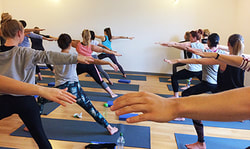 I'm regularly asked to help people choose a Yoga class that will suit them. There are lots of styles, and flavours on offer in Bristol, so here are a few pointers and guidelines to help get you started: Please feel free to get in touch for more information. Why Yoga?Different styles of yoga offer different degrees of either physical or mental challenge and discipline or more entertainment (music etc.). What are you interested in initially? Do you want to get fit, find some calm and mental space, learn how to meditate, reduce stress, lose weight, reduce stiffness, become more grounded and centred, ease tension, aches and pains, relax more, have a physical or emotional injury that you want to improve, explore something beyond everyday life? Yoga can do all of this and more. Your personal interests will help direct which class would be most suitable. See the styles of yoga below to see where you might want to start. Try some yoga classesThere isn't really any substitute for trying the class to see if you enjoy it and get along with the teacher as it is such a personal experience. Even if your friend loves the class, it just might not suit you. Try classes out until you find one you really want to go back to. Most yoga teachers are happy for you to come along and try their class and see if it is right for you. You are much more likely to stick with it if you find a class and a teacher you are happy with. Classes vary hugely, so don't be put off from yoga if you go to a class and it wasn't what you expected or didn't enjoy it. But don't shop around forever, at some point, you should commit to a class to gain not only breadth of practice but depth to your practice. Talk to the yoga teacherEvery teacher is different and will focus their class on what they understand is important. Talk to them to see if it fits with what you are after and if they have the skills to work with any special needs you may have. All yoga teachers are passionate about what they do but not all of the have the skills or experience to guide or teach others well. Enjoy the classSounds obvious, but some people enjoy endurance and believe in the old adage 'no pain no gain'. The class should leave you feeling refreshed, revitalised, relaxed, energised, calm, settled and more positive. An overall good feeling that should speak for itself and make you want to continue. If you didn't enjoy it, or feel unwell or are in pain, feel frustrated, unsettled, uncomfortable, competitive, agitated, then perhaps the class doesn't suit you or try talking to the teacher. The effects can be accumulative so be sure it is serving you well. Feel comfortable with the teacherYou should feel comfortable in the class, and confident in the teacher so you can immerse yourself in the yoga practice. You should feel able to ask your teacher questions (before or after class usually or get his/her attention during the class) to help support you. As a beginner, or as you begin to deepen your practice and potentially encounter obstacles, a supportive and experienced teacher will help you work through these. Find a regular class and commit to itRegular practice with a teacher who you get to know, is really important to gradually develop and deepen the benefits and practice safely. Finding a yoga class that is convenient for you to get to, and is at a time that you can usually make, will give you the best chance of sticking with it. when getting started. Once you have found a class that you enjoy and are becoming regular in your practice, avoid continuing to 'shop around' for a yoga class and commit to staying at least a few months with your class (if not years!). Continuing to scoot around to lots of different classes will keep you working with great breadth and variety, but it will be at the detriment to the depth and refinement of your practice. Relaxing class or challenging class?Should you take a more challenging, intense or difficult class (either physically or mentally) or a more gentle yoga class? Or find one that is somewhere in the middle. This is where classes vary the most and finding something that suits you and suits your lifestyle is really important.. If you are relatively healthy and fit, then a more physically challenging class may suit you. If you are interested in meditation and breath focus then some classes offer physical and breath/mental challenge too, beyond just the physical aspects, and are well worth seeking out. If you already have a really busy lifestyle and are a fast-paced person, then perhaps consider exploring a more calming, supportive Yoga class that will help balance your life. You might find yourself typically attracted to a strong, intense yoga class (e.g. Bikram yoga, Vinyasa Flow yoga or Ashtanga yoga), but this might be counterproductive. After a few months/years you could find it leaves you feeling 'burnt out'. Consider trying a different approach as a counterbalance to your usual pace and lifestyle and see what happens. Stick with it, avoid being drawn by entertainment and see what hidden depths yoga can offer you. If you have an injury or medical condition, then a smaller class where the focus is on safe alignment and modifying the practice to suit each person in the class is recommended, with a well trained teacher who understands your condition. If your lifestyle is quite sedentary, perhaps your not too motivated or feel lethargic or suffer from depression, then perhaps a more uplifting and energising class to switch your pace could be helpful. Start gradually and work within your physical abilities, especially at first, and see what the results bring over the months / years. Well trained teacherYoga is a vast and ancient body of knowledge. There is much to study and as yoga teachers we are always learning more. Along with the many Yoga postures, there are many breathing techniques that are learned over time, Yoga philosophy, anatomy and physiology, and lots more besides. We recommend at least two years teacher training to even begin to get to grips with the basics and be able to teach and adapt the class safely to suit the participants. Then the teachers experience, depth of knowledge (not just breadth) and their refinement of that knowledge and skill are all important. Organisations such as the British Wheel of Yoga provide accreditation to meet this standard. (They are the only Yoga body to be approved by Sport England). Styles of yoga classHere are a few 'types' or flavours of class to help orientate you. They are all Yoga and all dealing with the same things but might feel different and focus on slightly different aspects when you try them. So this is just a rough guide, feel free to add more descriptions below in a comment to help others choose a class... ~Hatha Yoga Classes~ Classic yoga postures which also incorporate a focus on the breathing and include relaxation. Variations on postures include staying in postures, or moving into them dynamically but more slowly. Classes can range from challenging to more gentle and relaxing so try the class or check with the teacher to see what they are teaching. They usually suit all levels from beginners so good for everyone. Most YogaSpace classes are a form of Hatha Yoga. ~Viniyoga Classes~ (what I teach) Classic Yoga postures which include slow flowing movements and a close integration of breath. Generally small classes where the teacher will help adapt the postures to suit the students and will offer optional challenges as you progress. Focus on breathing and gradually deepening and developing the breath to intensify the practice when the student is ready. Good classes for all levels including beginners and working on specific goals and they are well trained teachers :-) ~Iyengar Yoga Classes~ Iyengar Yoga offers physically challenging classes where you hold classic yoga postures for a period of time to develop good strength. Strong focus on alignment, making use of equipment such as belts, blocks, bricks, chairs etc. to assist you in getting in to the posture. Less focus on breathing until a couple of years into your practice. Usually well trained teachers. ~Ashtanga Yoga Classes~ Ashtanga Yoga is a set sequence of dynamic movements which you learn over time and will work through each class. A physically demanding practice with focus on moving steadily with the breath. Physically demanding and some quite extreme yoga poses. Good level of commitment required as you need to keep this up regularly to be able to do it. Good for physical and mental stamina and an intense experience. Go carefully, especially at first. ~Bikram Yoga Classes~ Hot Yoga classes, offering a set sequence of 26 postures practiced in a hot (super-hot!) humidified room where students sweat and work hard in each pose. Often beginners will sit out some poses and just enjoy (?!) the intense heat and humidity. Teachers have learned a set class formula which Bikram Choudhury developed and has taught to all his teachers during their 9-week intensive teacher training programme. An intense experience. ~Vinyasa Flow Yoga Classes~ Dynamic movements linking poses together and flowing the movements with the breath. Often a physically challenging and focusing practice which requires some coordination to join in and keep up. Some classes are quite fast, some involve music, some are very creative and expressive, good coordination needed to practice this safely. Variable teacher training, some good but some can be trained in only a month or few months so recommend finding out. Try a class or a few classes and see how they suit you. Please add more class descriptions or suggestions below to help others in finding the right class for them.
Enjoy! Back to homepage 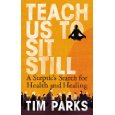 I'm enjoying a good book by Tim Parks at the moment, 'Teach us to sit still: a sceptics guide to health and healing'. It's a brilliantly honest account of a middle-aged academic's journey to overcoming chronic health issues through relaxation and meditation. I highly recommend it, a good read (perhaps skipping the literary references if not your thing) with amazing descriptions of what it is to struggle with the process of meditation. And he really is a sceptic so one I'll be passing it on to a couple of people who might be able to relate!
Back to YogaSpace homepage  I'm biased I know, but I think most people could benefit from yoga practice! I work with a lot of mums, especially in my private yoga therapy work, where women come to me without much time or space for themselves, and have a range of physical, mental and emotional issues such as stiffness, aches on one side from carrying children on one hip, stress through the shoulders, poor sleep, over-eating, worrying, and an over-active mind that refuses to slow down at the end of the day.
These are common complaints but particularly so for mums whose days aren't their own anymore and who struggle to find time to take care of themselves. Yoga doesn't have to be a weekly class, although this is often the best way to ensure you actually make it on to your mat at least once a week and spend a good hour doing a full yoga practice. Yoga can also be fitted in to your busy schedule, requiring perhaps as little as 15-20 minutes a day to help keep you physically, mentally and emotionally supported. Think of how you might tend to a garden - keeping it tended to little and often is as good, if not better, than a big session every now and again to keep it all under control. A practice that is customised for you is ideal, incorporating some physical postures to help energise the body, stretch and release tension, strengthen the posture to help alleviate aches and pains. Plus perhaps some breathing work to settle the mind and restore balance, and perhaps even meditation if interested (which has well known stress-relieving and healthful attributes). All of these practices will help you create and maintain some well-earned space for yourself, and can be fitted in to those small pockets of time once the kids have gone to bed, when they are napping, when they are watching tv, or before you go to bed. In my group classes I always encourage students to try some yoga practice at home if they are interested. Part-way through the term, I'll often offer them a small handout with a short practice to try for themselves at home. Sometimes students keep it up and come back weeks or months later reporting how much more benefit they get from yoga once they have started regular practice at home. Of course a daily healthful practice doesn't just have to be yoga, there are other things that you might find you enjoy that keep you motivated to continue with it. But what better way to nurture your health and wellbeing than by giving yourself the gift of a short yoga practice a few times a week to help maintain balance and health in your life. Worth sharing, the Guardian website has just published their 'How to Meditate' series. They have some step-by-step guides, videos and podcasts designed to support people wanting to meditate. Worth trying if you have wanted to give it a go or tried and found it hard in the past.
Enjoy here: http://www.guardian.co.uk/lifeandstyle/meditation We do it all day long, and most of the time we don't even think about it. Maybe we notice our breathing if we are climbing a flight of stairs and we breathe more heavily. Or perhaps if we are upset and our breathing becomes affected we become aware of it. But mostly it just carries on unconsciously.
In yoga we become trained to listen, feel and even count our breath. We see it as a mirror reflecting how we are and learn to observe it and even control it sometimes, for beneficial effects. A smooth, flowing, regulated breath helps to stabilise our thoughts and our minds. Steady full breathing encourages relaxation to set in and helps release deeply held tension that we aren't even conscious we are carrying. Students often first come to yoga without having consciously listened to their own breathing before. This alone can be challenging for some but eventually it is deeply rewarding. We almost need to 'learn' how to breathe properly. This sounds silly as we manage quite successfully to breathe all day long. But often we don't breathe very effectively or efficiently and there is usually room for improvement. There are even projects dedicated just to improve our breathing, like The Breathing Projectin NYC. Ultimately better breathing can promote better health. The shallow every-day breathing that we often use can be encouraged to be deeper. Try this for a moment Try taking a full, deep, slow inhale. Keep inhaling until the belly expands, notice the chest rise up gently. Then slowly exhale and feel the body gradually soften as you do so. Breathe out until there is no breath remaining in the lungs. Try using the tummy at the end, pulling it in to squeeze any last air out of the body. Notice how much longer that breath took than usual, and then perhaps realise how much more fully you could breathe if you paid attention to it. Allow the shoulders to relax and take another full breath. The benefits of breathing properly are broad and wide ranging. To name a few, they include reduced anxiety, stress and even blood-pressure. Relaxed respiratory muscles and some neck muscles. More efficient breathing and oxygen exchange and improved cardiovascular system. Strengthened diaphragm and intercostal (rib) muscles. Better posture. Improved physical endurance. And of course, a calmer state of mind. Yoga dedicates a whole aspect of its teaching to Pranayama or breath control and many techniques take years to master. The breath is more powerful than we realise. Try noticing it at a few different points today and see if it tells you anything about youself. It almost certainly will if you take the time to listen. Back to homepage |
More blog articles >
Categories
All
Archives
April 2024
|





 RSS Feed
|
Bristol YogaSpace Ltd
Princes Place, Bishopston Just off Gloucester Road Bristol BS7 8NP |
|