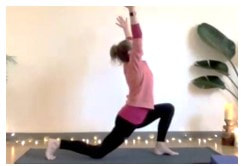
 Busy at the moment? There may be extra social gatherings and more demands on our time and things to get done. There are sights, sounds and smells that are stimulating and seasonal and that we would miss if we didn't have them (remember that the next time Jingle Bells is coming at you). Much of this can be enjoyable, some perhaps stressful, but life can certainly seem extra busy and we may feel like we are being swept along. Taking time for more grounding yoga practices and creating pockets of space for moments of stillness can be a huge support to help us stay present enough to enjoy what the time of year has to offer. I'm particularly noting this year's season as I've just lost a friend to a long illness. Sadly this was her last Autumn. As heart-breaking as this is for those who knew and loved her, it reminds us how precious these moments are. This experience of life, as it is right now, is actually it. We don't know what will come next. And while this doesn't mean we shouldn't plan for, and usher in a better future, we should also recognise that this moment right now is our life to experience fully. Yoga helps us settle in to our bodies more fully and comfortably. We realign ourselves back to our centre, and re-find our natural posture and balance. We settle agitation and stress in the body, ease our stiffnesses and aches, reduce turbulence in our minds. Whole body movements and breaths practiced regularly bring us into a steadier and more stable version of ourselves able to more fully notice and embrace the joy of the season.
0 Comments
Appreciate what you haveTake time to appreciate what you already have and not get too caught up in high expectations for the holidays. Enjoy what comes your way, and find abundance in each moment. Notice the simple things that you take for granted and marvel at how amazing they all are! Try some home yoga practiceA great time to commit to a short daily yoga practice, even if it is only one pose, or sitting and taking 12 steady, slow breaths. Sanctuary in a bookFind sanctuary in a contemplative book, even if only for 5 minutes a day. Be in natureSpend some time with nature. If that isn't possible, spend a few minutes each day gazing at a tree or plant. Treat yourself - mindfullyTreat yourself, but try and do it mindfully so that you really enjoy it and will remember it later on and so enjoy it again when you think of it! Be kindDo a kind action every day for no particular reason. Share some joy with others in your local community, or do something kind for yourself. Random acts of kindness, even if only a smile to someone you don't know.
Here's to wishing you a wonderful holiday season and a joyful and healthy new year. x
Breathing well in yoga can seem tricky As a beginner to yoga, it can seem difficult to keep the focus on the breath. It is common to find that you’ve been holding your breath and straining in some postures. Arms and legs are just about doing what the teacher has invited you to do - but your breath, well who knows? This is particularly noticeable in a fast-paced or deeply strenuous class where the body is most dominant and anything else gets left behind as you work your way through the class. So what if my breath isn't great?Day to day we typically breath 12-15 breaths per minute. The rate, depth and quality of it can help adjust our levels of anxiety and stress, our immune system effectiveness and many more physical and mental health markers. Yoga offers profound teachings in the breath if we choose to listen that can support our health, wellbeing and awareness in our day to day lives. Familiarity helps to develop our breath focusGradually, with familiarity of a regular yoga practice, we can start to remember to breathe with a flowing and calmer breath. And eventually the breath and movements start to link together more. From here we can start to take that further still and refine into a more advanced yoga practice. Once you feel you are able to link the breath and movements together, then the power of the breath can really start to be harnessed and the refinement and quality of our yoga practice can bloom. Our nervous system will feel immense benefit from working skilfully with breath centring and we can move beyond the endorphin highs of vigorous and strenuous yoga practice and move towards maturing our yoga practice. The breath powers our yoga practiceSounds obvious, of course we need to breath to power everything that we do or we’ll collapse in a heap. But it is easy to forget about the quality of our breath when distracted or physically strained. What if you eased back from the strain and found a spaciousness in the breath to develop the power of your yoga practice instead? What would that feel like? What could it do to your yoga practice? What if we found our physical alignment from our breath?We often listen to the technical instruction from the yoga teacher: move your foot here, rotate your hip there, etc... Breath-centred practice can support us to more naturally open and expand your body into a posture, rather than teaching instruction being the main driver. Explore how your breath can position you into a natural alignment from within that is unique to your body structure and your deepening breath. Starting out with breath-centred yoga practiceThe classes at Bristol YogaSpace work with a deeply breath-centred approach to yoga. Rather than simply coordinating with our breath, which is common in many Vinyasa, Flow or Ashtanga yoga practices, we centre ourselves in the breath more deeply and use it to power the practice and direct the postures and focus.
When I started out some 20 years ago I practiced Ashtanga yoga, a vigourous and strong yoga practice, then Iyengar yoga which is technical and detailed in its formal postures. But I eventually discovered a truly breath-centred approach in Viniyoga and practice was transformed for me. Perhaps ask your teacher more about the breath when you feel ready or curious or come along to a Viniyoga class which specialises in breath-centred yoga practice, or a yoga workshop to support you to develop more breath centring in your yoga practice. Enjoy your yoga practice. “Without breath, it isn’t yoga – it is like a river without water” Krishnamacharya 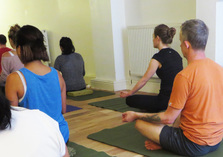 Do you know anyone who isn't busy? Really busy? Chances are you have a long list of things to do (once you've done all the things you need to do). And once you've done that, you'll find something else to keep you busy.
Radio 4 recently had a short article on how we are 'addicted' to being busy and I have to say it rang very true. As a society, it is almost a badge of achievement to say your really busy. We value you, the idea of doing, achieving, getting more things done. Really it is easier to be busy than to not be busy. But are 'busy' things distracting us from bigger objectives? We're so used to our time being filled that I'm not sure we'd be entirely comfortable with having nothing to do. When we might actually get a chance to turn our attention beyond the daily distractions. Unfortunately stress, health dilemmas, being 'burnt out' are all modern day results. And what have we really achieved? The idea that we are too busy to take care of ourselves, to maintain a balance in our lives between doing, achieving, and being and experiencing is a conversation we should probably all have with ourselves along our journey - regularly. Yoga practice, and other meditative practices try to encourage moving away from 'doing' and entering a state of 'being' as a regular habit. To become familiar with other aspects of our lives and see what arises as we do this. At least weekly, preferably daily, try simply 'being' for 5 or 10 minutes. Try sitting, gazing, breathing, meditating, a moving meditation such as yoga, whatever you like. Try it and see what happens...  Life is busy and stressful but yoga can help give you peace of mind, health, strength and support. We talked about this and much more when I was recently invited as a guest on Steve Yabsley's lunchtime radio programme. So if you have 20 minutes, have a listen by pressing the play button below.
(Or find the full radio show on Listen Again here >) 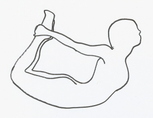 Yoga is great for improving our health and wellbeing. A well trained teacher will ensure that the class is safe and suitable for all participants. But yoga injuries do happen, and here are my top tips to ensure your yoga practice remains safe and enjoyable.
1) Listen to your body Yoga shouldn’t hurt. If it doesn't feel right, or your starting to feel strain in a vulnerable part of the body (e.g your knees, neck or lower back) then ease off and take a breather. Your body is yours so take care of it and work within safe limits, especially while you are getting started. 2) Start gently and build it up Don't go to your first class expecting to do everything. Whether you are seeking physical strength or improved breathing, connecting with yourself, focus, or relieving stress, there is no magic wand or quick fix to achieve these aims. Incremental changes will happen, and allowing yourself time to add challenges and layers of technique as you get used to the practices will bring the most benefit. Everyone has limitations, so be gentle with yourself and don’t be tempted to push it too soon. 3) Regular practice If you drop in to a class from time to time, your body will always be starting from the beginning and if there are any vulnerabilities, they are more likely to flare up. Regular practice will allow you to develop strength and stamina so that you can then further your practice. If issues or niggling pains do start to emerge, you'll have time to understand what triggers them and find ways around them. 4) Talk to your teacher Your teacher should be well-trained in a wide-range of injuries and ways to adapt the postures and techniques to suit you. Not all yoga teachers have this training (especially is they took their training over just a few weeks or months where they may only have covered postures, choreography and basic anatomy). Make sure your teacher understands any injuries or past vulnerabilities that you have so they can suggest alternatives or adaptations. You need to take some responsibility here and pro-actively talk to your teacher to ensure they can support you. 5) Yoga should never hurt Worth saying twice. Really. If it hurts, your body isn’t ready to go that deeply into it so ease off. Yoga classes aren’t (or shouldn’t be) competitive. Just because your neighbour on the mat next to you can do it, it doesn’t mean you should be able to. The class is there to benefit you, and every body in the class is different. So do things that will be helpful and have the wisdom and patience to know when to rest and wait for the next pose. Enjoy safe yoga practice and you will reap the rewards for years to come! 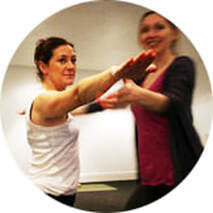 About 3 or 4 months ago a woman in her late forties joined my class who had been diagnosed with high blood pressure. She wanted to know if yoga would help and was willing to give yoga a try. She came every week, almost without fail, and enjoyed the classes.
We took it gently at first, modifying postures where needed, ensuring that the practice was safe and giving her body time to get used to moving in new ways. After some practice, she took well to the ujjayi breathing, and even came to a weekend workshop to explore taking yoga further. I had a wonderful email from her this week saying she has had her high blood pressure re-tested and it is back to normal and she credits the yoga practice for this. However let's give the credit right back to her. She was motivated to do something positive to help herself with her health situation. She was ready to make changes to her lifestyle that were contributing factors to her high blood pressure (high stress and lack of exercise). She stuck with it, even though at first she saw no tangible improvement in her blood-pressure and asked how long it would take for the yoga to 'work'. She helped her health situation for herself and she now has her own reward. All of us have this ability within us to help ourselves and I'm inspired by students who come and practice the yoga teachings in their own way for their own aims. It does take perseverance; it isn't overnight. Often when we arrive at a class we are looking to improve imbalances or issues that have crept up over years or decades, and these won't be changed in a few sessions. But hopefully by finding a yoga practice that you enjoy you will enable the improvements to come. Another woman in her early thirties came to my class in December. She was a British Athlete, a snowboarder, who had suffered a serious concussion and was unable to continue her rigorous slope and gym training. With frequent, regular yoga practice, she was able to continue her physical training in a way that adapted itself to her injury. She found a sense of peace of mind and confidence. Then in February she went on to win Britain's first Olympic medal on snow. Well done Jenny Jones! Yoga is adaptable to any injury, illness or health situation. When skillfully applied, it can be a great support and help you pave your way to improvements. The tools are varied and some may be more appropriate than others - bodywork, breathwork, meditation. No matter what your situation there will be something you can do to get started. Please get in touch to find out more or read more about yoga therapy here. Back to YogaSpace homepage  Mindfulness - to be mindful. To be aware of each moment and to act with intention. Christmas - beyond the religious festival it is to fill stockings, make plans, see friends and family, plan menus, arrange travel, eat wonderful rich foods etc. It's busy, fun, tiring, stressful, overindulgent, exciting, a whirlwind ... a mix of many things. For many people, trying to maintain a sense of mindfulness when life gets hectic is a challenge most of us struggle with. Those who go to a yoga class will already have a headstart in maintaining a mindful attitude. To practice yoga is to develop a mindful body and movement with mindful breath. Maintaining a mindful approach helps you to enjoy the whirlwind. To experience joy and gratitude for the festivities all around us. It is all too easy miss if your too busy to notice. Try this... To help you remain mindful try setting aside as little as 5 minutes each day to re-set your intentions. Sit quietly, perhaps alone, or over a quiet cup of tea. Do nothing else except gaze softly at a blank wall, table, or natural object and settle your gaze there gently, or close your eyes. Notice your breathing, and connect with yourself for a short while. Note your intentions for the day and resolve to pursue them. Try this for 5 minutes each day through the Christmas period. Try not to get carried away in the potential whirlwind but to stay connected to what is important to you and to enjoy the moments. If you find yourself feeling too rushed or stressed, take a few deep breaths and ask yourself 'what would my 'mindful self' do?', and then act. Remember to take time to enjoy your Christmas festivities. Keep up some yoga or other grounding practice if you can. And see you in class in the new year. Back to Bristol YogaSpace homepage 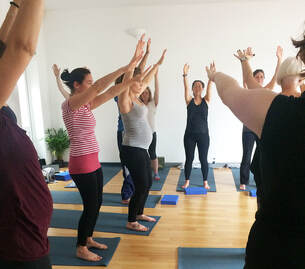 Each week in my yoga classes in Bristol, I see people come in to class feeling tired, perhaps agitated by their day, and usually more than a little lack lustre.
When they leave, there is a noticeable difference in how they seem. They are usually settled, calmer, and more comfortable in themselves. A better version of themselves. They have changed. During the class we move the body, opening, expanding, stretching, challenging, engaging and working the entire body in some way. We breathe fully, slowing and extending the breath where possible. And we try to focus internally and our breath. I came across a fascinating talk by Amy Cuddy recently called 'Your body language shapes who you are'. Amy is a social psychologist. She researches body language at Harvard Business School and she was interested in researching how body language not only effects other people's perceptions of us, but how it actually effects our own body chemistry. In her research she concluded that by standing up tall with the feet apart and with the arms raised and open for only 2 minutes daily, we can raise our testosterone levels (dominance hormone giving a confident outlook), and reduce cortisol levels (stress hormones). Simply by changing our body position in this way, we are altering our hormones and brain chemistry. We are changing ourselves to not only feel but become more powerful, confident and laid back. Great! In yoga classes it is very likely that you'll do a lot of arm raising like she describes, standing with the feet apart, reaching up, opening up. Also combining this with bending forwards, twisting and so on. So her research suggests that we are actually changing ourselves and our hormones in a very real way by doing this. I took two things from Amy Cuddy's inspiring talk - firstly, that yoga postures seem very aligned to the body changes she talks about, and that by doing them you'll actually become more confident and laid back. - and secondly, that only a little practice, taken regularly, can make a big difference! Pass it on... PS. I love TED Talks! Back to Bristol YogaSpace homepage  After being asked about it for ages by some of my male students and friends, we've finally decided to start up a new men's yoga class at YogaSpace on Saturday mornings (9.30am, all levels of fitness and stiffness welcome!).
Update since 2013 when we first published this - the class didn't last and the numbers coming were low, but there are men in most of our classes and they are very welcome. Men's yoga isn't different necessarily, but it is nice to be in a group where you feel comfortable and men tend to be stiffer than women, particularly in the legs and back, and in need of better core strength, all yoga classes help improve these areas. Traditionally yoga was only for men and it is only the last 50 years or so that it has been opened up to women by yoga teaching pioneers such as Krishnamacharya and Iyengar. So tell your friends and blokes who would benefit from a bit more strength, flexibility and de-stressing in their lives! Men welcome to all classes at Bristol YogaSpace. See our full offering of yoga classes here > Back to YogaSpace homepage 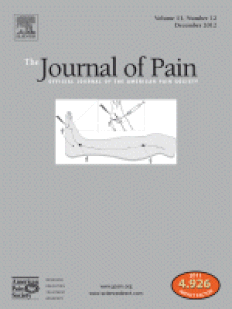 A common complaint - stiff shoulders, limited mobility in the neck and discomfort in the upper back, shoulder, neck area. Accumulated tension, often caused by working at a desk, poor posture, cycling etc. all contribute to tension and stiffness related pain. There are some great yoga postures that gently get to the root of the problem and release blockages and free up the area. And without them, or regular massage, it doesn't resolve by itself. We don't really do any natural movements that will release that part of the body, unless we make the extra effort. So it just gets worse over time. So many of us hunch our shoulders and have a rounded upper back as a result.
It is good to see yoga being clinically researched to demonstrate how it can help. I see benefits in my students and anecdotally hear how it helps them regularly. I currently have two yoga therapy students who are greatly benefitting from the gentle releasing of the shoulders and neck. You need to work carefully and gradually, but gentle stretching and movements will help. See more on the research here: Journal of Pain Research paper http://www.jpain.org/article/S1526-5900(12)00779-1/abstract Yoga Journal Article http://blogs.yogajournal.com/yogabuzz/2012/12/yoga-for-neck-pain.html Get in touch to find out more about how yoga can help you if you suffer from neck pain. bristolyogaspace@gmail.com Back to homepage > 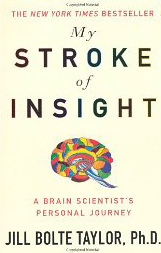 Jill Bolte Taylor is a Harvard Brain Scientist who had a life changing experience: a stroke in the left side of her brain. This offered her the extraordinary experience of analysing the progression of left and right brain function first hand as her left brain function subsided. She describes her intermittent experiences over four hours during the stroke, experiencing moments of pure stillness, fascinating insights and being an energy being connected to the universe. The chatter of the brain turns off as her left brain function is hampered, and she experiences the purity and wholeness of what we really are as her right brain comes to the fore. An interesting and inspiring experience which is worth seeing in her 20 minute TED talk.
Watch the video here >> The tools and techniques of Yoga could be described as aiming to allow us to quieten our left brain, to bring it under our control by training and discipline, to allow us to experience and tap into the right side of our brain. Being in the present, letting go of the baggage that our years of living have left us with, and becoming fully aware of our sensory experiences, being a witness, completely at peace with ourselves and the world. She says 'the more time we choose to run the deep inner peace circuitry that is the right brain, the more peace we will project into the world and the more peaceful the world will become.' Yoga movement and body work, breathing, sensory experience, and meditation are all tools that help us to still the left side of the brain and run our deep inner peace circuitry and find our own freedom. Back to homepage 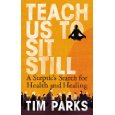 I'm enjoying a good book by Tim Parks at the moment, 'Teach us to sit still: a sceptics guide to health and healing'. It's a brilliantly honest account of a middle-aged academic's journey to overcoming chronic health issues through relaxation and meditation. I highly recommend it, a good read (perhaps skipping the literary references if not your thing) with amazing descriptions of what it is to struggle with the process of meditation. And he really is a sceptic so one I'll be passing it on to a couple of people who might be able to relate!
Back to YogaSpace homepage 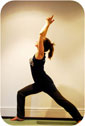 There are many inspiring stories of how practicing yoga has helped to support people with serious health problems back to full health. Here is a wonderful account of an NBA basketball player struck down with a serious kidney condition which resulted in a kidney transplant, and how his dedicated practice of yoga helped save his life and his career as a professional athlete...
Read more in this inspiring post by Trevor Kearney... Back to homepage > 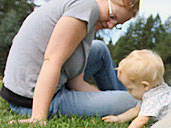 I'm biased I know, but I think most people could benefit from yoga practice! I work with a lot of mums, especially in my private yoga therapy work, where women come to me without much time or space for themselves, and have a range of physical, mental and emotional issues such as stiffness, aches on one side from carrying children on one hip, stress through the shoulders, poor sleep, over-eating, worrying, and an over-active mind that refuses to slow down at the end of the day.
These are common complaints but particularly so for mums whose days aren't their own anymore and who struggle to find time to take care of themselves. Yoga doesn't have to be a weekly class, although this is often the best way to ensure you actually make it on to your mat at least once a week and spend a good hour doing a full yoga practice. Yoga can also be fitted in to your busy schedule, requiring perhaps as little as 15-20 minutes a day to help keep you physically, mentally and emotionally supported. Think of how you might tend to a garden - keeping it tended to little and often is as good, if not better, than a big session every now and again to keep it all under control. A practice that is customised for you is ideal, incorporating some physical postures to help energise the body, stretch and release tension, strengthen the posture to help alleviate aches and pains. Plus perhaps some breathing work to settle the mind and restore balance, and perhaps even meditation if interested (which has well known stress-relieving and healthful attributes). All of these practices will help you create and maintain some well-earned space for yourself, and can be fitted in to those small pockets of time once the kids have gone to bed, when they are napping, when they are watching tv, or before you go to bed. In my group classes I always encourage students to try some yoga practice at home if they are interested. Part-way through the term, I'll often offer them a small handout with a short practice to try for themselves at home. Sometimes students keep it up and come back weeks or months later reporting how much more benefit they get from yoga once they have started regular practice at home. Of course a daily healthful practice doesn't just have to be yoga, there are other things that you might find you enjoy that keep you motivated to continue with it. But what better way to nurture your health and wellbeing than by giving yourself the gift of a short yoga practice a few times a week to help maintain balance and health in your life. Worth sharing, the Guardian website has just published their 'How to Meditate' series. They have some step-by-step guides, videos and podcasts designed to support people wanting to meditate. Worth trying if you have wanted to give it a go or tried and found it hard in the past.
Enjoy here: http://www.guardian.co.uk/lifeandstyle/meditation According to a news article last week on the BBC, one in five schools now teach yoga as part of the physical education provision.
There is a current trend is for schools to move away slightly from more traditional, competitive sports. Yoga can help students get the physical benefits of getting active and moving the body, improving their posture and physical strength. And also they could learn useful skills to help them develop better concentration, keep them de-stressed and able to handle life-stresses and exams better, and be more in touch with themselves during adolescent change. Yoga can be great both as a group class where they take a yoga practice as a PE class, but also shorter practices can be used less formally. For example teachers can start off a class with some focusing work such as a short stretch or chant to help settle the class and get them focused on the lesson ahead. Lots of useful possibilities! Back to homepage It is that time of year again. We're back from holidays, feeling pretty chilled out, and facing an Autumn of work with shorter days and dipping temperatures. There is a need to try and keep the summer-time relaxed feeling for as long as possible while the warm weather lasts.
The yoga courses starting next week at YogaSpace try to encourage that feel-good feeling with regular yoga practice and even personal home practice for those who are interested (my students often take home handouts with little stick men in yoga poses offering a short 15 minutes yoga session to try at home - not homework, and by no means compulsory!). Nothing beats a regular yoga practice for helping you feel good. The once-a-week de-stress in a group class is great, but keeping it up and taking even 10 minutes a day can really help cultivate that feel-good-feeling all through the week. All you need is a space on your carpet in a quiet part of your home and an uninterrupted 10 minutes (hard for some I know!). But an investment worth making. Morning stretch anyone! Last Sunday was a great opportunity to take a few hours to explore ways to improve how we handle stress in our lives. Stressful life is a given for most of us. We're busy, our lives are full, our jobs, kids, families, homes, obligations keep us pretty much flat out.
I'm used to welcoming people into my weekly yoga classes who are exhausted and stressed out. We often keep going until we are exhausted, and only really stop when things get to a point where we actually can't go on, when our bodies tell us in no uncertain terms that we must stop. We all do it, but of course it takes it's toll. Research suggests that stress is one of the biggest contributors to ill health and an early demise from various related health conditions such as heart disease. So Sunday's yoga workshop on stress relief was a chance to explore some simple, easy to practrice yoga methods that can help us manage our lifestyles and keep stress levels lower. The aim was to teach them in a way that means they can be practiced daily or regularly at home. Short, regular practice of these methods can make a dramatic difference to our ability to deal with stress and having a few techniques that you can use at any time, even at work or when in the car stuck in traffic, can help reduce our stress levels. Simple breath techniques, body work or meditation for a few minutes every day can make a huge difference. The yoga workshop on stress relief at Bristol Yoga Space explored a few easy methods and gave handouts on how to practice them at home. Another workshop on stress relief will be held in early Autumn too. Keep an eye on the website for dates. |
More blog articles >
Categories
All
Archives
April 2024
|

 RSS Feed
|
Bristol YogaSpace Ltd
Princes Place, Bishopston Just off Gloucester Road Bristol BS7 8NP |
|