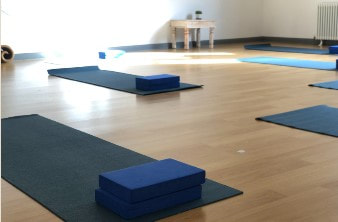
 With the colder evenings now set in for the winter, perhaps heading out to the studio, or getting on to your mat at home feels harder? Some of you have (or want) a regular home practice, some of you only practice in a group class, and some of you do both. In an ideal world we would do both, but home yoga and group yoga are both great in their own right. Our initial challenge is doing something! The main aim is to regularly and consistently move, breathe well, and become more embodied and subtly aware of yourself and life. Our bodies love to move, and when given time and space to practice, respond in incredible ways. The next challenge is doing what is right for you. What will bring you what you need in the most effective way. Group yoga is very different from home yoga, and both have brilliant benefits, advantages and disadvantages. And they are a wonderful complement to each other - in an ideal world, we would do both. GROUP YOGA More challenging. Typically more challenging, not necessarily physically, taking you into new territory in a guided way to discover aspects of your body, breath and awareness that you might not delve in to by yourself. It usually isn't as frequent as home yoga, so that extra challenge has time to integrate over the days until your next class. Teacher guidance. It offers more guidance from a teacher. Habits that you wouldn't notice on your own can be highlighted and explored. A teacher will be able to provide experience in how to overcome obstacles, issues and offer new insights physically and beyond. The process of finding an optimum practice that works for you and your unique body and situation can be achieved more quickly and avoid more of the pitfalls along the way. Motivating. It can be great to bookmark that time in your calendar, and help keep you motivated and accountable so that your practice actually happens. This requires its own commitment to showing up. Prebook your classes or term so that it is given priority in your life. And the friendly faces each week help keep it fun and enjoyable. HOME YOGA Personal to you. Home practice is typically more frequent, often shorter, more gentle and more personal and intimate with yourself. Once you know what your doing, there are less external reference points to guide you. Its just you with your body, breath and mind. The practice can gradually become more internal, and perhaps more subtle. Shorter time more often. If you are taking an hour long, class-like practice every day, chances are this is more than you need to do, so only do that if you know you are being careful, and have lots of spare time or have built this up over a while. It is incredible what a shorter practice, taken daily, with repetition and a well-focused mind-set can add to your life. Start small. I've been guiding home practice in 1:1 sessions for over 15 years and initially, I would suggest that 10-20 minutes is plenty if your goal is long-term. Spend a month doing a shorter practice, getting to your mat daily and consistently, and then only once the habit is established and solid, then consider adding in a little more, step-by-step, until it feels optimal, enjoyable, and fits in to your life. It doesn't have to 'look' impressive for it to be brilliantly effective. 30-day challenge. If your interested in jump-starting your own home yoga practice, your invited to join my free 30-day challenge to help you on your way. Go to the Free Yoga Resources page and start from there. 6-months from now you'll be so glad you did!
0 Comments
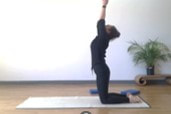 Our yoga practice is often forward looking - we practice to gain something. Perhaps we are seeking more flexibility, a less achy back, an unscrambled mind, a stronger and calmer end to our week. The idea of seeking something from yoga is universal, especially when you are getting started. We all take up the practice for a reason, and yoga in its brilliance, is often a good solution. It does all of those things, and much more. However we don't have to always seek something from our practice and their is a curious paradox here. Not seeking or expecting a reward from what we do is a different stance from how we approach most of the rest of our lives. Instead, we can move and breath for the joy of it, for the habit of it, we let go of the expectations and hopes, and simply see what arises. This step-change in our practice can be a revelation. It can provide a gentleness towards ourselves. We might discover how to listen inwards more fully. And perhaps opening towards what is there now, not what we are trying to create or get. And it allows us to discover space and be more receptive to what arises. Instead of pushing or demanding something of a posture, or of our breath or focus, invite a gentler approach. Bring an openness to a movement or to the breath, back away from pushing, struggling or trying too hard. And within that find receptivity. Pushing against anything will meet resistance. Sometimes it is appropriate to address this resistance. But it is also wonderful to let go of the pushing. Allow a pose to unfold for us instead of 'creating' it with effort. Allow the body to be more receptive to a stretch because it feels safer when not being pushed. Allow the nervous system to calm down. There is research demonstrating that if you take a stretch at only 30% of the maximum, so hardly anything really, that it is far more effective at gaining mobility than taking the stretch at 70% or higher. Receptivity and repetition do the job better than pushing, and allow us a spacious and relaxed body and mind along the way. Next time you take to your mat, instead of expecting or pushing, try giving thanks for what you already have, what is already there, and open gently into what arises without expecting anything more. It offers a beautiful pause in life which I would highly recommend.  I'm still enjoying the inspiring afterglow of last Sunday's day of yoga, reflection and intention setting. A lovely group of people gathered for the New Year Retreat Day at the Bishopston studio to take space for themselves and to delve a little more into simple but gorgeous yoga practices and refresh their yoga life skills ready for 2024.
The practices and chats on Sunday reminded us that yoga is as much about moving and breathing, as it is about the skills involved in living a more joyful life. We don't often have time in a group class for explicitly engaging with the philosophical framework of yoga, but it is a real, rich, living philosophy which once explained is hugely practical in every day life. The yoga framework includes aspects such as: ~ being kind and generous to yourself and others ~ ~ reflecting inwardly from time to time ~ ~ noticing how things effect you and adjust the stuff that isn't helpful ~ ~ being present more often, it is where joy can be found ~ ~ keeping things simple, overcomplication rarely helps ~ We do this often on the mat in our yoga class. We are invited to turn our attention inwards to our breath and body sensations, rather than outside of ourselves. To be more gentle with ourselves than we might normally. To pause and observe effects of a pose or technique. To be present and to simplify what we are doing with our attention. These are all aspects that we cultivate on the mat so that they are more available to us in daily life too. Insights are witnessed in our practice that allow us to be easier on ourselves and become wiser in our lives. And the net result will be that we become happier and healthier, nicer to be around, better to ourselves and others, and a whole lot more effective in whatever we are hoping to achieve with our day. (Win, Win, Win!) Beyond the day-retreat being a wonderful, refreshing escape from usual life, it was so valuable to discover what people took from the day. Many participants found the lifestyle framework from yoga, the 'Yamas' & 'Niyamas,' helpful for reflecting on their own situation as we took stock of 2023 and then shifted towards our direction for 2024. This framework is a way to rediscover unnurtured aspects of ourselves and remind us that life isn't all about work, or being a parent or a much-depended on support for others. Rekindling attention to our more whole self, which includes our sense of fun, adventure and creativity, will bring more joy into our life and those around us. "Wonderful,nourishing way to spend a Sunday." Very worthwhile day, would thoroughly recommend to anyone. Feel relaxed and refreshd and looking forward to the year ahead." Enjoyed the reminder of the power of simplicity. A really warm and welcoming experience." The next deep dive into our practice will be the yoga weekend retreat in April where we can take time away to refresh and nurture ourselves.
There is plenty in our lives that we have to do; we have responsibilities and obligations. But we can also make a conscious choice when the opportunity arises to resist being busy and distracted.
What can you do more of now that will feel right when you reflect at the end of your life?
When you first get started, there is a period of figuring out how to get to the mat regularly. Learning what sort of class suits you, and understanding the format of the class and what the teacher is talking about.
Then you start to figure out how to get into some basic postural forms, discover what the breath is doing. discover how to focus and pay attention. The teacher provides helpful feedback to help guide you into safe and effective practice. As the practice becomes more familiar perhaps we can then independently start to listen to our own cues and tune in to more subtle aspects. The guidance of the teacher is part of the picture, your own internal guidance perhaps starts to be of more importance. Some practice styles prioritise teacher feedback, others tend to prioritise students tuning in to their own feedback. Our own feedback may be more subtle and easier to miss until we become more sensitive in our practice. A teacher can never know what you are feeling in the same way that you can. At first you might have no idea how your feeling, but that sensitivity gradually develops. Your body might need to start grumbling more before it is listened to by you. The breath might get lost or become agitated or we might become out of breath before we listen to it. Sometimes students ask me for adjustments and may be disappointed when I suggest that their pose is in a good place, and offer cues to help them feel for themselves. Often people like to be told what to do (or perhaps they are used to being told what to do). Your body and breath are great guides, along with pausing to notice or taking more time in your practice to understand the responses being offered. Pausing during our practice, rather than just at the end, to observe moments of stillness and quietness, may seem counter intuitive if it isn't something your used to. Pausing, sometimes after each pose, can help us reduce our tendency to rush and not pay close attention. Some people take to it like ducks to water, moments of space and quiet are why they came to the practice in the first place. Some like to feel heat and intensity of a challenging practice with a strong focus to support and stabilise them. A long savasana at the end, once our energy is spent, may be the closest we get. Understanding your own practice can be your greatest teacher in yoga. Understanding the body and the breath, and ultimately understanding the mind and more subtle aspects beyond can be revelatory. A teacher / guide can be of enormous help and point things out that your not seeing and help you avoid indulging some ideas you may have about your practice. Feedback is a collaboration through relationship with your teacher, your body, your breath and the fruits of your practice.
It doesn't matter how much movement or breath or focus you are able to muster that day. Showing up, engaging in practice, connecting to your body, breath and more subtle aspects of yourself can be easily neglected, but remain instantly retrievable just by showing up next time.
Top tip: if you find you haven't got an hour or 15 minutes that week for practice, remove yourself from social media for a day and see how much time you actually have. What help can you need to support you in showing up?
Many yoga practitioners leave it there. The fruit of practice has served its purpose, the body and mind are happy, all is good. Roll on the next practice where we do this again.
But perhaps, at some point in your developing practice of yoga, this body focus and breath focus will become more familiar and come more naturally to you. The teacher will need to offer less instruction as your own enquiry and focus will lead the way. The body and mind may become less demanding and needy, allowing for greater stability and perhaps allowing space for other aspects to emerge. The teacher may become instrumental in guiding you in more subtle matters or ways of practicing. Rather than allowing the sometimes whimsical ways of the mind lead the way, guidance and direction can be very helpful. The monthly Sunday sessions at YogaSpace are intended to really put further developments of yoga practice, beyond the immediate benefits and side-effects of practice, front and centre and open it up to discussion. Reflecting on this past Sunday's morning practice we went into the depths of what the concept of 'energy' in our yoga practice might mean. Not in a text book definition, not what the ancients made of it, leaving aside theories of coiled snakes or conceptual energy centres, not in a physics theory (E = mc2 anyone?), but the actual, direct experience of energy - the stuff we are made from. Can we feel it? Where? What does it feel like? What can we 'do' with this feeling? Can we change it or manipulate it? Improve it? Find deep rest in it? Does it mean anything? Can we experience it at all? How? Finding a first person perspective of our energy without it being 'out there' (literally and metaphorically). You can't be told this, you can only experience it for yourself. It might be subtle, it might be powerful, it is certainly very curious. If your curious about your practice, perhaps join us one Sunday and participate in the practice and then discussion. 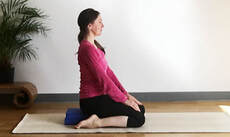 Spend a moment answering these questions:
1) What do you want from your practice? 2) Why? 3) What difference will this make? 4) Why don't you just < ... > instead? (put in something that is quicker, easier, more convenient etc.) Once you're satisfied that you've been honest and thoughtful, set yourself a suitable practice target to stick with for a minimum of one month and see if the results fit alongside your answers. If they don't, go back and rethink, or ask your teacher for guidance. Yoga can be brilliantly effective at many things. It is helpful to know what you want from your efforts and apply the tools appropriately. If your not sure you have a goal, and just enjoy the practice, that is absolutely fine, no grand goals required, but it can be helpful to have clarity on your aims and means. Sometimes our the ego tells us our efforts are worth it but it can be a competitive exercise that we are pursuing without realising it. Our goals could well be met with less practice or another activity or more breath focus and meditation and less asana. I know people who practice to get their back stronger but then avoid the safe back-strengthening exercises preferring to rest the area. Appropriate sometimes but at some point, you need to gain more stability in the back, and maintain it so that the problem doesn't re-emerge. Let me know how you get on.
At the start of lockdown, they announced an immediate and unexpected change to the way they reimburse partners (all studios and yoga teachers, not just us) and drastically reduced what they pay us when one of their members attends a yoga class. The reduction was massive, sometimes as much as 70%. This inevitably meant that our income and our teachers income reduced too. They needed to do this so survive as a business, so it makes sense for them. And it has meant that their members could continue their yoga classes during this time, which has been important.
For online yoga we have continued to accept MoveGB members and we have loved seeing you in class. But sadly this change means we have no choice but to limit MoveGB members to online classes only going forwards for the time being. At the physical studio, which we are hoping to reopen soon, spaces are going to be very limited given social distancing measures, so we have to plan accordingly. So initially we will be only accepting MoveGB members to online classes. We will continue to honour current members with online classes, but we just wanted to let you know this change ahead of time so you can consider your options as we re-open our studio space and hope to welcome you back again. As always, we welcome your comments and questions so please don't hesitate to get in touch.
Appreciate what you haveTake time to appreciate what you already have and not get too caught up in high expectations for the holidays. Enjoy what comes your way, and find abundance in each moment. Notice the simple things that you take for granted and marvel at how amazing they all are! Try some home yoga practiceA great time to commit to a short daily yoga practice, even if it is only one pose, or sitting and taking 12 steady, slow breaths. Sanctuary in a bookFind sanctuary in a contemplative book, even if only for 5 minutes a day. Be in natureSpend some time with nature. If that isn't possible, spend a few minutes each day gazing at a tree or plant. Treat yourself - mindfullyTreat yourself, but try and do it mindfully so that you really enjoy it and will remember it later on and so enjoy it again when you think of it! Be kindDo a kind action every day for no particular reason. Share some joy with others in your local community, or do something kind for yourself. Random acts of kindness, even if only a smile to someone you don't know.
Here's to wishing you a wonderful holiday season and a joyful and healthy new year. x 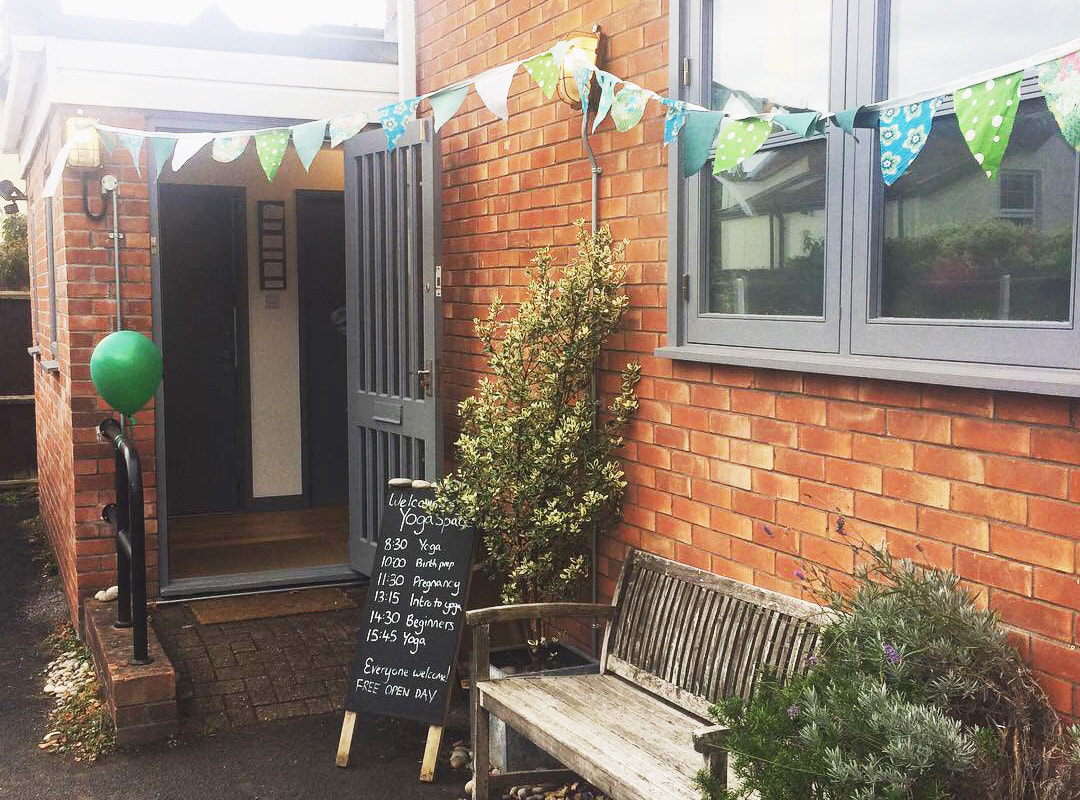 Free yoga to raise money for charity! We are delighted that we had another successful Open Day with the other independent yoga studios in Bristol as part of the Bristol Yoga Trail. Together we all raised a whopping £943.59 for charity, all going directly to OTR (Off the Record) supporting young people's mental health. Each £10 raised equals a counselling session for a young person and we are so pleased to be able to support such a good and worthwhile cause. Thanks to everyone who came along to our free yoga classes. From the 8:30am Saturday morning yoga class, to the pregnancy yoga and the viniyoga classes, everyone seemed to have a lovely day and we certainly enjoyed meeting so many new faces and beginners to yoga. Gloucester Road in Bishopston was buzzing and the balloons from our studio and Yogawest next door made a gloomy day into something quite delightful. Don't forget to use your discount vouchers and come back and visit us again soon! x 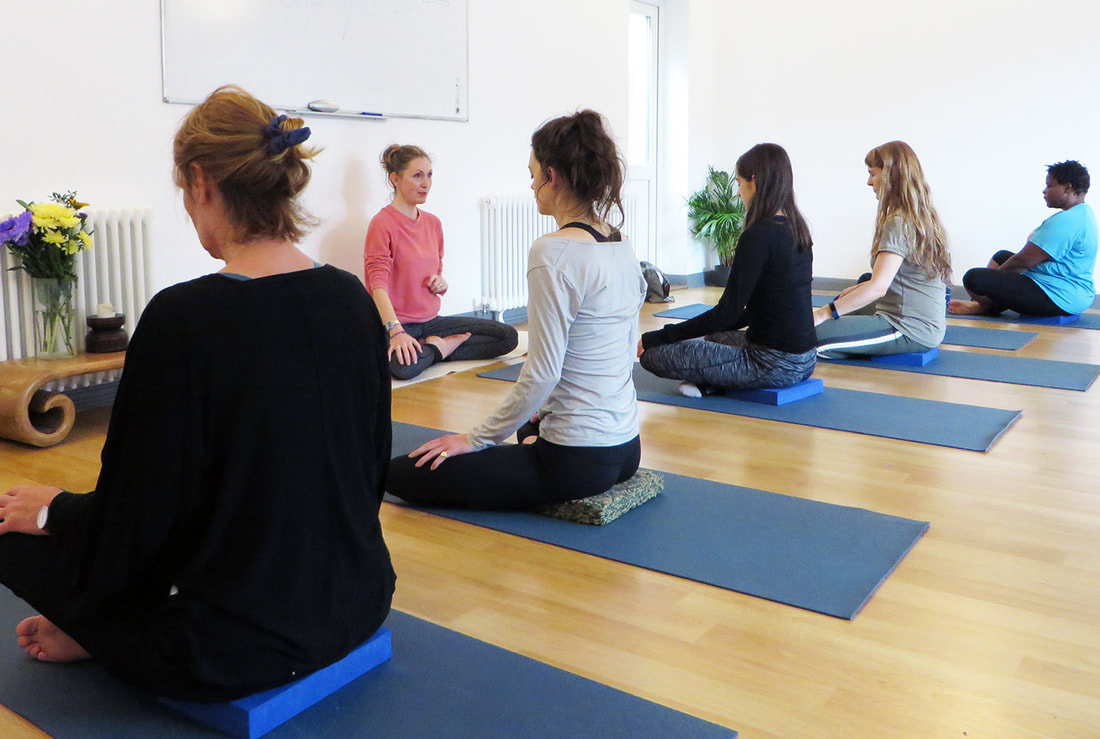
Breathing well in yoga can seem tricky As a beginner to yoga, it can seem difficult to keep the focus on the breath. It is common to find that you’ve been holding your breath and straining in some postures. Arms and legs are just about doing what the teacher has invited you to do - but your breath, well who knows? This is particularly noticeable in a fast-paced or deeply strenuous class where the body is most dominant and anything else gets left behind as you work your way through the class. So what if my breath isn't great?Day to day we typically breath 12-15 breaths per minute. The rate, depth and quality of it can help adjust our levels of anxiety and stress, our immune system effectiveness and many more physical and mental health markers. Yoga offers profound teachings in the breath if we choose to listen that can support our health, wellbeing and awareness in our day to day lives. Familiarity helps to develop our breath focusGradually, with familiarity of a regular yoga practice, we can start to remember to breathe with a flowing and calmer breath. And eventually the breath and movements start to link together more. From here we can start to take that further still and refine into a more advanced yoga practice. Once you feel you are able to link the breath and movements together, then the power of the breath can really start to be harnessed and the refinement and quality of our yoga practice can bloom. Our nervous system will feel immense benefit from working skilfully with breath centring and we can move beyond the endorphin highs of vigorous and strenuous yoga practice and move towards maturing our yoga practice. The breath powers our yoga practiceSounds obvious, of course we need to breath to power everything that we do or we’ll collapse in a heap. But it is easy to forget about the quality of our breath when distracted or physically strained. What if you eased back from the strain and found a spaciousness in the breath to develop the power of your yoga practice instead? What would that feel like? What could it do to your yoga practice? What if we found our physical alignment from our breath?We often listen to the technical instruction from the yoga teacher: move your foot here, rotate your hip there, etc... Breath-centred practice can support us to more naturally open and expand your body into a posture, rather than teaching instruction being the main driver. Explore how your breath can position you into a natural alignment from within that is unique to your body structure and your deepening breath. Starting out with breath-centred yoga practiceThe classes at Bristol YogaSpace work with a deeply breath-centred approach to yoga. Rather than simply coordinating with our breath, which is common in many Vinyasa, Flow or Ashtanga yoga practices, we centre ourselves in the breath more deeply and use it to power the practice and direct the postures and focus.
When I started out some 20 years ago I practiced Ashtanga yoga, a vigourous and strong yoga practice, then Iyengar yoga which is technical and detailed in its formal postures. But I eventually discovered a truly breath-centred approach in Viniyoga and practice was transformed for me. Perhaps ask your teacher more about the breath when you feel ready or curious or come along to a Viniyoga class which specialises in breath-centred yoga practice, or a yoga workshop to support you to develop more breath centring in your yoga practice. Enjoy your yoga practice. “Without breath, it isn’t yoga – it is like a river without water” Krishnamacharya
The gentle yoga class was quieter but always nice to be able to offer a more adapted and therapeutic approach to yoga practice for those who want to start there. Small groups are ideal for this approach to yoga so that we can ensure that it is adapted and suitable for you.
We are pleased to say we raised £163.28 for Off the Record, the local Bristol charity providing free mental health support for young people. Thanks for your donations and the donation jar is there this week for anyone who wants to drop-off a donation who didn't get a chance on Saturday. It was a lovely chance to collaborate with many of the other independent yoga studios in Bristol too. Our lovely neighbours, Yogawest, who offer the more alignment based Iyengar yoga joined in, Yogafurie who offer hot yoga in Ashley Down, Yogasara and Bristol City Yoga in Stokes Croft, and Flow yoga in Windmill Hill. It is so nice to collaborate with the other 6 studios, work together to share yoga to the broader Bristol community, and raise money for charity. It is great to demonstrate that in this day and age, not everything is competitive or trying to get ahead. We all love yoga and see if as a way to share our love of it with as many people as possible, bring people together and become more integrated with our communities as a collective. Looking forward to the 2018 yoga trail and working with the other yoga studios again to bring that to everyone. Thanks again for coming and we welcome you back to the YogaSpace studio in Bishopston soon!
Church halls can suckChurch halls are not ideal teaching or practice spaces. I still teach on Thursday evenings in Westbury Park with limited heating, lentils leftover on the floor from the preschool earlier in the day, and don’t even get me started about the red glitter stuck to the yoga mats that will remind my students when they get home that they did cobra posture as the shiny specks remain on their foreheads. But I value these classes in many ways and value the students who come so enjoy teaching them anyway How I came to own a yoga studio I didn’t have big ambitions for what I was trying to do, just a space, a resource, to teach what my teacher Paul Harvey had taught me and what I had discovered along the way and find great value in, and pass on this helpful stuff that I was privileged to be able to have time to study and practice. Before starting the studio in 2009 I had a good job that I enjoyed and was teaching yoga part-time in the evenings in the church hall. I didn’t really have plans to start a yoga studio. But one morning I was early to an appointment with my hairdresser on Park Row, so was hanging around near her salon and noticed to sign advertising a space that was for rent. A great place for a yoga studio, right in the centre of Bristol. I recounted this to my hairdresser as I was in her chair and she mentioned that their basement was unused and I should take a look. I did and the seed of YogaSpace was planted. The yoga centre at 10 Park Row opened a couple of months later. At first it was just me teaching classes. Then once the yoga centre started, many teachers approached me to be able to teach there. Naomi started up her Tuesday evening classes which she still runs now. I navigated the changing yoga landscape as best I could as the eclectic practice styles became more popular. I found some wonderful people along the way, and hopefully have offered teachings and classes that the students of YogaSpace have found helpful and valuable and created a studio space that the teachers have enjoyed teaching in. Push yourself, or restore yourself? Or neither... Eventually though my heart was less and less in it as I found myself managing a centre and lots of other teachers and having less time for my own teaching and study. And also finding that the style of modern yoga practice was changing in a direction that I didn’t feel aligned to. It felt more and more fueled by the need to exert, sweat and push ourselve, or on the flip side of that, to relax and restore. To ‘get’ somewhere with our practice rather than discover what we already have. How to 'open your heart'?Yoga seemed to be becoming more physical in what was being taught, more entertaining for people who come to class, physically challenging as the primary focus, creatively expressive and freeform, maybe with a sprinkling of yoga philosophy and perhaps esoteric symbolism. I kept coming across romantic sounding notions such as ‘opening your heart’ (metaphorically and symbolically interesting when presented thoughtfully and with context but otherwise a phrase that in my opinion needs further examination). I needed a rethink of what I was spending my time doing. My compass felt a little off kilter. I had somehow found myself hosting and promoting classes that while enjoyable and of use to those who attend, I didn’t personally love. Paul Harvey's yoga centre, YoganjaliThen my teacher, Paul Harvey, decided to pass on his yoga studio as he was going to be primarily teaching smaller groups and 121 yoga ongoing and didn’t have need of a larger studio space. His beautiful studio, Yoganjali, established in 1998 and where I had taken my teacher training was in need of a new owner. It’s an ideal space, down a quiet cul-de-sac in the heart of Bishopston. If you could design a yoga studio from scratch, this would be it - beautiful, quiet, simple, functional, warm, light, tranquil, and just off a bustling high street. My personal history with yoga was embedded here, steeped in the tradition of Krishnamacharya and Desikachar. No brand names or stylesSo here I am, now based at Bristol YogaSpace in Bishopston, with like-minded teachers, without a brand name or ‘styled’ yoga approach, just simple, breath-centred yoga orientated towards personalised yoga practice, taught in small groups or 121. And I love it. Good luck to Bristol Yoga Centre!Naomi I’m sure will do a wonderful job with Bristol Yoga Centre. It is a lovely studio space and I loved the 7-years I spent there building a vibrant yoga community. I miss the teachers and students and I’m sure our paths will continue to cross, but I love where I find myself. I’ve gone back to my roots of teaching what I have a firm conviction about, and returning to study with Paul Harvey for the rest of the year. This time around, I’m hoping to keep my compass more aligned and closer to my heart. I wish Naomi and all those adventurers out there happy travels and very best wishes with all the other wonderful stuff!
1) Friendly teachers
All of our yoga teachers are friendly, supportive, and are there to help you experience yoga and its benefits in a way that suits you. We are all different, need different things from the class, and friendly, approachable teacher will help you get there. 2) Health info When you arrive, it is best to arrive 5 or 10 minutes prior to the class starting so that you can fill in a quick health questionnaire and meet the teacher. We like to know about any injuries, fitness limitations, health problems, relevant experiences that might benefit from additional supervision, instruction or adaptation of the practice to ensure it suits you. Every body can practice yoga safely and getting started at the right level will help you get there. 3) Smaller classes We have a max of 15 in each yoga class, most classes are smaller. We strongly believe in supporting each individual and providing a good level of attention that will get you started safely. In a smaller group this enables the teacher to observe your practice and develop it when the timing is right. 4) Teacher-student relationship Our teachers will get to know you and your health background, will observe how you practice yoga, where your interest develops, and be there to offer guidance during the class and talk through any questions both before and after class. There is no substitute for an experienced teacher to guide you along your yoga journey once you get started. 5) Step by step All our classes are taken step by step, maintaining and developing your ability to practice in a group class and perhaps at home safely once you are familiar with the movements, techniques and ways of practicing yoga. Every body is able to participate and any postures or techniques that don't suit you, or are inaccessible for whatever reason, will be adapted or substituted suitably for you to enable you to get the most from practicing yoga.. 6) Feel better A new class should leave you feeling energised, settled, refreshed, more relaxed and spacious, both mentally and physically, than when you arrived. The benefits of yoga should feel immediately apparent and enjoyable. Then with regular practice to help you learn them, the tools of yoga, the movements, breathing techniques, meditation techniques and approaches that you learn in class, may well become a lifelong support...  Do you know anyone who isn't busy? Really busy? Chances are you have a long list of things to do (once you've done all the things you need to do). And once you've done that, you'll find something else to keep you busy.
Radio 4 recently had a short article on how we are 'addicted' to being busy and I have to say it rang very true. As a society, it is almost a badge of achievement to say your really busy. We value you, the idea of doing, achieving, getting more things done. Really it is easier to be busy than to not be busy. But are 'busy' things distracting us from bigger objectives? We're so used to our time being filled that I'm not sure we'd be entirely comfortable with having nothing to do. When we might actually get a chance to turn our attention beyond the daily distractions. Unfortunately stress, health dilemmas, being 'burnt out' are all modern day results. And what have we really achieved? The idea that we are too busy to take care of ourselves, to maintain a balance in our lives between doing, achieving, and being and experiencing is a conversation we should probably all have with ourselves along our journey - regularly. Yoga practice, and other meditative practices try to encourage moving away from 'doing' and entering a state of 'being' as a regular habit. To become familiar with other aspects of our lives and see what arises as we do this. At least weekly, preferably daily, try simply 'being' for 5 or 10 minutes. Try sitting, gazing, breathing, meditating, a moving meditation such as yoga, whatever you like. Try it and see what happens...
1) Listen to your body and be comfortable
Make sure you feel comfortable in all the poses and during breathing or meditation. Adjust to use more blocks in postures or perhaps a chair is a useful support, and talk to the teacher about how to make it comfortable if it isn't. Encourage yourself to take easier alternatives if you are feeling tired or overwhelmed, especially during your third trimester. 2) Take extra care in your practice If you are a beginner, then this will be easier for you as you'll be approaching the practice with less expectations. But if you are an experienced yoga practitioner, you may need to focus on practicing in a new way, changing old habits of yoga practice, and perhaps even letting go of your favourite pose while your pregnant. Your body is changing, daily, and your postures will need to adapt to this, both in the choice of posture, and in how you do them. Of course you still want to stay strong and supple during your pregnancy to avoid common aches and pains, but be careful to avoid over stretching (see below) or straining. 3) Make space for your baby Stand with the feet wider than your hips and be careful not to squash your baby-bump or feel any pulling in the abdominal area. Forward bends are still wonderful to practice as long as you keep the legs wider, bend the knees and go as far as feels right for you and feel comfortable doing them. Avoid deep twists in the abdomen, keep any twisting lighter and 'above the bra strap' so your shoulders are twisting comfortably, but not your belly. Consider twisting in ways that leave more space in the belly area. Don't push yourself into anything. 4) Start any time after 13 weeks The sooner you start, the more benefit you will gain and any time from 14 weeks is a safe time to join in unless advised otherwise. And you can continue all the way through as long as you feel good and keep enjoying the practice. 5) Keep your spine strong and healthy Keeping your back in great shape will help support you all the way through your pregnancy. Focus on keeping your spine lengthened in asana (postures) and use your 'chin lock' (jalandara bandha) to help keep your spine and back of the neck long. Ask your teacher if your not sure of course! 6) Be careful of over stretching Your body is producing a hormone called Relaxin during your pregnancy which makes you feel more flexible. You might find you can stretch further than usual, but don't be tempted to take advantage of this extra stretch. Your tendons and ligaments won't thank you later if you stretch too far. Don't stretch 100% in anything, hold back a little and be less ambitiious. 7) Engage your pelvic floor Great to tone this area to facilitate post natal recovery. On the exhale, think about lifting and engaging your pelvic floor. 8) Avoid straining the abdomen Approach leg lifting carefully, especially if you feel any pelvis discomfort. Listen to the advice of your mid-wife if you any discomfort in your abdomen or pelvis, it might mean you need special consideration in your yoga practice so talk to your teacher. 9) Choose your class carefully Your yoga teacher should have specialist pregnancy training, but you don't need a specialist pregnancy class unless you want one. (The British Wheel of Yoga offer a good standard of accreditation for pregnancy yoga training). A good class should be small enough so that the teacher can adjust the poses to ensure they are suitable as your body will change through each week of your pregnancy. The class can either be a general class that will adjust the poses for you, or a specialist pregnancy class, whichever you prefer. If your tired, consider a daytime yoga practice when you have more energy. If you have special needs, consider a private lesson or two first to give you some guidelines on safe practice. 10) Enjoy the class Yoga practice should feel enjoyable and leave you feeling energised, revitalised, relaxed and calm. You can keep it up as long as it feels good and doesn't leave you feeling over tired. Enjoy... See more on yoga classes during pregnancy here. Back to YogaSpace homepage.  Life is busy and stressful but yoga can help give you peace of mind, health, strength and support. We talked about this and much more when I was recently invited as a guest on Steve Yabsley's lunchtime radio programme. So if you have 20 minutes, have a listen by pressing the play button below.
(Or find the full radio show on Listen Again here >)  We are delighted to open our doors on Sat 13th September and invite everyone to join in our free yoga classes, meet the teachers and enjoy refreshments.
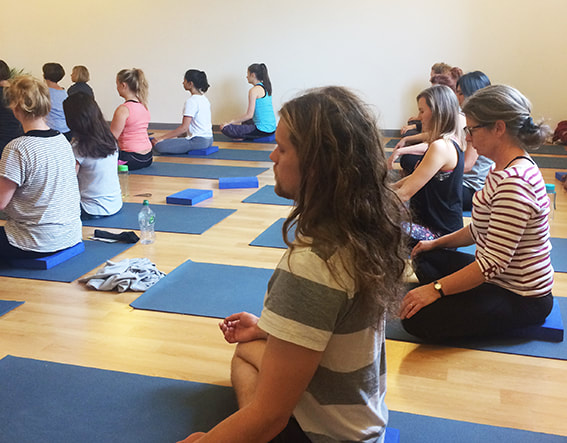
We are inviting you and your friends to join us, whether you are a beginner or just want to try another style of yoga or a new teacher. Everyone is welcome! Free class schedule 11:45 - 12:45 Flow yoga with Virginie and Sheila 13:00 - 14:00 Beginners yoga with John 14:25 - 15:15 Viniyoga with Clara 15:30 - 16:30 Beginners yoga with Clara All levels of fitness and experience are welcome to all the classes. YogaSpace along with most of the other yoga studios across Bristol are all opening our doors for the 2nd Bristol Yoga Trail. Last year's was great fun so hoping to make this year's even better. Hope to see you there! See the Bristol Yoga Trail website here > Back to YogaSpace homepage > 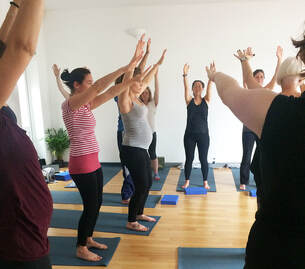 Each week in my yoga classes in Bristol, I see people come in to class feeling tired, perhaps agitated by their day, and usually more than a little lack lustre.
When they leave, there is a noticeable difference in how they seem. They are usually settled, calmer, and more comfortable in themselves. A better version of themselves. They have changed. During the class we move the body, opening, expanding, stretching, challenging, engaging and working the entire body in some way. We breathe fully, slowing and extending the breath where possible. And we try to focus internally and our breath. I came across a fascinating talk by Amy Cuddy recently called 'Your body language shapes who you are'. Amy is a social psychologist. She researches body language at Harvard Business School and she was interested in researching how body language not only effects other people's perceptions of us, but how it actually effects our own body chemistry. In her research she concluded that by standing up tall with the feet apart and with the arms raised and open for only 2 minutes daily, we can raise our testosterone levels (dominance hormone giving a confident outlook), and reduce cortisol levels (stress hormones). Simply by changing our body position in this way, we are altering our hormones and brain chemistry. We are changing ourselves to not only feel but become more powerful, confident and laid back. Great! In yoga classes it is very likely that you'll do a lot of arm raising like she describes, standing with the feet apart, reaching up, opening up. Also combining this with bending forwards, twisting and so on. So her research suggests that we are actually changing ourselves and our hormones in a very real way by doing this. I took two things from Amy Cuddy's inspiring talk - firstly, that yoga postures seem very aligned to the body changes she talks about, and that by doing them you'll actually become more confident and laid back. - and secondly, that only a little practice, taken regularly, can make a big difference! Pass it on... PS. I love TED Talks! Back to Bristol YogaSpace homepage |
More blog articles >
Categories
All
Archives
April 2024
|




 RSS Feed
|
Bristol YogaSpace Ltd
Princes Place, Bishopston Just off Gloucester Road Bristol BS7 8NP |
|