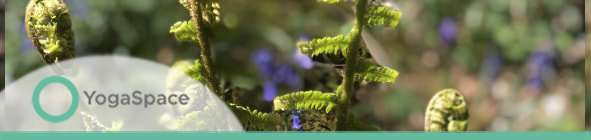
 It's spring at the moment and the weeds are growing, fast. They are called weeds because they grow fast, and spread easily. The garden is a wild and busy place if left to itself.
Spring is a great time to take stock, to decide what we want to keep, what we want to cultivate, and what we want to minimise and have less of. If we don’t decide to pull out anything, before long we have a wonderfully wild but overgrown garden. This if of course a great metaphor for our life, and for our body-mind. We cultivate the good stuff, what we want to encourage and want more of, and discourage the rest. This takes an objective mindset and clarity, and our yoga practice helps us come to this place. We come to our mat and use our moving and breathing practices to quieten our mind, revitalise our energy, and come back to balance. And from here, with clarity, we can observe and notice our usual habits. In our practice habits might show up as postural tendencies, pushing and striving to ‘achieve’ a posture or breath length, judging ourselves harshly, observing breathing patterns, noticing recurring mental thought-loops and patterns, and so on. Then we might go to the weeds and start digging. We react to what we notice and perhaps want to change it. We look for ways to be different from how we have noticed ourselves to be. We catch ourself and try to change the course. But are we over-weeding...? There is a lot of talk about ’self improvement’ and working on things to make them better / more efficient / less problematic. Within this framing it is easy to treat our yoga practice like this. But with it we might lose sight of all that is already whole and right about ourselves. We might tend to the weeds but forget to enjoy the flowers, shrubs and trees. In part our yoga practice is about noticing the whole. Noticing the inherent harmony that is so self-evident and at the very foundation of ourselves, that it is easy to overlook. There is a beauty in every single breath that we take - no matter whether it is shallow or deep, quick or slow. There is a whole body harmony that just works without us having to do anything. We come to our mat and notice our breath, move the body to it, and can rediscover an ease and balance. When I look at my little apple tree and enjoy its blossoms, I don’t look at the gnarly bits, or the imperfections. I enjoy the beauty of the whole tree and find that the imperfections are actually what makes it this particular expression of a tree, and that it doesn’t look exactly like any other tree. Like trees, we can cultivate seeing ourselves as uniquely different from anyone else, yet already perfectly whole and beautiful. When we look at a little baby, rather than look for its imperfections, we take in the whole beautiful miracle of them, and marvel that they are possible at all. Stepping back and enjoying this inherent beauty in yourself and all around you is well worth doing (BUT strangely hard to do - which is why yoga helps us). We don’t take this stance to get better or to improve anything, but to remember that we are already bloody amazing.
0 Comments
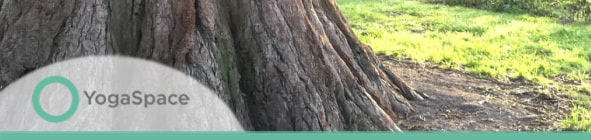 Trees are the silent giants all around us, with beautiful trunks, branches, leaves, twiglets, birds perching, wind rustling. The roots are the invisible foundation, the part of the tree that is unseen, and often unconsidered. Even when you trip over a tree root when walking next to a big tree, it feels separate, not like an integral part.
Of course the roots are essential, and often overlooked. Our feet are in a similar position. They are our foundation, our support and yet they are wrapped up and perhaps neglected somewhat. The encumbrances we overlay on our feet are physical and mental. We bundle them up in socks and shoes and are surprised when don’t thrive and develop problems. We think about our feet but don't fully and vibrantly feel them and embrace them as an integral part of ourselves. They are often an after thought. And of course we can do very well without them, but if we are lucky enough to have them, then they are part of our whole. Yoga is a wonderful chance to set the feet free and invite them to do what they do best - support us unencumbered and fully integrated. I know some like to wear socks to yoga, and there are many reasons why this can be a good idea, skin conditions etc. Yet bare feet has a vibrancy to it. Feet are designed to feel texture and temperature, to spread out and connect to the ground, and to be responsive to all that they encounter. My teacher used to joke that doing yoga in socks was a bit like taking a shower with your pants on. Fine, but not quite as effective and refreshing :-) My feet were the butt of many a joke when I was a kid. They are short and wide, with toes the same length - not really optimum. But we all have what we’ve got, and we make the best of it. The orthotics I was prescribed didn’t help and were uncomfortable. The orthopaedic surgeon suggested breaking a bone or two and resetting my foot at a better angle (no thank you). But actually, the thing that made the difference in the end was barefoot yoga. Using my feet unconstrained and given them the chance to do what they were designed to do. I’m sure yoga is also why I didn’t get the predicted bunions until my 50s. And now a couple of compensatory exercises help keep my feet pain-free. We are working with Tree Pose in my classes this term which is a very feet-centred pose. It has has something to offer everyone, no matter how steady or wobbly your balance is at the moment and there are many stages to the pose to support and develop stability. Being foot-centred doesn’t mean we need to ‘do’ anything extra with the feet intentionally. Gripping or bracing the foot may even be counterproductive. Let the feet relax. Feel your feet from within, rather than thinking about them from your head down. Invite them to connect to the sensations of the ground pressing in to them, and feel them spread out rather than grip in. Enter the initial stages of the pose with a sense of curiosity, shifting our weight over, whether or not balance is available. The foot over time will figure out what to do. To wake up and do what it is designed for, without the shoes and socks. Invite rather than ‘will’ the foot to support the pose and openly notice what happens. Do you tense up? In the foot? In your neck? Are you holding your breath? All these habits that show up in our practice are often helpful to notice and explore further. It is true, practice will help our balance. Just like when we were toddlers, and it took practice to balance on two feet. If your new to balancing or find it hard or intimidating, consider yourself the toddler that will figure it out given the opportunity. Practice standing more on one foot than the other daily with bare feet and notice the change that happens. If your more experienced and enjoy the challenge of feeling rooted and extended at the same time, experiment at the different heights available in Tree Pose as they all offer different explorations. And any frustration you find in your balance is simply an optional extra that we can choose not to invite along. 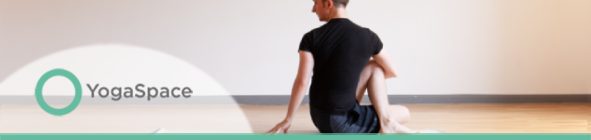 It's windy out there at the moment. I can hear it on the window, and can see the close-to horizontal rain. I can also feel a surge of excitement when the weather takes a dramatic turn - which seems to happen more when wind is involved.
The British love the weather, we get a lot of it. It changes our environment so rapidly to one that is easier or harder to navigate day-by-day. I remember my kids when they were little, they seemed to get 'whipped up' into tricky behaviours when the wind was up. It used to be my least favourite kind of weather. I've always sworn off wind-surfing as it basically involves standing up with a sail in the wind, which seems like my idea of a bad day. Then someone once said 'think of the wind as blowing away the cobwebs'. Try seeing wind as being refreshing instead of hiding away from it. Try embracing it, let it blow right through you, clear you out, blow away old moods and grievances, and then enjoy the post-storm calm as a fresh start. Things are swept clean and there is a sort of purity that remains. This has helped me embrace windy and rainy weather. To enjoy it as a positive. Appreciate the sun when it's shining as the contrast is so stark. I've lived in sunny places where the weather is pretty predictable for weeks and months on end. Wall-to-wall sunshine and warmth. It is lovely, but it also gets pretty samey. The variety we enjoy offers the chance to fully savour the good stuff more when it is here. No matter what the weather is where you are, there is always an embrace to be found. The cliche that says 'the sun is always shining' is of course completely true - somewhere it is. And the practices of yoga help us reframe our relationship to clouds, which helps the sunshine stay in view. In the Yoga Sutra, an ancient text that holds some of the earliest writings on yoga and a whole lot of wisdom, there is a verse that teaches the practice of 'cultivating opposite thoughts and emotions' (Chap II.34). The turnaround. Things that are bothering you or causing disatisfaction can be reframed. It's an idea the Stoics employed too. Why practice this? Then your day, and your life, can feel a whole lot better. Try it :-)  One thing you discover as you age, is that things ache more. There are more sore bits, injuries take longer to heal and niggles can frustrate our efforts to be pain free.
The body simply isn't as resilient as it was, and we need to work harder to maintain stability and mobility. We are all aging, and we can't wait for a pain-free day to do something positive to turn the tide. It takes more effort to hold our ground than it ever has before and waiting will only set us back further. I had a recent minor skin surgery (thankfully nothing to worry about). It didn't stop me practicing. I had to modify my yoga postures and work around any forward bending so that the stitches could work their magic. My sprained ankle a couple of years back when I slipped into a hole in the park didn't derail my practice. My foot went black and blue and was swollen so cross legged was off the cards, but I simply had to avoid things that hurt, and ensure that I showed up to my practice with extra care and attention. A bit like if I have a sore in my mouth, I don't stop cleaning my teeth. I just brush them more carefully, respect the sore bits, but take care of the rest of my precious teeth and gums in the meantime. If your waiting for the day that nothing aches to get to your mat . . . The Pros - there are lots! Working with an injury can be brilliantly insightful. You'll discover an easily enhanced focus as the sheer risk of not paying attention is far greater. It is easy to view injuries as bad. Granted, no-one invites them, we all want to enjoy the freedom that good health affords. But discomfort is such an amazing opportunity for self-enquiry. Instead of fighting against, and getting frustrated by, your ailments and symptoms, treat the sensations of the cold / achey hip / swollen ankle etc., as the body giving you information about what it can and can't do today. Be curious about the patterns in the mind, the way judgement and negative bias creeps in, and the potential for your intentions to be derailed by over-thinking. All patterns worth getting to know. It is tempting to let movement and meditative practices drop off the priority list in the face of discomfort, congestion, fear etc. but it can be such an interesting and valuable time to practice. It affords new insights and rewards that are very different than if you were feeling fine. And the yoga still helps, even when it is more gentle than perhaps you would choose. You always feel better, more grounded, relaxed, energised, you'll recover sooner, and it can even adjust your relationship to the ailment to become more positive. I found Covid completely fascinating. I had new sensations in my body. My smell went completely. And mentally I knew I had 'it' - the dreaded thing that was sweeping across the world. It was in me, right now. If I allowed it, it could feel a bit scarey. But also there was a level of excitement. How interesting?! That thing that everyone is talking about, I get to experience it first hand, before anyone else I know. Was I going to be okay? Who knew. A completely new experience - how curious, a new adventure. I was lucky enough to have it while on holiday and at no point did I feel so ill that I contemplated hospital. There was even something of a relief at getting it. There was no need to avoid getting it any more, at least for a few weeks after I felt bullet proof. A layer of worry that I didn't even realise I had been carrying around had vanished. That was worth discovering - that I didn't even realise I was that worried. I had discovered a lot about what 'worry' in its more subtle guise looks and feels like. Worth knowing. And from there I just had to go with what unfolded next. My yoga practice was a revelation. My postures and breath felt different. Each practice held a sense of fascination at what it was actually like to be in a body with Covid. The physical sensations, plus the stuff in my mind. The temptation of dramatic narrative and fear of what might happen next, drawing me away from what was actually my direct experience of what was happening. The vividness of experiencing my new body, within the familiar ground of my daily practice, helped deepen my practice and level of attentiveness and meditation. All brilliant insights to carry forwards. Ultimately life is often out of our hands. We like to think we are in control, we often try to be which can take so much energy. Illness and injury are times when situations are taken out of your hands in a visceral way. And this has great value and benefit. This doesn't necessarily mean showing up to class with a streaming cold, but show up to something. Show up online and take it gently, take a short video, do your own personal practice. There is always something you can do, and it is always worth the effort. The old adage life is a journey, not a destination, applies at its best here. The journey is possibly the opposite of what you would have chosen, but there is plenty to enjoy anyway, it might just take a shift of mindset. Definitely something worth practicing.  Did you almost not make it to your mat this week? Did your hip ache more than usual? Or have you missed a week a couple of weeks and need to re-establish the habit?
The hardest part of a movement practice can be simply showing up, even when we don't feel like it. The challenge of the practice, the physical and mental 'progress' has its own inherent motivation - but what motivates you to show up? Initially we need to establish a baseline that feels like it is meeting our needs and goals. Finding a sense of reward that motivates us to continue showing up. We need to feel like the forward bend is getting easier or doing something good, the breath is becoming more spacious and accessible, the back is less achey, our mood feels lifted after practice. At first, we need to meet the resistance to getting on the mat head-on. Find out what the obstances are (Netflix? Instagram? Bad weather? Kids or work derailing our days? Twingey back?) and figure out how to step on to the mat even when life doesn't pause and make space for it. Showing up messy is much better than not showing up at all. We can often get a little lost in the idea of tangible progress, and overlook the more subtle aspects of yoga which are possibly even more valuable. The improved sleep, the less urging for snacks as our anxiety isn't as heightened, the increased patience with our kids, colleagues and neighbours, the inherent 'okayness' with our day. We need to acually 'do' yoga for anything to begin to improve. I used to clean my teeth because my parents told me too. Because my dentist insisted and I was scared of him. And now I do it because it just doesn't feel right to leave them uncleaned and I know I still want to have my teeth decades from now. It is a baked in part of my day that I would go to some lengths to achieve, even if I lost my toothbrush. This built in motivation and habit of practice happens in yoga practice. It takes a while to get to this stage of stability. Initially the effort is showing up and noting the motivating rewards that will keep you coming back. The sheer joy and pleasure of it will eventually shine through. It might very well become the most joyous and pleasurable habit that you ever learn to cultivate, which positively influences the very foundation of your life. To help you get to your mat, it is helpful to pre-commit to your practice. Plan ahead, schedule it in, prioritise it. It's important. Identify your obstacles and show up anyway. We need yoga more than ever. If you haven't even got 5-minutes for practice, set aside at least 10 and show up. You'll be so glad you did.  The uplifting sunshine has been soooooo welcome this week.
When the sun shines I always remind myself that the sun is of course always shining.... somewhere. Today it shines on us. While we can't rely on the weather for joy and good vibes, especially in this rather drizzly part of the world, it is so much easier, isn't it? My week has been a doozy, but I'm here at the end of it enjoying the nodding daffodils. Even with life's challenges and ups and downs, we still have access to an inner stability and steadiness. Our inner weather isn't reliant external clouds. My yoga practice, my moving, breathing and meditational practices, brings me back to this place of calm, spacious ease every day. The more I practice keeping that connection alive and vibrant, the easier it is to draw upon it in the midst of a challenging circumstance (or teenage tantrum). This is a life skill that is definitely worth cultivating. Part of the practice of yoga, is this invitation to put aside our usual operating mode - the mode of keeping busy, anticipating whats coming up, worrying about it, prepping and planning for it, and so on. And discovering that there is another place to stand. In our yoga we can discover that there is actually a space, a moment, where we can fully and completely arrive. Arrive where? Right here. Try stopping for one moment. Stop chasing the next thing, the next thought, the next sentence, the next worry that wants to fill the pause. Notice that there is no problem in this immediate moment to solve, but a quiet, calm presence that was there all along. The problem that does need solving will still be there after this pause, and you'll be able to come at it with a fresh, calm perspective and engage with it more fully. In our yoga practice, the pauses on our mat between our poses look like nothing. They look like we are waiting for the next pose. Waiting for the next instruction to guide us. The pauses might even feel boring in contrast to the busy sensibility that drives most of our day. But the ultimate reward of practice is the full arrival in each moment. And the moments can be most readily noticed in the pauses between poses, between breaths, and between thoughts. They are there, they are subtle, at first they are fleeting and feel non-existent. Yet these moments can be the most fruitful part of our endeavours. Don't worry if you haven't noticed any of this yet. At first the poses are the stuff that make sense, that fit in to our modern mind-set of doing more things to sort out the other things. And over time the unfolding of pauses will become an unlocked treasure that, like the sunshine, is always there waiting to become visible. 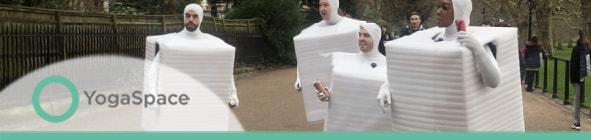 I was in a park recently and these wonderful people dressed as sugar cubes were making their way down the path smiling and being rather exuberant as they went. Almost everyone they encountered broke into a smile. They were people in silly outfits having fun, disarming everyone with relentless joy and enthusiasm.
I think there is research backing this up, but even faking a smile helps you feel better. Sharing a smile with random strangers in the street helps you feel happier. The world needs a little more joy at the moment and it starts with each of us. The news can seem bleak, the weather grim, the trees are a little bare etc. But that doesn't mean there isn't an abundant amount of joy to be found. It perhaps isn't as obvious and we might be out of the habit of looking. Don't get stuck thinking everything is awful. It really isn't, even if on the surface it might appear that way. Okay, we don't have to go as far as dressing up as sugarcubes (I think they were being paid, promoting a sugar free drink or something), but start with smiling every opportunity you get. Fake it till you make it. Wave to the next person who stops at the zebra crossing for you. Wish the cashier in the supermarket a lovely rest of day. It seems trite, but it is infectious and we all need to be reminded that it starts with us. Make someone elses day. It feels good! Of course yoga helps with this. Consider it part of your daily practice. It helps us catch the downward trajectory of negative thoughts and reframe them. Note if you are feeling disappointed or frustrated with your practice and remind yourself to let go of the analysis and judgement. Pay closer attention to the sheer fact and wonder that you are breathing and moving today. There is joy to be found in each breath and remembering to recognise that is something worth practicing.  All yoga is good... to a point.
Take the analogy of cooking. McDonalds is food. It has good energy, has great texture and flavour (subjective - but many would agree and $millions has been spent on developing it in labs), it fills you up when you are hungry, and has protein and carbs to keep you going. And you don't even have to know how to cook! Home cooking is better food. It has good energy, fills you when you are hungry, tastes delicious, but you take more responsibility for what you put in it. You are more discerning about your intake of the 'other stuff' (fat, salt, sugar, low quality ingredients). It is more nutritious and will serve your longer term health 1,000% more. It has better balance that includes fresh vegetables and micronutrients. It avoids the stuff your allergic too, and gives you more of what you actually need. It adapts each week and each month depending on the season or the stage of health or stage of life. But you have to learn how to do it. When we first start yoga, we work on the assumption that what we desire is what we should have. We find the Youtube videos we enjoy, or the class that makes use feel great. This is almost everyone's starting point. We simply wouldn't carry on if it didn't feel good. It is a great place to start. The larger class can be fun, exhilarating and challenging - enjoy the great vibe and energy of the room. The cons are that the practice might not be quite right for you, and over time, this can be a red-herring in our yoga. After a while, especially as we age and our bodies and minds need a more thoughtful and careful approach, we learn to listen to how we are reacting to our practice. How is it serving us? Are our aches and pains improving? Is our sleep better? Is our mood improving or are we getting frustrated? Are we becoming more patient and kind with ourselves and those around us? Some of these markers are subtle, but incredibly important. If any of these are off, then an adjustment to the way we are practicing is almost certainly necessary. This is where your relationship with an experienced teacher can help guide you to a more nuanced and balanced practice. Enjoy your practice and reflect on how well it is serving you so that your time spent in yoga can be even more fruitful. 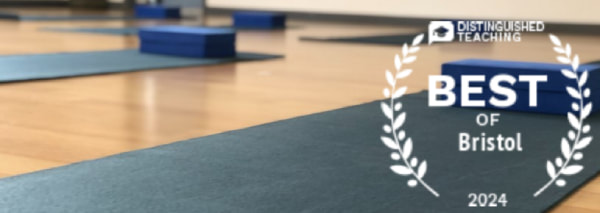 Celebrate our teachers
We have some wonderful teachers at YogaSpace including some of the most experienced in Bristol. Marian has been running her Thursday classes since 1998, which is the same year that I started practicing yoga. Something must be going right for us to get the award for BEST YOGA CENTRE IN BRISTOL, 2024. Experience really counts in a yoga teacher. Especially if you find yourself in an older body, or have an old injury that needs extra care and attention. Almost all our teachers are 50+ and have been at this for at least a decade so know what we are doing and can ensure it is ideally tailored to those participating. 'Yoga with Adriene' is great if you are also in your 30s, young and fit etc., otherwise you might find yourself pursuing a practice suitable for someone younger. She says and does a lot of great stuff, but... having an appreciation for bodies and minds that have some wear and tear, a collection of injuries or issues, are flat-out in their busy lives, or are perhaps post-menopausal, really does matter when it comes to teaching a movement-based practice. Alongside our brilliant skill and experience, it is also why we keep our classes pretty small. One studio just up the road from us squeezes in 35 students in each class. 35!! I hope no-one needs an adaptation or any bespoke attention as it simply isn't possible to see what everyone is doing in a group that size. Of course almost all practice is better than none. YouTube videos for folks in their 30s is fun, squeezing into a hot room with lots of others is an exhilarating buzz. Or if you want tried and tested experience for grounded, well-balanced yoga that will leave you feeling great and support you in a tailored way, then you are in good hands with us. 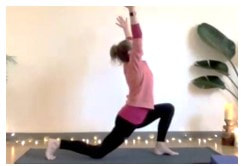 Busy at the moment? There may be extra social gatherings and more demands on our time and things to get done. There are sights, sounds and smells that are stimulating and seasonal and that we would miss if we didn't have them (remember that the next time Jingle Bells is coming at you). Much of this can be enjoyable, some perhaps stressful, but life can certainly seem extra busy and we may feel like we are being swept along. Taking time for more grounding yoga practices and creating pockets of space for moments of stillness can be a huge support to help us stay present enough to enjoy what the time of year has to offer. I'm particularly noting this year's season as I've just lost a friend to a long illness. Sadly this was her last Autumn. As heart-breaking as this is for those who knew and loved her, it reminds us how precious these moments are. This experience of life, as it is right now, is actually it. We don't know what will come next. And while this doesn't mean we shouldn't plan for, and usher in a better future, we should also recognise that this moment right now is our life to experience fully. Yoga helps us settle in to our bodies more fully and comfortably. We realign ourselves back to our centre, and re-find our natural posture and balance. We settle agitation and stress in the body, ease our stiffnesses and aches, reduce turbulence in our minds. Whole body movements and breaths practiced regularly bring us into a steadier and more stable version of ourselves able to more fully notice and embrace the joy of the season. 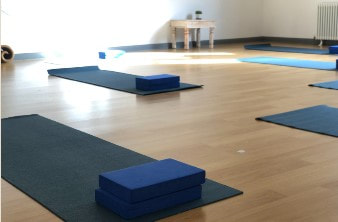 With the colder evenings now set in for the winter, perhaps heading out to the studio, or getting on to your mat at home feels harder? Some of you have (or want) a regular home practice, some of you only practice in a group class, and some of you do both. In an ideal world we would do both, but home yoga and group yoga are both great in their own right. Our initial challenge is doing something! The main aim is to regularly and consistently move, breathe well, and become more embodied and subtly aware of yourself and life. Our bodies love to move, and when given time and space to practice, respond in incredible ways. The next challenge is doing what is right for you. What will bring you what you need in the most effective way. Group yoga is very different from home yoga, and both have brilliant benefits, advantages and disadvantages. And they are a wonderful complement to each other - in an ideal world, we would do both. GROUP YOGA More challenging. Typically more challenging, not necessarily physically, taking you into new territory in a guided way to discover aspects of your body, breath and awareness that you might not delve in to by yourself. It usually isn't as frequent as home yoga, so that extra challenge has time to integrate over the days until your next class. Teacher guidance. It offers more guidance from a teacher. Habits that you wouldn't notice on your own can be highlighted and explored. A teacher will be able to provide experience in how to overcome obstacles, issues and offer new insights physically and beyond. The process of finding an optimum practice that works for you and your unique body and situation can be achieved more quickly and avoid more of the pitfalls along the way. Motivating. It can be great to bookmark that time in your calendar, and help keep you motivated and accountable so that your practice actually happens. This requires its own commitment to showing up. Prebook your classes or term so that it is given priority in your life. And the friendly faces each week help keep it fun and enjoyable. HOME YOGA Personal to you. Home practice is typically more frequent, often shorter, more gentle and more personal and intimate with yourself. Once you know what your doing, there are less external reference points to guide you. Its just you with your body, breath and mind. The practice can gradually become more internal, and perhaps more subtle. Shorter time more often. If you are taking an hour long, class-like practice every day, chances are this is more than you need to do, so only do that if you know you are being careful, and have lots of spare time or have built this up over a while. It is incredible what a shorter practice, taken daily, with repetition and a well-focused mind-set can add to your life. Start small. I've been guiding home practice in 1:1 sessions for over 15 years and initially, I would suggest that 10-20 minutes is plenty if your goal is long-term. Spend a month doing a shorter practice, getting to your mat daily and consistently, and then only once the habit is established and solid, then consider adding in a little more, step-by-step, until it feels optimal, enjoyable, and fits in to your life. It doesn't have to 'look' impressive for it to be brilliantly effective. 30-day challenge. If your interested in jump-starting your own home yoga practice, your invited to join my free 30-day challenge to help you on your way. Go to the Free Yoga Resources page and start from there. 6-months from now you'll be so glad you did!  Our yoga practice is often forward looking - we practice to gain something. Perhaps we are seeking more flexibility, a less achy back, an unscrambled mind, a stronger and calmer end to our week. The idea of seeking something from yoga is universal, especially when you are getting started. We all take up the practice for a reason, and yoga in its brilliance, is often a good solution. It does all of those things, and much more. However we don't have to always seek something from our practice and their is a curious paradox here. Not seeking or expecting a reward from what we do is a different stance from how we approach most of the rest of our lives. Instead, we can move and breath for the joy of it, for the habit of it, we let go of the expectations and hopes, and simply see what arises. This step-change in our practice can be a revelation. It can provide a gentleness towards ourselves. We might discover how to listen inwards more fully. And perhaps opening towards what is there now, not what we are trying to create or get. And it allows us to discover space and be more receptive to what arises. Instead of pushing or demanding something of a posture, or of our breath or focus, invite a gentler approach. Bring an openness to a movement or to the breath, back away from pushing, struggling or trying too hard. And within that find receptivity. Pushing against anything will meet resistance. Sometimes it is appropriate to address this resistance. But it is also wonderful to let go of the pushing. Allow a pose to unfold for us instead of 'creating' it with effort. Allow the body to be more receptive to a stretch because it feels safer when not being pushed. Allow the nervous system to calm down. There is research demonstrating that if you take a stretch at only 30% of the maximum, so hardly anything really, that it is far more effective at gaining mobility than taking the stretch at 70% or higher. Receptivity and repetition do the job better than pushing, and allow us a spacious and relaxed body and mind along the way. Next time you take to your mat, instead of expecting or pushing, try giving thanks for what you already have, what is already there, and open gently into what arises without expecting anything more. It offers a beautiful pause in life which I would highly recommend. 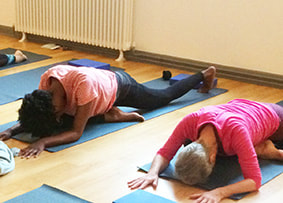 I love getting to the end of a term of classes and inviting people to see if the physical work or breathwork feels different than when they started a few weeks previously. We have been getting into the deeper work that familiarity in your practice allows. Perhaps the half pigeon pose isn't as intense after doing it for a few weeks, not because you aren't doing it as fully, but because the body has changed and is less restricted in the hips than it was before.
Yoga really does work. Brilliant! I had a lovely email from someone from class yesterday and I would love to share it with you (it's anonymous of course, but thanks so much for sending me your story of how yoga is helping you!!). "I walked into the office this morning and my boss took a deep breath to speak. (Clara note: her boss is VERY difficult to work for) Instantly a little voice in my head said “You’ve got this. You did yoga last night!” Isn’t that incredible! I stood tall and answered politely! So yoga is working for me! Looking forward to our next session!" Yoga practice helps our bodies change for the better, and helps our nervous system to become more resilient to stress and strain. We become more open and available to meeting antagonism with friendliness, holding our ground with amity rather than anxiety. Our minds become more open, relaxed, spacious, and we can let go of negative patterns and embrace a more positive way of being in the world. All that from a weekly class. I love it!  If you do yoga regularly, a year from now you'll be stronger, healthier, have improved mobility, breath capacity and regulation, and be accustomed to feeling good ...
Our bodies, our health, our mental vitality are in a 'use it or lose it' trajectory. If we don't get round to putting our bodies and breath through their paces, and stretch our mental wellbeing and focusing ability, the decline will be subtle until things start to grumble. Don't leave it that long. I hear all the time, as people return to practice, they don't know why they stopped and had forgotten how good it feels. The body loves (needs!) to move, to breath well, to notice and address postural habits and mental patterns. It is amazing how it all falls back into place if we make it to the mat regularly. If not now ... when? My teenage kids can be a challenge with turbulent and unpredictable moods and impulsive behaviours. It's certainly not easy being a teenager. As they are a huge part of my life they take as much energy, patience and goodwill as I can muster. Keeping calm and bringing positive energy to meet their teenage hormones is sometimes the best thing I can do for them, and I can't always even do that! It helps hugely to practice yoga each morning before I head downstairs to greet them. If I manage to arrive with a positive mindset, it effects how my day goes, my perception of everything I encounter, and if I can bring humour and fun to whatever they bring to the breakfast table, it instantly raises their mood too. And if you know any teenagers, moods are a big deal.  Our yoga practice is not only for us but also those around us. If our outlook can be improved, then it has a ripple effect that goes far beyond ourselves. We experience each moment of our day through the lens of our minds. We colour everything we encounter with our moods, our emotions and mindset. And if the lens of our mind is cloudy, murky or moody, then that will be how we interpret most things.
And then we do our yoga... Moving and breathing in helpful ways actually shifts things. It changes our state to become lighter, more positive, more vibrant and able to meet challenges with more positive energy, which is contagious.. Weekly yoga, daily yoga even for 10 minutes - it all counts. And it accumulates over time. We build up a positive 'credit' of health and positive energy. We can draw on this when times get tough, and we can invest into it and build up our credit when times are good. Keep showing up to your practice and the ripple effects will positively effect everyone around you. Even teengers.  I'm still enjoying the inspiring afterglow of last Sunday's day of yoga, reflection and intention setting. A lovely group of people gathered for the New Year Retreat Day at the Bishopston studio to take space for themselves and to delve a little more into simple but gorgeous yoga practices and refresh their yoga life skills ready for 2024.
The practices and chats on Sunday reminded us that yoga is as much about moving and breathing, as it is about the skills involved in living a more joyful life. We don't often have time in a group class for explicitly engaging with the philosophical framework of yoga, but it is a real, rich, living philosophy which once explained is hugely practical in every day life. The yoga framework includes aspects such as: ~ being kind and generous to yourself and others ~ ~ reflecting inwardly from time to time ~ ~ noticing how things effect you and adjust the stuff that isn't helpful ~ ~ being present more often, it is where joy can be found ~ ~ keeping things simple, overcomplication rarely helps ~ We do this often on the mat in our yoga class. We are invited to turn our attention inwards to our breath and body sensations, rather than outside of ourselves. To be more gentle with ourselves than we might normally. To pause and observe effects of a pose or technique. To be present and to simplify what we are doing with our attention. These are all aspects that we cultivate on the mat so that they are more available to us in daily life too. Insights are witnessed in our practice that allow us to be easier on ourselves and become wiser in our lives. And the net result will be that we become happier and healthier, nicer to be around, better to ourselves and others, and a whole lot more effective in whatever we are hoping to achieve with our day. (Win, Win, Win!) Beyond the day-retreat being a wonderful, refreshing escape from usual life, it was so valuable to discover what people took from the day. Many participants found the lifestyle framework from yoga, the 'Yamas' & 'Niyamas,' helpful for reflecting on their own situation as we took stock of 2023 and then shifted towards our direction for 2024. This framework is a way to rediscover unnurtured aspects of ourselves and remind us that life isn't all about work, or being a parent or a much-depended on support for others. Rekindling attention to our more whole self, which includes our sense of fun, adventure and creativity, will bring more joy into our life and those around us. "Wonderful,nourishing way to spend a Sunday." Very worthwhile day, would thoroughly recommend to anyone. Feel relaxed and refreshd and looking forward to the year ahead." Enjoyed the reminder of the power of simplicity. A really warm and welcoming experience." The next deep dive into our practice will be the yoga weekend retreat in April where we can take time away to refresh and nurture ourselves. The holidays are over and we are looking ahead. However if you read the news, 2024 looks a little chaotic and unpredictable. However if there is one thing yoga can teach us, it is that even in the whirlwind of life, there is a calm, sound, internal foundation available to help us navigate every day life.
Our wellbeing doesn't need to be determined by our external environment. Improve mental and emotional wellbeing through movement and breath, and we can more easily navigate any storm that comes our way. Build resilience physically, mentally and emotionally so that we can be a calm presence and positive force in 2024. Let's make 2024 as good as possible.
Slow downWe took the opportunity to slow down and really give space to our yoga practice and to go deeper. Each practice was longer than a usual class giving more time to delve, spend time exploring poses or pauses for longer and gaining familiarity with the ‘health mantra’ to cultivate our health and nourishment. Nourish It could sound self-indulgent to spend a weekend like this, but truly it isn’t. Each of us needs nourishment so that we can show up in our everyday lives with more energy, kindness, patience and good humour and do all the things we need to do better. The hope is that periods of deeper practice rekindle the love of regular practice to inspire you to continue to nourish yourself regularly, to show up on your mat and avoid running on empty for too long. BreathThe interest and discovery of breath was a real take-away for many. The workshop seemed to gravitate towards this through the interest of everyone there. It was so great to have time to experiment with the effects of breathwork in our practice and to understand how it can profoundly change our state and effect how we feel energetically, physically and mentally. Working with the breath takes patience, I remember working with a breathing technique for 5 years (!) before I finally got it and was able to gain the benefits from it. Yes it was worth it! It can be such a useful and vital aspect of ourselves to cultivate. ResultsThe feedback from the weekend has been wonderful. “Beautiful house, gardens, great food and very friendly. I enjoyed it so much and learned so much about the breath which I think has transformed my practice and I'll take forwards. I loved how relaxed it all was and a perfect gentle rhythm to the days. Thank you so much.” “An outstanding weekend” “A fabulous weekend. Feeling relaxed and grounded. Thank you.” ContinueI’m already looking forward to the next one and will be planning it soon. Watch this space as the last one has been fully booked since last December.
In the meantime, keep yourself nourished, including through your yoga practice. I have weekly classes which keep you practicing reguarly, offer 121s to support you with starting or developing your home practice, have online resources to help you practice in a fruitful way, and some nourishing Autumn workshops available soon. Please get in touch if I can help or give me a ring if you want any guidance on your yoga practice or getting started. Clara x  One day, you stumble upon a telescope. It looks grubby and old, but it is brass and the lenses are in good condition so it will likely clean up nicely. You make it a personal project and get started cleaning it up. You polish it until it is gleaming, you notice there are a few dents but nothing much to worry about. The lenses are grubby and you take some lens cleaner to them and make them sparkle too. The telescope is your new pride and joy. You love it. It gleams and you enjoy keeping it golden and shiny. You keep the lenses clean and you enjoy it when others ask about your telescope. When they ask how you manage to make it so shiny and keep it in such great shape, you love to tell them about the techniques you use to polish it without finger marks and how you buff it and dust it daily. They admire it too and consider doing something similar. But what is missing here? This beautiful instrument is now in fact more beautiful than before, but it is still a telescope. For all the polishing and shining, the cleaning and the taking pride in keeping it gleaming. It is still an instrument. And an instrument ultimately has a greater purpose. It affords a different view from our day-to-day view that is so easy to overlook. The view that has been there all along once the lenses were clean enough to see. We love our things, we love to work to improve them and gain satisfaction from the progress and developments we make. However ultimately the shiny brasswork is a non-essential bonus. We sometimes approach our yoga practice in the same way. We hone our body, we become accomplished in our postures and do things we never thought we would be able to do. There is wonderful value in this and it makes use feel great and can be a lifeline in an unstable world. We refine our breath and become closer to our embodied selves and find a calm we never knew before. We make our minds attentive and focused and able to stay with objects of attention for longer than before. But then what... The view that we can find by using the instrument for what it was intended, whether we have done all of our polishing and shining, has been there all along waiting to be seen. The ancient Yoga Sutra of Patanjali capture this idea beautifully up front, right at the beginning. Yoga is the containment of the minds movements (Yoga Sutra. Chapter 1. Verse 2) So that... our perception and awareness can rest in its own essential nature (Yoga Sutra. Chapter 1. Verse 3) The mind containment isn't the ultimate point, it helps us recognise it. It makes it easier to see and notice, and a certain amount of focus and experience here helps. It brings its own benefits which can be delightful - but don't stop there. Once we have this, what remains for us to notice? What has been here all along that we have been overlooking by focusing on the 'every-day'? What we are seeking in our yoga practice, can't be found anywhere but right here. It is already available and present. We don't need to polish the brass to find it. Don't forget to find that amongst your practices. 
So what happened?
She moved quickly and breathed as she was used to. She would finish before everyone else, and look around bored. And she missed a fair amount of what the class was offering, the class simply didn't suit where she was. Here are a few things she missed: A chance to leave behind the 'rushing' that makes up most of the rest of our life. Allowing time to not just 'do' a yoga pose or breath, but to actually embody, inhabit and Be in a pose and find a fuller connection to every single breath. The increased challenge of moving slowly. The body has to sustain the movement for longer, the breath requires more focus as it is so different to our habitual pace, and there is less chance to escape into easier bits of the practice. If we normally breath at around 15-breaths per minute in our everyday breath, in a typical sun salutation you might find yourself at 6 or 7 breaths a minute. This is great and offers a lot. But then what would happen if you went to 3 or 4 breaths a minute? It feels really different, it requires 10X focus, the nervous system loves it, the body has to slow down to more control in each pose is required which takes more skill, and you notice way more. Needless to say, the after-class chat went along the lines of: do I do any other types of class where she can work harder and feel more challenged. I'm not the right teacher for her, and if I was, my beginners class would be a great starting point so that she could established a good foundation of movement and breath. Not every teacher is the right one for every student. You need to be met where you are, and engaged in the practice that they are compelled to teach. I wish her well and hope she finds a teacher that can catch her attention and that she can really learn from. |
More blog articles >
Categories
All
Archives
April 2024
|




 RSS Feed
|
Bristol YogaSpace Ltd
Princes Place, Bishopston Just off Gloucester Road Bristol BS7 8NP |
|