
Thinking about whether to do your practice or not is a slippery slope. Our thoughts are tricky, easily derailed, and unreliable for doing what is best for us.
Not getting to your mat can be tempting when the weather is bad. And without the commitment in advance, it won't get any easier. Take your decision to practice once, in advance, when your feeling pro-active. It is soooo much easier than deciding each day or week whether or not to turn up. If you are constantly questioning whether your practice is going to happen, then Autumn is the season where it will really slide. Pick your time, pick your class, book it in and stick to it, enjoy that you did it. The same way that you don't think about cleaning your teeth each day, you already committed to doing that as part of your life years ago. Yoga practice should be developed to be that same positive habit. I took a drenching this morning going to the studio. But it made me feel alive, vibrant, and great to be outside, rather than home watching the rain. It is always hard when you have to decide to leave the house. Commit ahead of time, book your term or pre-book your month's classes using your membership to help you stick to your good intentions. You'll always be glad you did.
0 Comments
So what happened?
She moved quickly and breathed as she was used to. She would finish before everyone else, and look around bored. And she missed a fair amount of what the class was offering, the class simply didn't suit where she was. Here are a few things she missed: A chance to leave behind the 'rushing' that makes up most of the rest of our life. Allowing time to not just 'do' a yoga pose or breath, but to actually embody, inhabit and Be in a pose and find a fuller connection to every single breath. The increased challenge of moving slowly. The body has to sustain the movement for longer, the breath requires more focus as it is so different to our habitual pace, and there is less chance to escape into easier bits of the practice. If we normally breath at around 15-breaths per minute in our everyday breath, in a typical sun salutation you might find yourself at 6 or 7 breaths a minute. This is great and offers a lot. But then what would happen if you went to 3 or 4 breaths a minute? It feels really different, it requires 10X focus, the nervous system loves it, the body has to slow down to more control in each pose is required which takes more skill, and you notice way more. Needless to say, the after-class chat went along the lines of: do I do any other types of class where she can work harder and feel more challenged. I'm not the right teacher for her, and if I was, my beginners class would be a great starting point so that she could established a good foundation of movement and breath. Not every teacher is the right one for every student. You need to be met where you are, and engaged in the practice that they are compelled to teach. I wish her well and hope she finds a teacher that can catch her attention and that she can really learn from.
When you first get started, there is a period of figuring out how to get to the mat regularly. Learning what sort of class suits you, and understanding the format of the class and what the teacher is talking about.
Then you start to figure out how to get into some basic postural forms, discover what the breath is doing. discover how to focus and pay attention. The teacher provides helpful feedback to help guide you into safe and effective practice. As the practice becomes more familiar perhaps we can then independently start to listen to our own cues and tune in to more subtle aspects. The guidance of the teacher is part of the picture, your own internal guidance perhaps starts to be of more importance. Some practice styles prioritise teacher feedback, others tend to prioritise students tuning in to their own feedback. Our own feedback may be more subtle and easier to miss until we become more sensitive in our practice. A teacher can never know what you are feeling in the same way that you can. At first you might have no idea how your feeling, but that sensitivity gradually develops. Your body might need to start grumbling more before it is listened to by you. The breath might get lost or become agitated or we might become out of breath before we listen to it. Sometimes students ask me for adjustments and may be disappointed when I suggest that their pose is in a good place, and offer cues to help them feel for themselves. Often people like to be told what to do (or perhaps they are used to being told what to do). Your body and breath are great guides, along with pausing to notice or taking more time in your practice to understand the responses being offered. Pausing during our practice, rather than just at the end, to observe moments of stillness and quietness, may seem counter intuitive if it isn't something your used to. Pausing, sometimes after each pose, can help us reduce our tendency to rush and not pay close attention. Some people take to it like ducks to water, moments of space and quiet are why they came to the practice in the first place. Some like to feel heat and intensity of a challenging practice with a strong focus to support and stabilise them. A long savasana at the end, once our energy is spent, may be the closest we get. Understanding your own practice can be your greatest teacher in yoga. Understanding the body and the breath, and ultimately understanding the mind and more subtle aspects beyond can be revelatory. A teacher / guide can be of enormous help and point things out that your not seeing and help you avoid indulging some ideas you may have about your practice. Feedback is a collaboration through relationship with your teacher, your body, your breath and the fruits of your practice.
It doesn't matter how much movement or breath or focus you are able to muster that day. Showing up, engaging in practice, connecting to your body, breath and more subtle aspects of yourself can be easily neglected, but remain instantly retrievable just by showing up next time.
Top tip: if you find you haven't got an hour or 15 minutes that week for practice, remove yourself from social media for a day and see how much time you actually have. What help can you need to support you in showing up?  Advertisers, social media, TV, radio, friends, family, sales people, chores - many things want a slice of our attention. It is a valuable resource and there often doesn't seem like enough to go around.
Your attention is literally for sale. Advertisers pay good money for it, news companies are funded by it. Treat it with high regard and choose what you do with it wisely. Yoga practice includes the art of cultivating sustained attention towards that of your choosing. In our practice we gradually discover that we can 'do' less, so that we can 'be' with ourselves more fully. Our practice might start with 'attention grabbing' poses and bold breath focus, and from there the practice unfolds. We gradually settle into being more comfortable in our body, our mind settles down, and we are able to discover relative stillness. We turn away from the external world for a while, discover our own internal sanctuary and find a wellspring from which to restore ourselves. Have you noticed that in yoga practice we start with more energising, external facing, open poses, and gradually become quieter, more internally aware, more subtle? Our attention is encouraged to settle onto the body, the breath, the inner sensations, and this process unfolds as we continue through our practice. What feels like a stormy body and mind at the beginning of practice, becomes more calm and steady by the end. The art of paying attention, of intentionally choosing what you attend to, is really a radical act in today's world as it goes against what external forces would command. But it is a skill well worth cultivating. Find more space and freedom in your life as you give your attention to what you choose, rather than by-design what you encounter. Spend your attention wisely and reap the rewards. 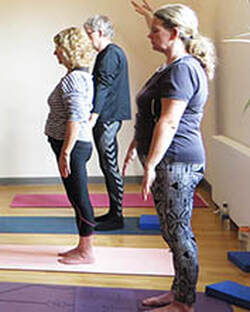 What does it mean to be 'good' at yoga?
That you can do many of the poses or techniques? Perhaps that you have athletic prowess or a graceful and flexible body? Maybe your face remains serene under duress? That you get to your mat regularly no matter what? Or maybe you have mental focus like a laser beam and an impressive breath? The quality of your yoga practice can be viewed through the pursuits that you are able to master along the way or it can be viewed through the lens of the quality of care and attention that you bring to your practice. Try bringing in more care and attention. Sun salutations not required.
I'm part of a community of teachers who participate in the Association of Yoga Studies (AYS). A group of a few hundred teachers, mostly in the UK, who meet annually to share teachings, learn from experts in their field, and continually develop our knowledge and understanding of yoga and yoga teaching. We are based in the teachings of TKV Desikachar and his father, Krishnamacharya, Viniyoga. Part of this tradition is chanting. Chanting the Yoga Sutras was a core part of my teacher training. Learning by heart some of this core text which forms the basis of much of what I teach. Even though it is over 2,000 years old, the teachings on the mind are so relevant to modern life. Being able to chant in Sankrit was a surprise part of my training that I didn't realise I was going to learn to do, but here I am, years later still continuing and participating in group chanting. There are practical reasons to learn how to chant... - breath development - learning the ancient teachings of the Vedas and Yoga Sutras by heart - focus and concentration (you literally can't drift your attention and remain true to the Sanskrit sounds without knowing that you have, as you'll make an audible mistake right away and bringing your focus keenly back) - quietening the body, nervous system and mind But something else happens when you chant, especially when your in a group. A resonance takes place in your own body and mind. Especially with the group sound, the coming together of individual voices to make a collective sound which is a wonderful and powerful experience. Anyone who takes part in a choir or orchestra will understand what I'm talking about. It's no coincidence that every culture has singing practices embedded deep within. And Covid has reminded us the value of being together in a room with others. Chanting in Sankrit, continuing the strict chant rules and pronunciation that has remained as unchanged as possible for over 2,000 years is an inspiring experience. It brings us together, connecting us individually, as a collective, and to the shared subtle underpinning of our everyday life. This past weekend I took part in a wonderful Vedic Chanting retreat with Chris Preist. Coming together with a shared joy of yoga practice and study with time for reflection and silence has never felt as needed as after the challenges of Covid. If you've ever wondered about chanting, please do ask me, or come to one of my workshops where we use simple chanting and sound practices. Or simply try humming to yourself and start to enjoy the sound and vibration. Try this...Lie on your back, knees bent.
~ Place your hands over your eyes (not pressing on the eyes themselves) and block out the light. ~ Gaze into the darkness and patterns that appear there. ~ Relax ~ And then take a soft, easy hum each time you exhale. ~ Do this for a few minutes, slowly listening to the sound of each hum. ~ No matter what note or quality of sound, and no matter if you like the sound of your voice or not. Feel the sound if you don't like to listen to it, ~ After 5 minutes, see how you feel. Something will have changed in you. ~ Ponder....
Breathing well in yoga can seem tricky As a beginner to yoga, it can seem difficult to keep the focus on the breath. It is common to find that you’ve been holding your breath and straining in some postures. Arms and legs are just about doing what the teacher has invited you to do - but your breath, well who knows? This is particularly noticeable in a fast-paced or deeply strenuous class where the body is most dominant and anything else gets left behind as you work your way through the class. So what if my breath isn't great?Day to day we typically breath 12-15 breaths per minute. The rate, depth and quality of it can help adjust our levels of anxiety and stress, our immune system effectiveness and many more physical and mental health markers. Yoga offers profound teachings in the breath if we choose to listen that can support our health, wellbeing and awareness in our day to day lives. Familiarity helps to develop our breath focusGradually, with familiarity of a regular yoga practice, we can start to remember to breathe with a flowing and calmer breath. And eventually the breath and movements start to link together more. From here we can start to take that further still and refine into a more advanced yoga practice. Once you feel you are able to link the breath and movements together, then the power of the breath can really start to be harnessed and the refinement and quality of our yoga practice can bloom. Our nervous system will feel immense benefit from working skilfully with breath centring and we can move beyond the endorphin highs of vigorous and strenuous yoga practice and move towards maturing our yoga practice. The breath powers our yoga practiceSounds obvious, of course we need to breath to power everything that we do or we’ll collapse in a heap. But it is easy to forget about the quality of our breath when distracted or physically strained. What if you eased back from the strain and found a spaciousness in the breath to develop the power of your yoga practice instead? What would that feel like? What could it do to your yoga practice? What if we found our physical alignment from our breath?We often listen to the technical instruction from the yoga teacher: move your foot here, rotate your hip there, etc... Breath-centred practice can support us to more naturally open and expand your body into a posture, rather than teaching instruction being the main driver. Explore how your breath can position you into a natural alignment from within that is unique to your body structure and your deepening breath. Starting out with breath-centred yoga practiceThe classes at Bristol YogaSpace work with a deeply breath-centred approach to yoga. Rather than simply coordinating with our breath, which is common in many Vinyasa, Flow or Ashtanga yoga practices, we centre ourselves in the breath more deeply and use it to power the practice and direct the postures and focus.
When I started out some 20 years ago I practiced Ashtanga yoga, a vigourous and strong yoga practice, then Iyengar yoga which is technical and detailed in its formal postures. But I eventually discovered a truly breath-centred approach in Viniyoga and practice was transformed for me. Perhaps ask your teacher more about the breath when you feel ready or curious or come along to a Viniyoga class which specialises in breath-centred yoga practice, or a yoga workshop to support you to develop more breath centring in your yoga practice. Enjoy your yoga practice. “Without breath, it isn’t yoga – it is like a river without water” Krishnamacharya  Yoga helps us achieve improved health and wellbeing. Here are 10 things to watch out for during yoga classes to help you get the most from your yoga practice. Avoid these and your practice will be far more effective. If you find yourself doing these things, don't be disheartened - but do explore why you do them, see what happens if you mindfully avoid them, and in time you'll find the quality of your practice improves along with the benefits.
1) Avoid being late to class If you arrive late, you are likely to be flustered and rushed. Arrive early or on time and you can settle yourself and get more from your practice. (But being late is better than not coming at all.) 2) Don't have your phone on This is time for you, time to step outside your everyday life and ground yourself. Watching the phone won't help, and you won't fully switch off from your 'doing' mode. Plus ringing or vibrating phones can be off-putting for others in the class too. 3) Don't chat Once the practice starts turn the focus inwards rather than chatting with your friends. 4) Don't eat a full meal before practice It will be uncomfortable and those twists and abdominal holds will be limited by a full belly. A small snack is fine if you need to keep up your energy, but a full meal will restrict your practice and lose some of the energetic effects. 5) Don't look around during practice The gaze is an important part of yoga practice. There is a saying, "where the gaze goes, the mind follows" - looking around encourages the mind to jump around too, and we want to try and settle the mind as much as possible. Settling the gaze, or closing the eyes for some of the postures, helps you keep your focus on your practice. Admiring the water bottle of the person in front won't help you get the benefits of yoga. 6) Avoid fidgeting In the quest to develop our focus and attention in our yoga practice, fidgeting isn't helpful. Instead, try to notice that you want to adjust your t-shirt every time you finish a pose, notice that you want to do it, but don't react to it, don't do it, simply enter into stillness and see how it makes you feel. 7) Don't push too hard Yoga practice should be engaging, even challenging, but if you find yourself constantly pushing yourself, then easing off slightly may improve the quality of your practice. We push ourselves all day, trying to get to work on-time, rushing around from task to task. During yoga, there should be an equal level of effort and grit but also of comfort and space in each pose (sthira and sukha). Notice your breath during the challenging parts of practice, if it isn't smooth and under your control, then it's time to ease off. 8) Don't drink in between postures Ideally, you should come to the class fully hydrated so that you don't need to take a drink in between each pose. Yoga practice can make you warm, even hot,and this is part of the practice which we don't want to dampen down. Usually we are drinking through habit, rather than actually needing to hydrate the body, which means we have lost our focus. Keep focused, have a drink at the end, and you'll reap more benefits. 9) Don't wear jeans They don't usually let you move freely and can be uncomfortable. Wear clothes that allow free movement. (Unless your jeans are of the full lycra variety.) 10) Don't beat yourself up If you find yourself unable to focus, fidgeting, looking around, sipping your water, running late to class, and glancing at your phone - don't beat yourself up about it. Yes your yoga practice has plenty of room for refinement, but it is still worth doing, regular practice will help things improve, and you'll feel better for having done it! Back to YogaSpace homepage 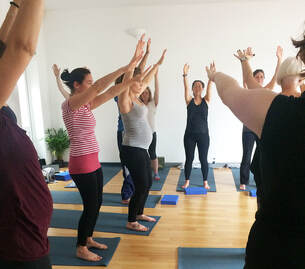 Each week in my yoga classes in Bristol, I see people come in to class feeling tired, perhaps agitated by their day, and usually more than a little lack lustre.
When they leave, there is a noticeable difference in how they seem. They are usually settled, calmer, and more comfortable in themselves. A better version of themselves. They have changed. During the class we move the body, opening, expanding, stretching, challenging, engaging and working the entire body in some way. We breathe fully, slowing and extending the breath where possible. And we try to focus internally and our breath. I came across a fascinating talk by Amy Cuddy recently called 'Your body language shapes who you are'. Amy is a social psychologist. She researches body language at Harvard Business School and she was interested in researching how body language not only effects other people's perceptions of us, but how it actually effects our own body chemistry. In her research she concluded that by standing up tall with the feet apart and with the arms raised and open for only 2 minutes daily, we can raise our testosterone levels (dominance hormone giving a confident outlook), and reduce cortisol levels (stress hormones). Simply by changing our body position in this way, we are altering our hormones and brain chemistry. We are changing ourselves to not only feel but become more powerful, confident and laid back. Great! In yoga classes it is very likely that you'll do a lot of arm raising like she describes, standing with the feet apart, reaching up, opening up. Also combining this with bending forwards, twisting and so on. So her research suggests that we are actually changing ourselves and our hormones in a very real way by doing this. I took two things from Amy Cuddy's inspiring talk - firstly, that yoga postures seem very aligned to the body changes she talks about, and that by doing them you'll actually become more confident and laid back. - and secondly, that only a little practice, taken regularly, can make a big difference! Pass it on... PS. I love TED Talks! Back to Bristol YogaSpace homepage  Running the Bristol Half Marathon this Sunday?
What you learn on the yoga mat either at your group class or in your own home yoga practice can be invaluable to help keep you injury free, focused, motivated, energised and able to stay the distance. Here are some top-tips: 1) Tall posture Yoga practice often starts by standing on the mat, focusing on standing with awareness, with attention and length in the spine, having an open chest, and then relaxing your shoulders and breathing deeply. Bring this feeling of readiness yet relaxation into your pre-run preparation and take some deep breathes to stay focused and relaxed. Stand with both feet evenly supporting you and be aware of the shift of balance from side to side of the feet and body. This awareness of balance can carry on through into your running to help keep you centred and grounded for the duration of the run. 2) Stay aware to prevent injury It is easy to become part of the crowd and lose your internal awareness, meaning your perhaps not listening to your body and maybe accumulating tension into your running. This is when injuries are far more likely. Stay focused and aware of your running and how your body is responding. Keep aware of how your breathing is, and try to relax and let go of any tension as you notice it coming into the body. During the run, every 10 minutes or so, spend 10 breaths checking that you are breathing well, with a good exhalation, that your shoulders and body are relaxed, and that your posture isn't starting to collapse as you become tired. Reenergise yourself and keep your focus going. 3) Open your chest to breathe Breathing properly is very important to ensure your body is working at its optimum, and many people only use a portion of their full breath, meaning their bodies have to work harder. As you tire, everything wants to collapse downwards, including your chest and shoulders. Or perhaps you become tense and your full capacity for breathing 'seizes up' as you will yourself on. Keep your chest open, shoulders back and relaxed, shoulder blades down, arms and hands relaxed. Maintaining this openess will enable optimal breathing. 4) Take time to exhale Your yoga practice will have taught you to exhale completely, and this takes time and practice. If you become out of breathe during running, it usually is because your not breathing out deeply enough. Focus on your exhale, breathe out from the belly drawing your belly button in towards the spine, take a few deeper exhales and than relax into a breathing rhythm that allows full exhalation. 5) Some Downward Facing Dog After the run, fully stretching will help your recovery and leave you in less discomfort the next day. Include some time spent in downward facing dog as this can be great for stretching your calves, hamstrings and your back. Stay in the pose for at least 8 full breathes (breathing slowly), longer if comfortable for you. Each inhalation spend time lengthening the spine and extending the hips away from the shoulders, each exhalation allowing the legs to take a little more of the stretch. Taking some time to relax and stretch here to help your recovery from the run. (Not advis Most of all, enjoy your run and good luck! Back to YogaSpace homepage > Worth sharing, the Guardian website has just published their 'How to Meditate' series. They have some step-by-step guides, videos and podcasts designed to support people wanting to meditate. Worth trying if you have wanted to give it a go or tried and found it hard in the past.
Enjoy here: http://www.guardian.co.uk/lifeandstyle/meditation This question is one that I get asked regularly. The responses are different for different people and of course, there isn't a right or wrong answer, yoga is different things to different people...
Yoga for fitness? People take to physical activity for the challenges that are supposed to help keep us supple and healthy. Yoga can provide a range of challenges, some intense and others more relaxing depending on the yoga practice. The movements can help you feel better in yourself (as long as you work within your own limits and progress sensibly), can strengthen you and keep you suitably supple. However here is definitely more to it than a regular fitness regime, otherwise why not go to the gym? Yoga for stiffness? Yoga is notorious for its bendiness and many people believe they need to be bendy to do yoga. Not so! The bendy poses are not in the majority, and many postures are completely accesible for stiff people too and over time the stiffness will ease up so yes, great to help improve stiffness. Yoga for posture improvement? Yoga is perfect for strengthening and improving posture. After all, the physical postures or asana were originally designed to keep the body strong and stable to enable hours of meditation by the yogi. So the benefits of practising yoga asana can support our modern day posture needs too. Yoga for relaxation? Stretching and limbering up the body can help encourage the body to let go of tension. Along side this, focusing our minds on body and breath work can help relax our minds from the tensions of daily grind. Yoga can help us ease up on tension and encourage the body, and the breath, and even the mind, to relax. Yoga for stress-relief? It is well known that the work in yoga leaves people feeling calm and with a pervasive sense of well-being. Some people report this also from running, swimming, eating chocolate... Yoga definitely helps both release stress, and also to have the ability to recognise it earlier. By taking the time to listen to our bodies and minds, and recognising the signs of stress early, and by understanding what the causes are, we can begin a deeper pattern of change to prevent stress-related problems. Yoga for healing? Yoga is known for its therapeutic help, and I work with a lot of private yoga students who will testify to this. For a variety of reasons, they find a regular yoga practice helps improve their bodies and also helps them with much more besides. Movement and good breathing can help heal the body and mind and encourage repair, renewal and strength. Yoga can be as gentle or as strong as is needed to ensure it is beneficial to whoever is practicing it. I work with people recovering from sometimes serious illness who physically are very limited. But there is always something you can do that will gradually lead to greater ability and hopefully progress you back to health either physically, mentally or more often than not, both! Yoga for spirituality? Yoga has the ability to calm down and settle an overactive body and mind. We can stop worrying, still the incessant chit chat of the mind and move towards creating a refreshing calm, a reprieve to help us handle every day life. This in turn can lend itself to meditation and contemplation of what spirituality might mean to us. By accessing a still and settled mind we can experience the world from a different perspective and perhaps notice things we hadn't noticed before, bringing us closer to who we really are. Yoga to support personal change The philosophy and psychology of yoga has many teachings on how we perpetuate our habits, good and bad. It teaches how we can reflect on them, what their triggers and patterns are, how to know ourselves well enough that we can ultimately move towards changing them and ourselves. Yoga practice is a starting point for personal change and development. As I told a private student today, one of the joys of yoga is that it is sooo efficient. It can do all this and more in a relatively short practice, the more you practice, more the of these benefits you can get. So why do we practice yoga? Is it so we can become a little bendier than we were before? Or perhaps there is more purpose than this? Back to homepage According to a news article last week on the BBC, one in five schools now teach yoga as part of the physical education provision.
There is a current trend is for schools to move away slightly from more traditional, competitive sports. Yoga can help students get the physical benefits of getting active and moving the body, improving their posture and physical strength. And also they could learn useful skills to help them develop better concentration, keep them de-stressed and able to handle life-stresses and exams better, and be more in touch with themselves during adolescent change. Yoga can be great both as a group class where they take a yoga practice as a PE class, but also shorter practices can be used less formally. For example teachers can start off a class with some focusing work such as a short stretch or chant to help settle the class and get them focused on the lesson ahead. Lots of useful possibilities! Back to homepage Finding a yoga class or yoga practice that suits you is a fine art and finding a range of postures that are right for you can depend on what you are looking for from yoga.
Some yoga postures are physically demanding, and some are completely inaccessible to many, but even postures that are relatively easy to get into initially, can actually be some of the toughest. This yoga postures website www.santosha.com lists a range of postures and then grades them based on how hard it thinks they are. Interestingly it gives 'Savasana' the corpse or lying relaxtion pose the easiest grade. I At first glance you could easily agree with this rating, surely you just have to lie there? However I regularly see students in my yoga classes struggling with this pose. It is a personal challenge to many to actually lie and relax, close the eyes and keep the mind attentive while the body releases onto the mat. People can fall asleep in a class in this posture, indicating that they are over-tired rather than able to relax the body. Or they find it hard to close the eyes or feel comfortable lying face up. Or their back bothers them and they don't find it relaxing. Or they just can't let go of the tension in their shoulders and hips. It is a tough posture in many ways, and the stillness of the mind, one of the goals of yoga, is challenged here as the body isn't moving to provide focus and distraction. Postures, or asana as yoga terms them, can be deceptively difficult, and getting into them is only the very first step of practicing yoga. Deepening the work in the more 'simple' postures, advancing your work in a seemingly straightforward asana rather than trying more advanced asana in a physical way can often lead to much greater rewards. So finding a class with advanced postures isn't always the way to develop your own yoga practice. Advancing your work in the primary yoga postures is a good approach for many practitioners rather than reaching for the headstand. And it is this basis which makes yoga accessible to everyone, not just those who are super bendy or super strong! Back to homepage If you've tried yoga, you may already have an idea about the health benefits it can bring, the calm state of mind it can develop, the concentration and self-disclipline it can foster. Finding the right teacher and the right style for you is essential and not everyone takes to it straight away. But it has stood the test of time and has so much to offer.
But can yoga also develop these qualities in children? And could it help them increase there prospects of making more of their time in school for learning? Yoga is being tried at Quarry Brae primary school near Glasgow who are trying it to find out and so far the results are really encouraging. The school is in a deprived area and many of the children show up to school without having a structured start to the day, often coming from unsetttled home environments. This can set the day off with a rocky start, and the disruption can spill over into the classroom where concentration and discipline can be challenging. They have been trying starting the day with some yoga techniques, using some physical postures, chanting, breathing, mudras to calm the children down, provide a sense of concentration and discipline and prepare the children much better for a day of group participation and learning. The children are responding well, enjoying the practices, noticing and commenting on how calm they feel and how it is helping them to concentrate and 'feel better'. One 11 year old comments: "I got hit in the face with a ball, usually I'd go up and start a fight with whoever did it but I don't any more. I used to have a quick temper and yoga has calmed that down." Many of the physical yoga postures were designed with children in mind. They often have playful names like 'downward facing dog' to help make them memorable and appealing. And practices such as jumping in and out of the postures help keep the young people engaged and challenged as they work through the practice. The school teachers are supportive and at least one has gone on to be trained as a yoga instructor and is bringing yoga practices in to her classes to help prepare the children for learning. It takes a specialist approach to help children get the best out of their yoga practice. But what this school has done seems to demonstrate something that should be explored and tried out further, both with children and with adults. Many of us are already embracing the benefits of yoga and gradually learning how to apply yoga to help us in our everyday lives. It has so much to offer from relaxation and calmness, to health and therapy to support and improve health problems, and can even bring a more connected, holistic and spiritual aspect to our everyday lives. Lots to explore. |
More blog articles >
Categories
All
Archives
April 2024
|



 RSS Feed
|
Bristol YogaSpace Ltd
Princes Place, Bishopston Just off Gloucester Road Bristol BS7 8NP |
|